Yellowhammer Scientific Classification
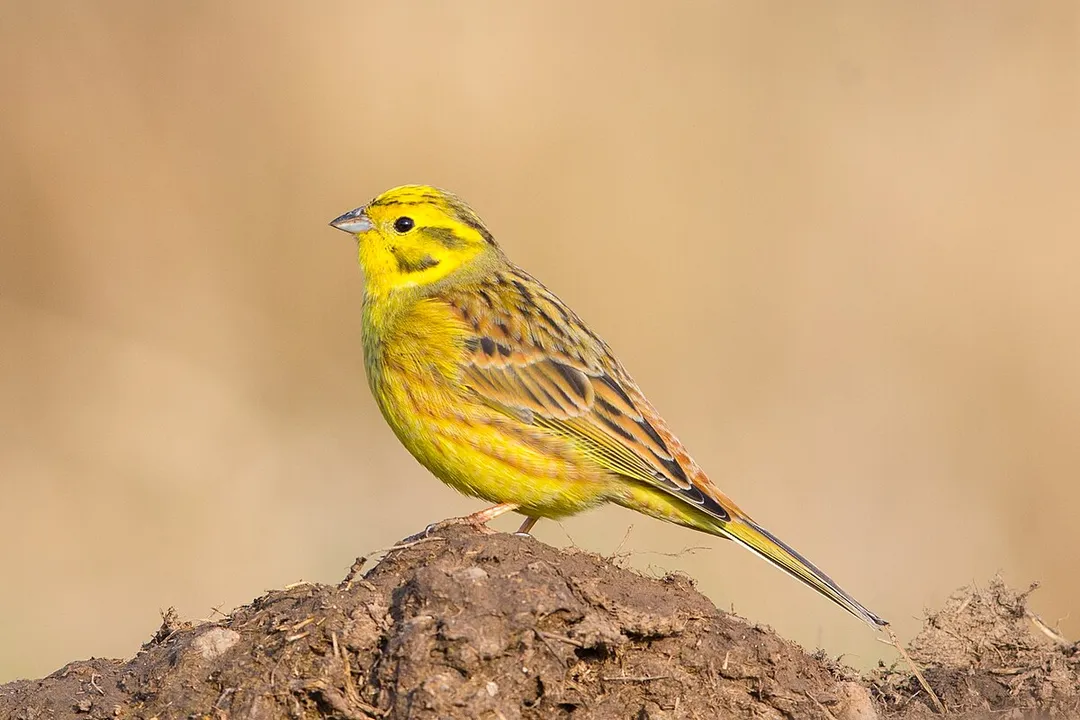
The Yellowhammer, with its unmistakable flash of yellow brightening the edges of European farmland, is a familiar sight, yet its scientific placement tells a deep story about its evolutionary history and relationships within the avian world. To truly understand this bird—from its bright plumage to its distinctive, almost rhythmic song—we must trace its formal lineage as defined by taxonomy. This process is less about arbitrary labeling and more about mapping out the structure of life itself, placing Emberiza citrinella precisely within the grand organization of the animal kingdom. [2][3]
# Linnaean Naming
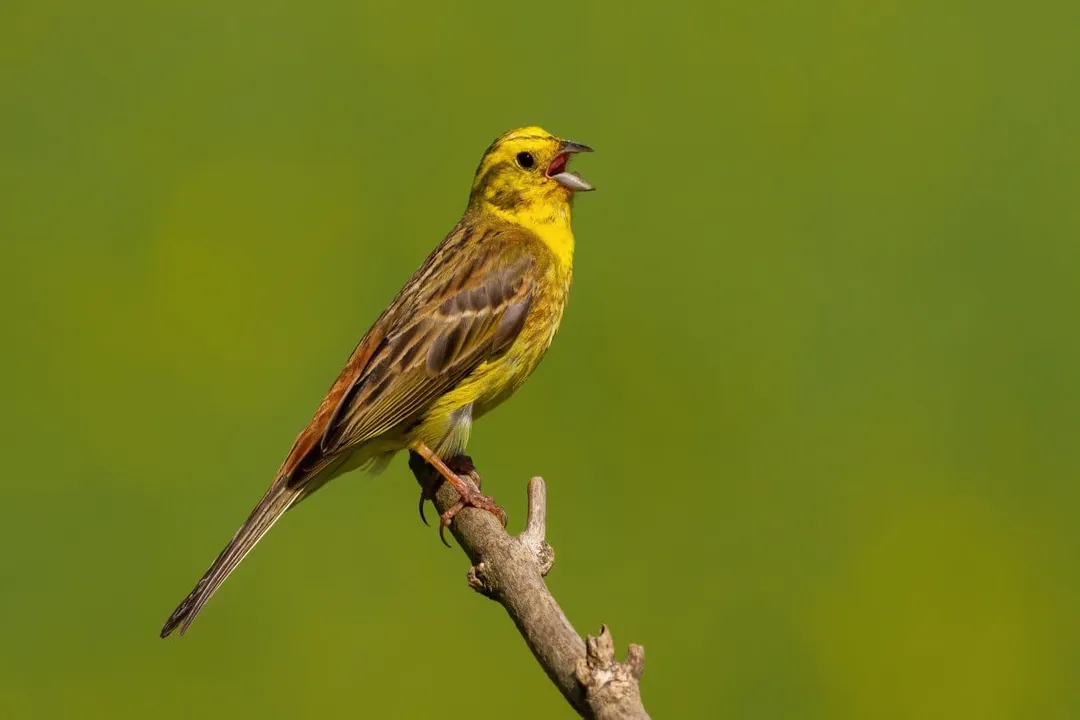
The formal address for this bird begins, as so many of our scientific understandings do, with Carl Linnaeus. In his seminal 1758 tenth edition of Systema Naturae, he assigned the binomial name Emberiza citrinella. [2] This nomenclature is not accidental; it is a precise, two-part scientific label intended to be universally understood, regardless of local language or shifting common names.
The first part, the genus name, Emberiza, finds its root in the Old German term Embritz, which simply denotes a bunting. [2] The species epithet, citrinella, is derived from the Italian word for a "small yellow bird". [2] This dual name beautifully summarizes the bird’s basic identity: it is a type of bunting, and it is noticeably yellow. Even the English common name, Yellowhammer, likely has Germanic origins, perhaps stemming from Ammer, another word for a bunting, first documented as yelambre in the mid-sixteenth century. [2] This continuity in naming, even across centuries and languages, suggests a strong, observable phenotypic link that defined its initial scientific positioning. [2]
# Hierarchical Placement
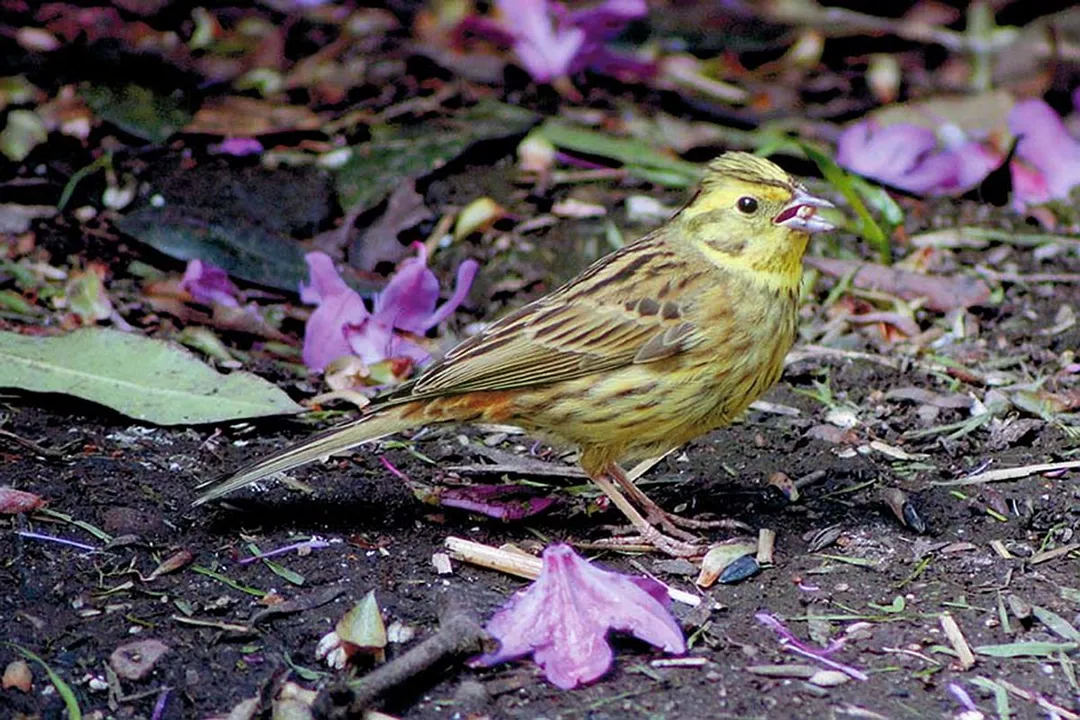
The scientific classification of the Yellowhammer reveals its position within the greater tree of life, moving from the broadest categories down to its specific species designation. [2][6] It is categorized under the Kingdom Animalia, confirming its status as a multicellular organism that ingests other organisms for energy. [2][5] Following this, it falls into the Phylum Chordata, indicating it possesses a notochord or backbone at some stage of its life, which naturally places it among the vertebrates. [2][5]
The Class Aves is where we identify it specifically as a bird. From there, the classification narrows into the Order Passeriformes, the perching birds, which represent the vast majority of avian species and are characterized by specialized foot structure allowing them to grip branches securely. [2][5] The family level is Emberizidae, a grouping known primarily as the Old World buntings. [2][6] It is important to note the distinction here: while North American "buntings" sometimes carry similar names, the Emberizidae family is typically restricted to the Old World group containing the Yellowhammer. [2]
This leads to the genus, Emberiza, which consolidates the various true buntings together. [2][6] Within this genus, the Yellowhammer (E. citrinella) is placed based on genetic and morphological evidence, solidifying its closest evolutionary ties. [2]
| Taxonomic Rank | Classification | Characteristics/Notes |
|---|---|---|
| Kingdom | Animalia | Multicellular, heterotrophic organisms [2] |
| Phylum | Chordata | Possesses a spinal column or notochord [2] |
| Class | Aves | Feathered, winged vertebrates [2] |
| Order | Passeriformes | Perching birds [2] |
| Family | Emberizidae | Old World buntings [2][6] |
| Genus | Emberiza | Contains about 40 closely related bunting species [2] |
| Species | E. citrinella | The distinct Yellowhammer [2] |
This systematic breakdown shows that the Yellowhammer is fundamentally linked to other buntings through its family and genus, differentiating it from, say, the true finches or sparrows, even if they share similar habitats or diets outside of the breeding season. [7]
# Genus Ties and Kinship
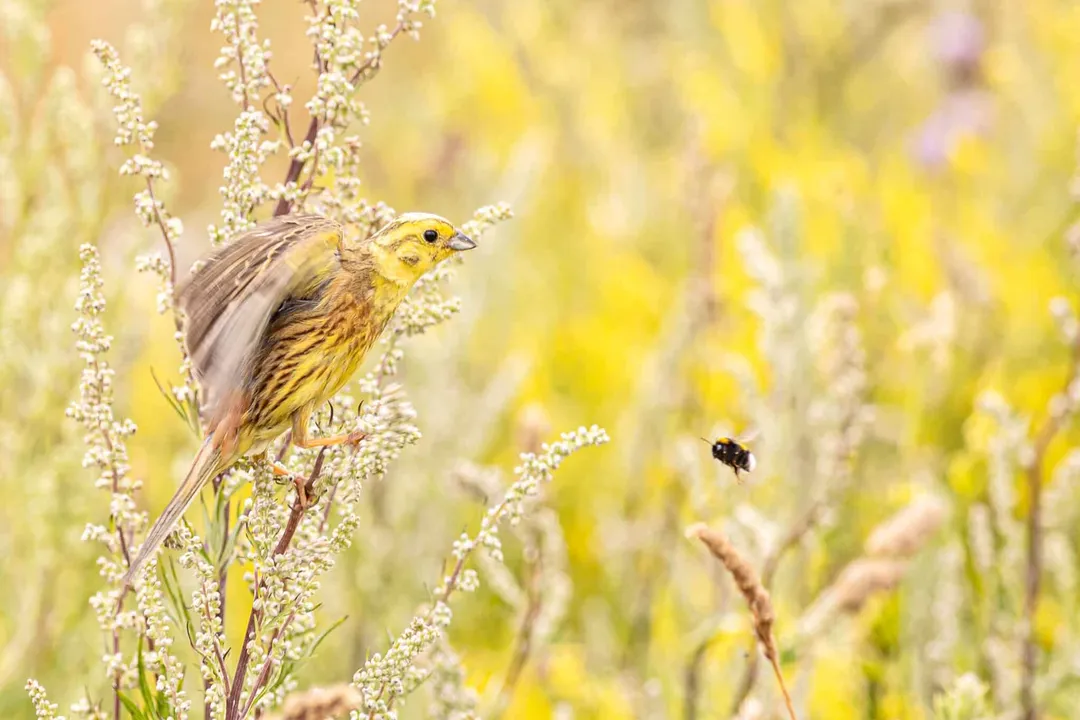
The placement within the genus Emberiza highlights several critical relationships. This genus contains roughly 40 members confined to the Old World, meaning their evolutionary diversification largely took place across Europe, Asia, and Africa. [2] Within this genus, the Yellowhammer’s closest relative is the Pine Bunting (Emberiza leucocephalos), with whom it shares such a close genetic bond that they are often considered a superspecies. [2]
This close relationship isn't just theoretical; it manifests in the physical world. Where the ranges of the Yellowhammer and Pine Bunting overlap—a phenomenon known as secondary contact—they are known to interbreed. [2][6] The fact that hybridization occurs suggests a relatively recent divergence from a common ancestor. Furthermore, observers note that the songs of the two species are remarkably similar, adding a layer of auditory confusion where their habitats meet. [2][6] Interestingly, the Yellowhammer appears to hold dominance in these hybrid zones, a factor potentially related to the appeal of its song, which females appear to prefer. [2] Other near relatives within the Emberiza genus include the Cirl Bunting and the White-capped Bunting, further illustrating the species' evolutionary neighborhood. [2]
Considering the consistency of this placement, it is interesting to observe how fixed the Linnaean description remains, even as our understanding of conservation needs evolves. While Emberiza citrinella is accepted across major global checklists—from Avibase to the European Environment Agency’s EUNIS records—its conservation status presents a fascinating dichotomy. [3][5] Globally, the IUCN classifies it as Least Concern due to its vast range, estimated at 12.9 million square kilometers and a large total population. [2] Yet, in specific regions like the UK and Ireland, the story is drastically different, leading to it being placed on the Red List as a severely declining species. [2][7] This demonstrates a core concept in modern ornithology: the scientific classification defines what the species is biologically, but its conservation status reflects local ecological pressures and management histories. [7]
# Subspecies Variation
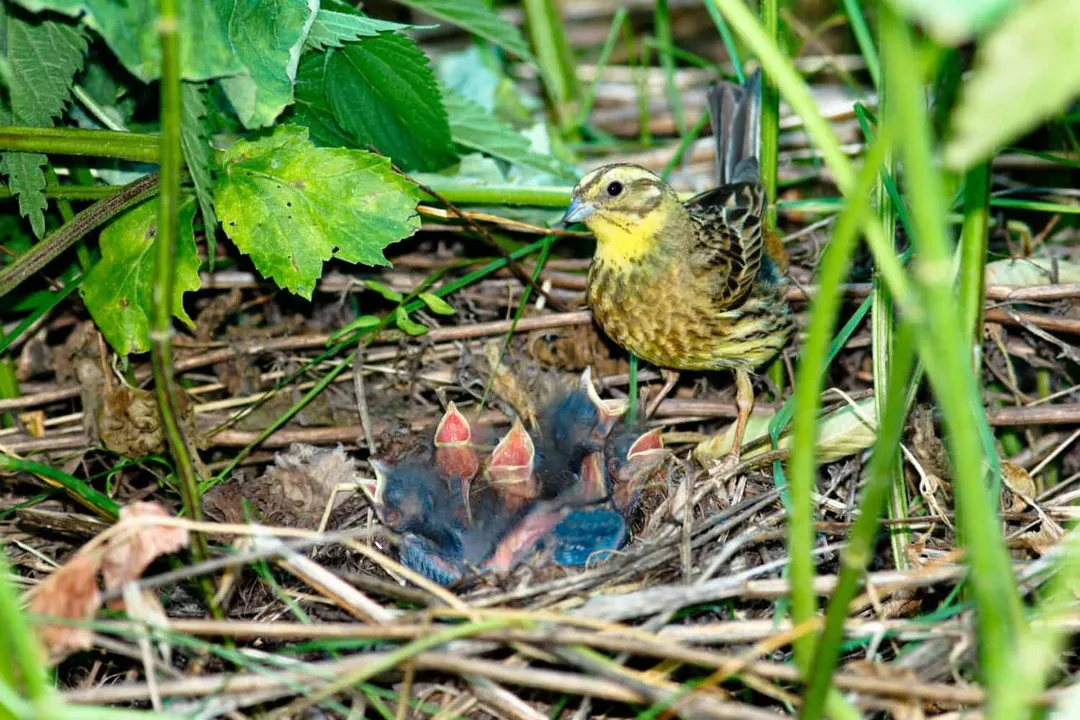
The concept of the species Emberiza citrinella is further refined by recognizing distinct geographical variants, or subspecies, that have adapted slightly to their local conditions across the Palearctic. [2] There are currently three generally recognized subspecies, each defined by subtle differences in plumage, size, and distribution. [2]
- E. c. citrinella: This is the nominate subspecies, the one first formally described by Linnaeus. [2] It occupies a broad area, covering southeast England and the majority of Europe, stretching eastward toward the northwestern edges of Russia and western Ukraine. [2]
- E. c. caliginosa: Found across Ireland, the Isle of Man, and Great Britain (with the exception of that southeastern corner assigned to the nominate form), this subspecies is subtly different. [2] On average, males tend to be slightly smaller and darker than E. c. citrinella, often displaying more streaking on the back and a slightly greener tint to the head's yellow coloration. [2] The disappearance of this specific race from the Isle of Man highlights the fragility even within populations considered widespread elsewhere. [2]
- E. c. erythrogenys: Representing the eastern populations, this form breeds from Russia and central Ukraine eastward into Siberia and northwestern Mongolia, also appearing in isolated pockets east of the Black Sea and in the Caucasus. [2] Males of this eastern subspecies are generally paler and less heavily streaked than the European nominate form. Their undertail and wing bars are usually whiter, and their crowns and throats present a brighter yellow hue. [2]
Distinguishing between females of these three subspecies is often impractical based on plumage alone, as the differences are minor and frequently overlap. [2] However, when comparing a female or juvenile E. c. erythrogenys to a Pine Bunting, the Yellowhammer typically retains a telltale yellow wash to its plumage and a rump that is a paler rufous shade. [2] This level of detail in subspecies identification shows how classification requires granular observation, extending from the broad order down to slight variations in feather pigment across continents. [2]
# Linking Taxonomy to Ecology
While the classification system is built on morphology and genetics, the Yellowhammer's placement within the Emberizidae family fundamentally relates to its ecological strategy, particularly its feeding behavior. As a member of the bunting group, it is strongly associated with a diet centered on seeds and grains, especially outside the breeding season. [6][7] In winter, they forage in flocks, favoring starchy items over oily seeds, with preference often given to cereals like wheat and oats. [2]
This heavy reliance on seeds dictates habitat selection—the open countryside, farmland mosaics, and hedgerows that provide both foraging ground and song posts. [5][7] It is worth considering that the specific morphology required for a seed-eating diet—the stout, conical bill mentioned by some observers—is a characteristic shared across much of the Emberizidae family, reinforcing why these species are grouped together under the genus Emberiza. [6] During the breeding season, however, their classification as generalist insectivores for their young reflects an adaptation to provisioning altricial chicks, requiring them to consume invertebrates like grasshoppers and caterpillars. [2][6]
The functional consequence of this classification is evident in their decline: modern, intensive agricultural practices that reduce seed availability (like efficient harvesting that leaves less stubble) and increase pesticide use (reducing insect prey) directly threaten the lifestyle dictated by their taxonomic niche. [1][6] The Yellowhammer’s classification as a ground nester—a behavior common across many members of the genus—also leaves its eggs and chicks vulnerable to small mammals and corvids, another ecological facet tied to its inherent structure. [2][7]
The cultural connection to the bird also ties back, poetically, to its classification and appearance. The Yellowhammer is known across its range by a multitude of names, many of which reference its color or its song, like the common mnemonic, "A little bit of bread and no cheese". [2][7] In contrast to the scientific Emberiza citrinella, which describes its genus and hue, these local names offer a direct, accessible description of the bird's presence in the human environment, like the old alternate name "scribble lark" referring to the intricate markings on its eggs. [2] While science seeks an objective, ordered placement, local common names often focus on the most immediate, sensory experience of the bird—its striking yellow appearance or its specific vocalization—offering a different, equally valid way to catalogue its existence. [7] Thus, understanding the Yellowhammer’s scientific classification provides the necessary foundation for appreciating not just what the bird is, but how its biology interacts with the specific environments where it has earned its place in the world. [5]
Related Questions
#Citations
Yellowhammer
Emberiza citrinella (Yellowhammer)
Yellowhammer - Emberiza citrinella
YELLOWHAMMER (Emberiza citrinella) - songbird factfile
Yellowhammer | TCV
Yellowhammer - Emberiza citrinella - Linnaeus, 1758
Yellowhammer Bird Facts - Emberiza citrinella
Yellowhammer