What defining feature separates the genus *Jynx* from the various genera of true woodpeckers?
Answer
The tail structure, specifically lacking the stiffening adaptation for vertical bracing
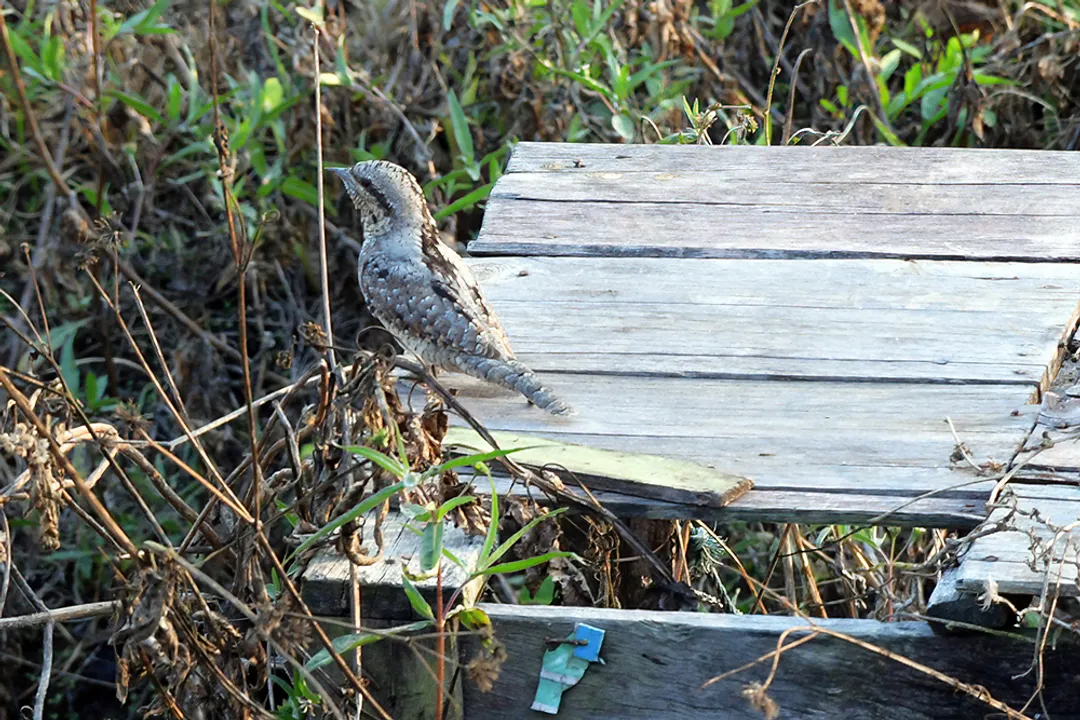
The classification into the genus *Jynx* is fundamentally based on morphological differences that reflect distinct behavioral niches within the broader woodpecker lineage. The most salient feature setting *Jynx* apart is the absence of specialized tail feathers that are stiff and pointed, which true woodpeckers use as essential props against vertical surfaces. Because wrynecks spend less time bracing vertically on bark—due to their preference for ground foraging and clinging horizontally to branches—they evolved away from this bracing necessity, resulting in softer tail feathers that lack rigidity.
Related Questions
To which Order are wrynecks assigned alongside toucans and barbets?What foot structure characterizes birds within the Order Piciformes, including the wryneck?What structural adaptation do true woodpeckers possess that the genus *Jynx* lacks, defining a key separation?Which subfamily specifically separates wrynecks from the Picinae within the family Picidae?What bizarre defensive behavior gives the species *Jynx torquilla* its common name, wryneck?How does the primary feeding ecology of the wryneck contrast with most specialized woodpeckers in the family Picidae?What defining feature separates the genus *Jynx* from the various genera of true woodpeckers?Across which continents is the migratory Eurasian Wryneck (*Jynx torquilla*) widely distributed?The wryneck belongs to the **Family** Picidae, which is commonly known by what designation?Which designation represents a recognized non-nominate subspecies of the Eurasian Wryneck?