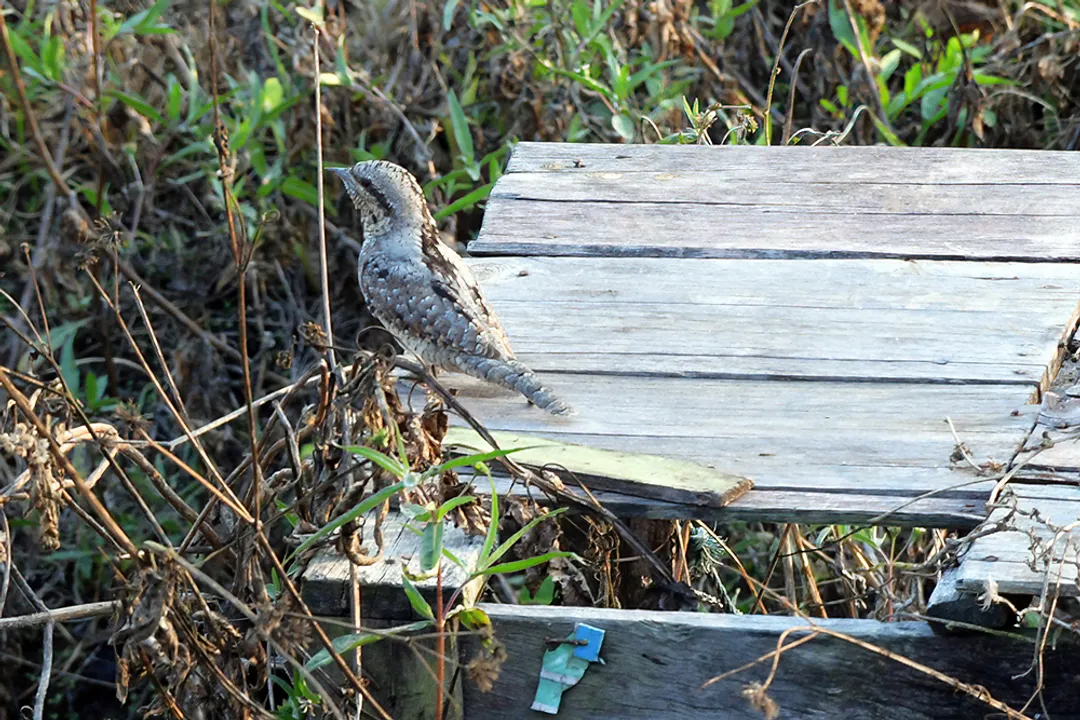
How does the primary feeding ecology of the wryneck contrast with most specialized woodpeckers in the family Picidae?
Wrynecks primarily subsist on ants and ground-dwelling insects probed from crevices or the ground
The feeding strategy of the wryneck represents a significant departure from the highly specialized excavation methods common among many members of the Picidae family. While typical woodpeckers adapt to hammer into hard wood to access deeply situated larvae, the wryneck primarily feeds on softer prey, specifically ants and other insects found on the ground or within shallow crevices. It achieves this by utilizing a specialized, sticky tongue that is adept at probing, functioning more like an anteater's tongue than a chiseling instrument for breaking through dense wood. This ecological difference is linked to the lack of evolutionary pressure for specialized tail support.