Wryneck Scientific Classification
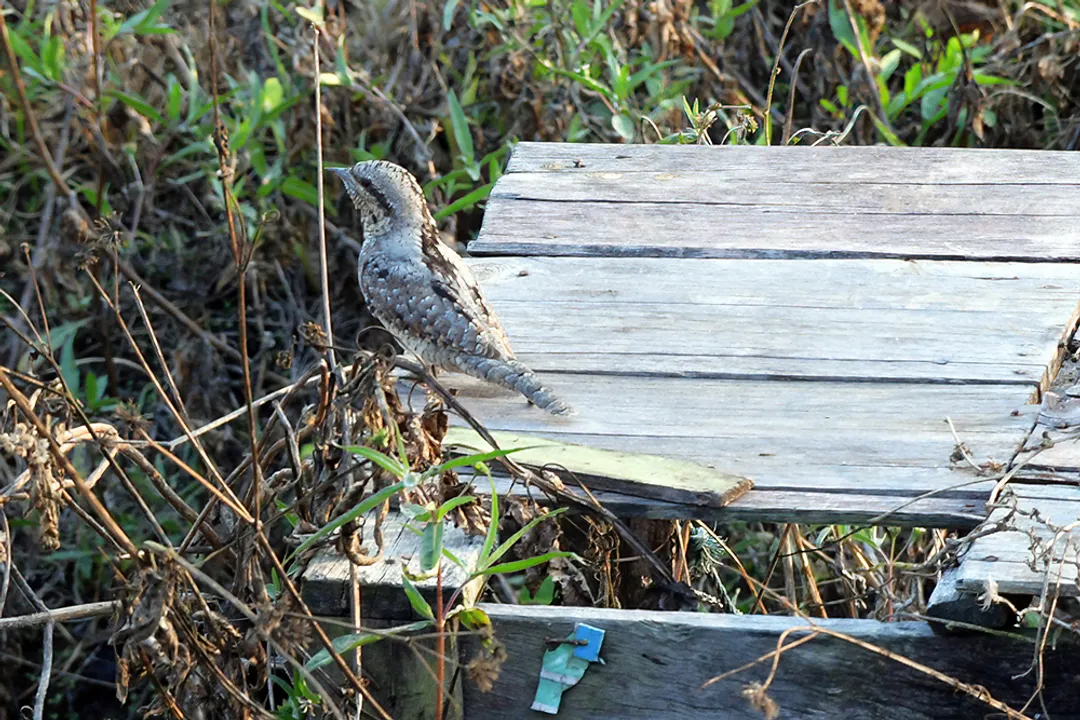
The classification of the wryneck reveals a fascinating position within the avian world, often causing initial confusion for those familiar only with the typical, loud, drumming woodpeckers. While these birds share many physical and evolutionary traits with that well-known group, the wryneck occupies a distinct niche defined by its scientific nomenclature, tracing its lineage from the broadest kingdom down to its specific species designation. [1][2]
The most common subject for scientific inquiry regarding this bird is the Eurasian Wryneck, scientifically cataloged as Jynx torquilla. [1][2][6] Understanding this classification requires moving systematically through the Linnaean hierarchy, which charts the evolutionary relationships and shared characteristics that bind this unique bird to others.
# Broad Groupings
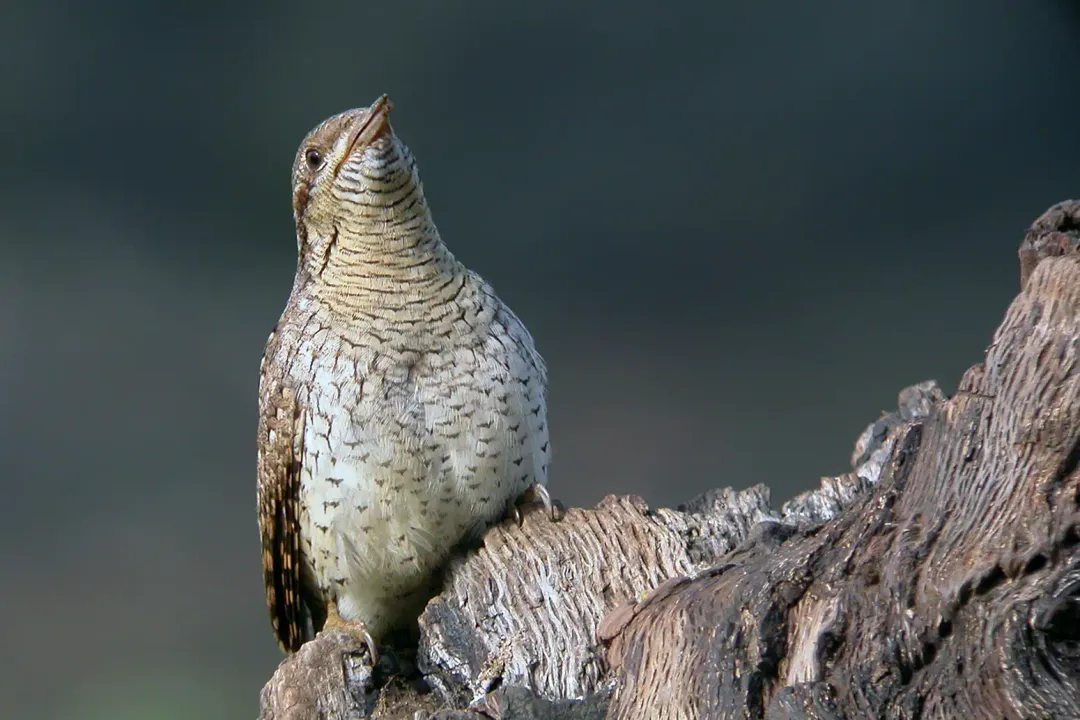
At the highest level, the wryneck fits comfortably within the familiar structure of life. It belongs to the Kingdom Animalia, meaning it is multicellular and heterotrophic. Moving down, it is placed in the Phylum Chordata, possessing a spinal cord, and further into the Class Aves, identifying it as a bird. [7] These foundational levels place it alongside nearly all other feathered creatures, offering little distinction among avian species themselves.
# Order Placement
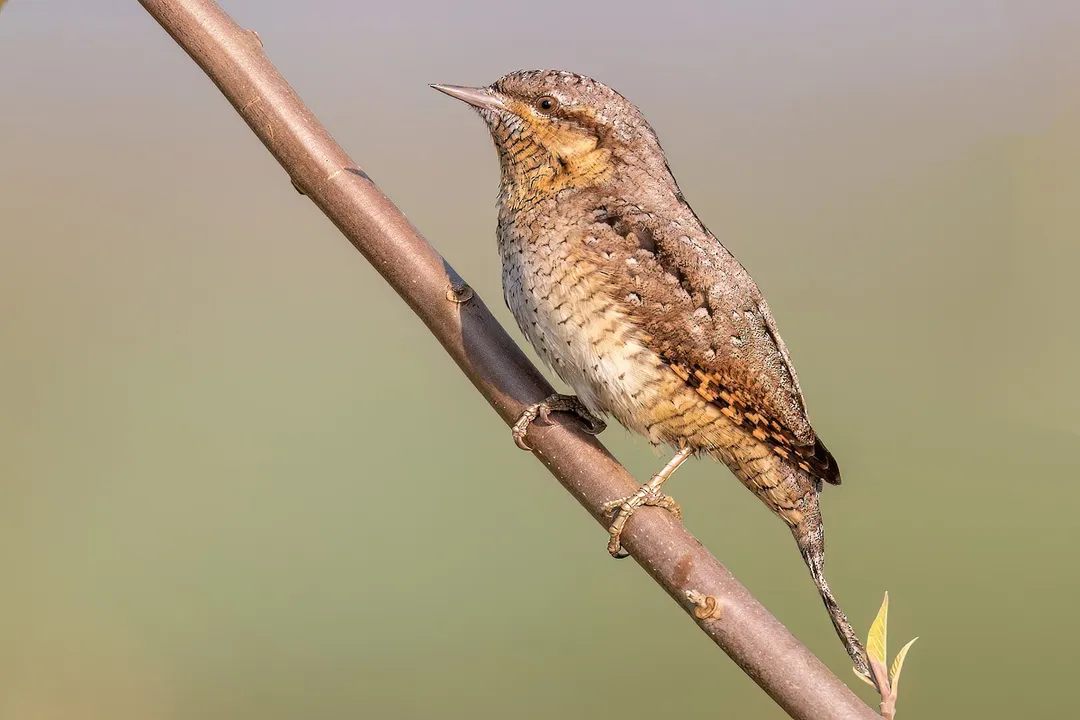
The first significant demarcation occurs at the Order level, where the wryneck is assigned to Piciformes. [2][6] This order is critical because it groups the wrynecks with the true woodpeckers, as well as toucans and barbets. [2] This association is not arbitrary; it is based on shared fundamental anatomical characteristics. A key feature cementing this placement is the foot structure. Birds in the Piciformes order typically exhibit zygodactyl feet, meaning they have two toes pointing forward and two toes pointing backward. [2][6] This arrangement is highly advantageous for gripping vertical surfaces, a characteristic shared by woodpeckers, even if the wryneck employs it differently than its drumming relatives. [2]
# Family Link
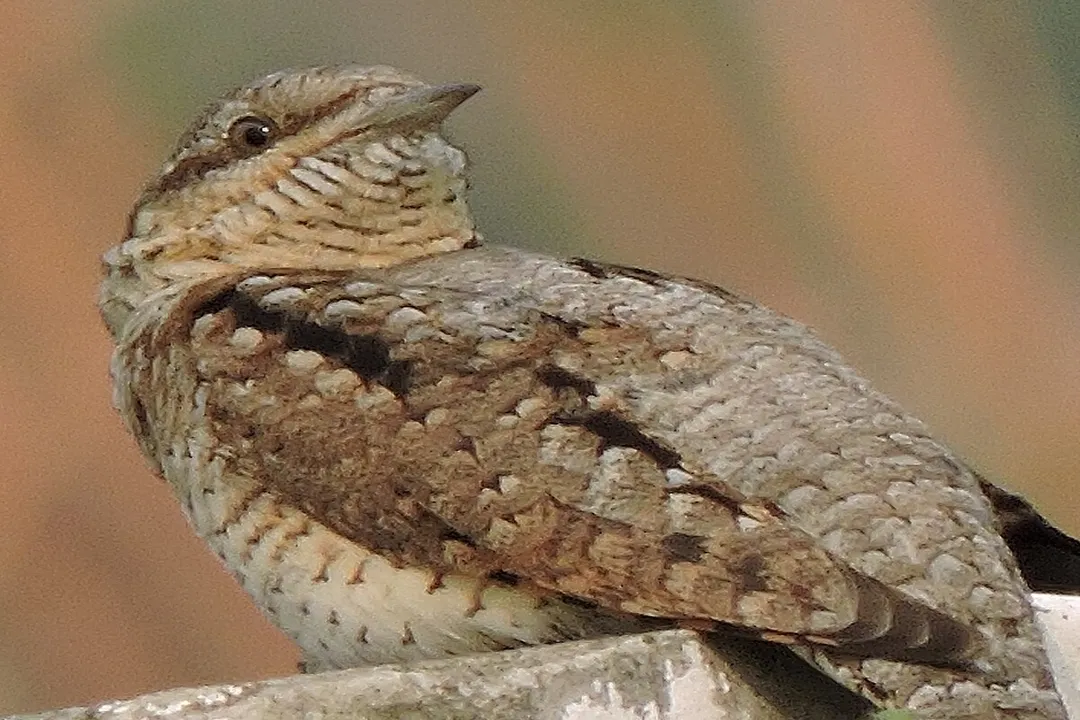
Within Piciformes, the wryneck is placed in the family Picidae. [2][6][7] This family is essentially the woodpecker family. However, the taxonomy here begins to reflect the wryneck's unique biology. While they are in the woodpecker family, they are not considered "true" woodpeckers in the strictest sense derived from later evolutionary divergences within the family. [2][7]
To account for these differences, modern taxonomy often separates the wrynecks into their own subfamily, Jynginae, placing them distinctly apart from the main woodpecker subfamilies, such as Picinae (true woodpeckers). [2] This internal separation within the family Picidae highlights that while they share ancestry, the wryneck lineage has specialized in a way that required formal recognition at a lower taxonomic rank. [2]
# Genus Definition
The genus level provides an even clearer separation: the wryneck belongs to the genus Jynx. [1][2] This genus contains only two recognized extant species: Jynx torquilla (the Eurasian Wryneck) and Jynx scutellaris (the African Wryneck). [1][2] The defining feature separating the Jynx genus from the various genera of true woodpeckers is the tail structure. [2]
True woodpeckers possess stiff, pointed tail feathers that they press against tree trunks to create a supportive prop while climbing and drumming. [2][6] The wryneck, conversely, lacks this stiffening adaptation. [2] Its tail feathers are relatively soft, which is indicative of a bird that spends less time bracing vertically on bark and more time foraging on the ground or clinging horizontally to branches. [2][6] This structural difference is an excellent example of how classification reflects functional specialization. While most Picidae rely on specialized tail support for their characteristic feeding method, the wryneck evolved away from that necessity. [2]
# Species Specifics
The specific species most frequently referenced, Jynx torquilla, is the Eurasian Wryneck. [1][4] This species is widely distributed across Europe and Asia. [4][6] It is noted for being a migratory species, contrasting with many resident woodpeckers found across similar ranges. [4]
Its common name, wryneck, is derived directly from its remarkable defensive behavior. When threatened, instead of fleeing or attacking like a typical woodpecker, Jynx torquilla will often fall to the ground near its nest or chicks and contort its neck in a bizarre, serpentine, hissing display, sometimes even secreting a foul-smelling fluid. [1][5] This "snake mimicry" is a behavioral adaptation unique enough to be tied directly to its specific species name, torquilla, which relates to twisting. [5]
# Subspecies Variation
Taxonomic work also accounts for regional variations within the species level, leading to recognized subspecies of the Eurasian Wryneck. [1] These subspecies often reflect geographical isolation and slight differences in plumage or size. [1] For instance, the nominate subspecies is Jynx torquilla torquilla, but others include J. t. sericeus and J. t. yunnanensis, among others, each tied to specific regions of its vast migratory range. [1] The existence of these accepted subspecies demonstrates the authority of ornithological bodies in tracking evolutionary divergence even within a single species designation. [1]
# Taxonomic Insights
When considering the scientific classification, one interesting point is how the wryneck’s feeding ecology mirrors more primitive avian traits rather than specialized woodpecker traits. While most woodpeckers are adapted for excavating hard wood to find larvae, the wryneck primarily subsists on ants and other ground-dwelling insects. [4][5] It uses its specialized, sticky tongue to probe into crevices or the ground, much like an anteater, rather than hammering into solid wood. [4]
This reliance on softer insect prey and ground foraging helps explain why the evolutionary pressure to develop stiff tail feathers—essential for maintaining position during heavy excavation—was absent or reduced in the Jynx lineage. It suggests that the wryneck represents an evolutionary path within Picidae that diverged before the full specialization for drumming and deep wood excavation took hold in other branches of the family. [2] Observing a wryneck foraging on a lawn, carefully probing with its tongue, offers a live demonstration of its classification distinction; it acts more like a specialized ground insectivore than a tree-pecking excavator.
Another way to view its classification is by contrasting its morphology with a close relative that does drum heavily, such as the Green Woodpecker (Picus viridis), which also often forages on the ground for ants. [6] Both birds share the Picidae family membership and zygodactyl feet, yet the wryneck’s lack of specialized tail bracing and its different nesting habits (often using existing holes rather than excavating new ones) necessitate its placement in the separate Jynx genus. [2] For field observers, this taxonomic difference is visually confirmed by how the bird moves on a vertical surface—the woodpecker is firmly braced, while the wryneck appears more precarious, often adopting a more horizontal posture clinging to a branch rather than a strictly vertical stance against a trunk. [2]
# Formal Classification Summary
To summarize the placement of the Eurasian Wryneck, a tabular view of its scientific hierarchy is helpful:
| Taxonomic Rank | Designation | Notes |
|---|---|---|
| Kingdom | Animalia | Multicellular, heterotrophic organism |
| Phylum | Chordata | Possesses a backbone |
| Class | Aves | Feathered, warm-blooded vertebrate |
| Order | Piciformes | Includes woodpeckers, toucans; characterized by zygodactyl feet [2][6] |
| Family | Picidae | The woodpecker family [2][7] |
| Subfamily | Jynginae | Separates wrynecks from true woodpeckers (Picinae) [2] |
| Genus | Jynx | Defined by lacking specialized stiff tail feathers [2] |
| Species | Jynx torquilla | The Eurasian Wryneck [1][4] |
This structured approach confirms that the wryneck is fundamentally a member of the woodpecker lineage, but its unique adaptations—particularly concerning its tail, foraging method, and serpentine defense—have secured its place in a distinct genus and subfamily within that larger family grouping. [2][6] Its classification is a testament to how taxonomy reflects both shared ancestry and subsequent evolutionary divergence based on ecological needs.
Related Questions
#Citations
Wryneck - Wikipedia
Eurasian Wryneck (Jynx torquilla) | U.S. Fish & Wildlife Service
Eurasian Wryneck - Jynx torquilla - Birds of the World
The Wryneck: Biology, Behaviour, Conservation and Symbolism of ...
Wryneck - NatureSpot
Wryneck | Woodpecker, Migration & Conservation - Britannica
Eurasian wryneck - Province - Diputación de Málaga
Eurasian Wryneck Scientific name: Jynx torquilla Higher ... - Facebook