Zebra Scientific Classification
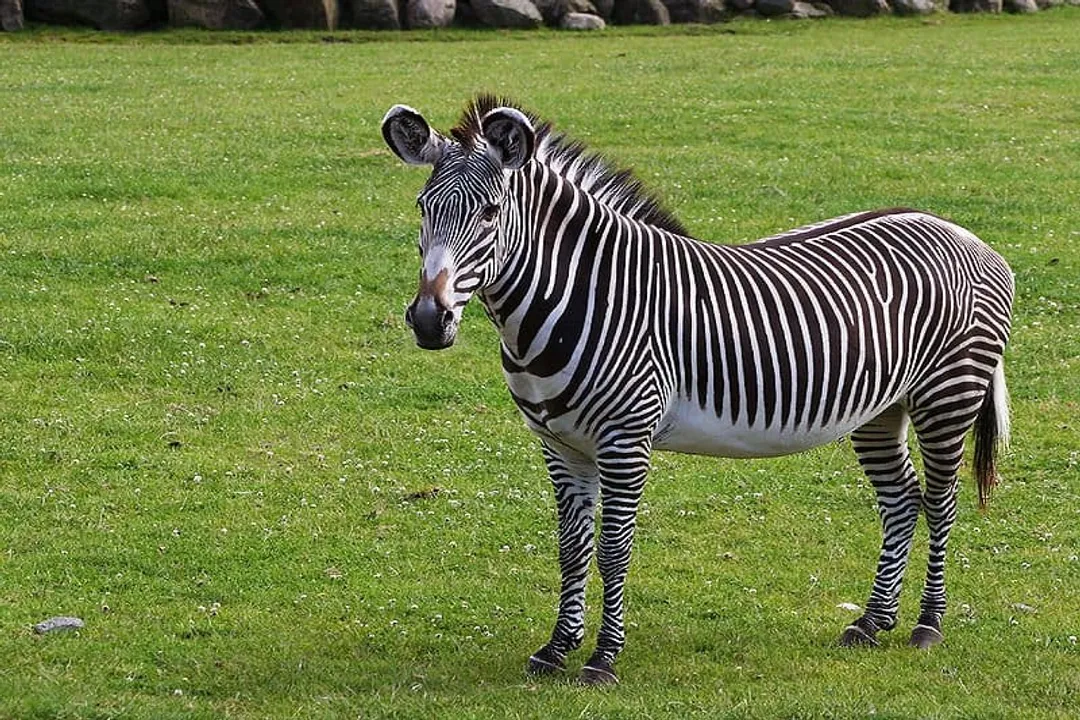
The striped equine, instantly recognizable across the savanna, holds a fascinating place within the animal kingdom, one defined by its unique position in the order Perissodactyla. [3] Understanding the zebra requires looking beyond its coat pattern and delving into its scientific pedigree, which firmly plants it within the family Equidae. [1][3][8] This places the zebra shoulder-to-shoulder, evolutionarily speaking, with horses and asses, all belonging to the genus Equus. [1][3] While all members share the fundamental characteristics of the genus—being odd-toed ungulates that are characterized by a single functional toe—the genus Equus itself showcases significant evolutionary divergence, which is clearly mapped out in the three recognized species of zebra. [3][8]
The scientific classification system, rooted in Linnaean principles, serves to organize the diversity within this genus. For zebras, this organization reveals a distinct split into three major groups, each adapted to different ecological niches across Africa. [1][8] These are the Plains zebra, the Grévy's zebra, and the Mountain zebra. [1][8] Though they share the common Equus name, the differences in their chromosomal counts, morphology, and behavior are significant enough to warrant species-level separation. [3]
# Equus Family Placement
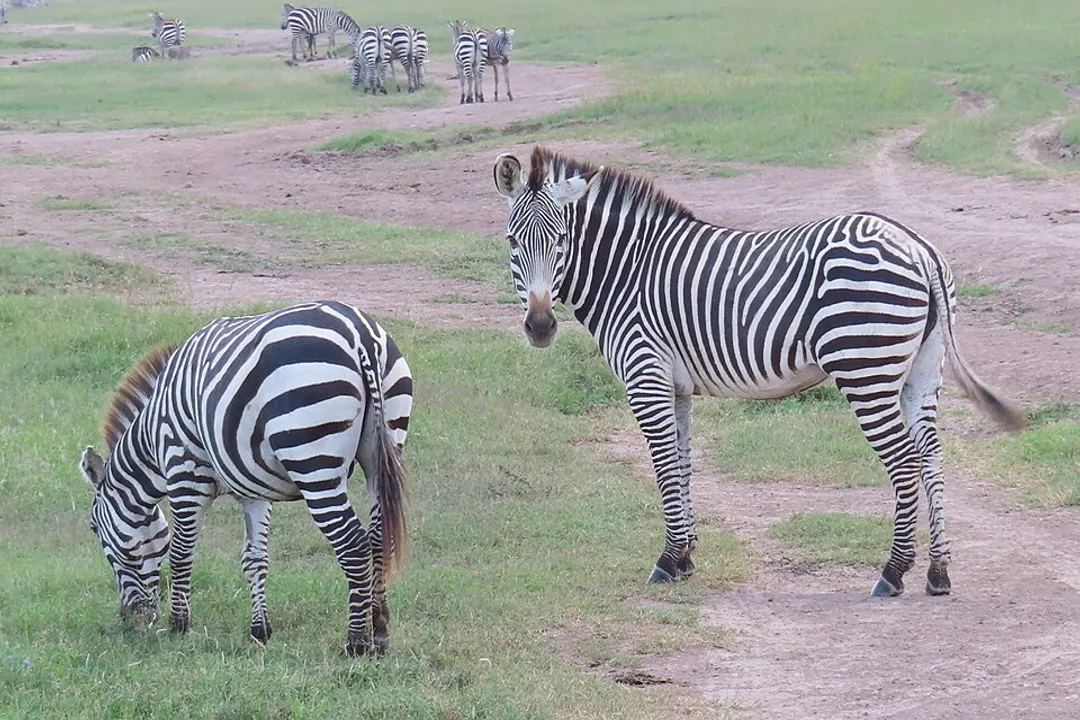
The deepest level of classification places the zebra under the class Mammalia, the order Perissodactyla, and the family Equidae. [3] This taxonomic placement is crucial because it tells us that the evolutionary split between the ancestors of the zebra and those leading to modern rhinos or tapirs happened long ago, though all share the odd-toed structure. [3] Within Equidae, the genus Equus is the sole surviving lineage, a testament to the evolutionary success of this group, which today includes various horses, donkeys, and zebras. [1][3] The zebra’s lineage, however, took a distinctly African path, differentiating it from the Eurasian origins of the domestic horse, Equus caballus. [1]
# Three Species
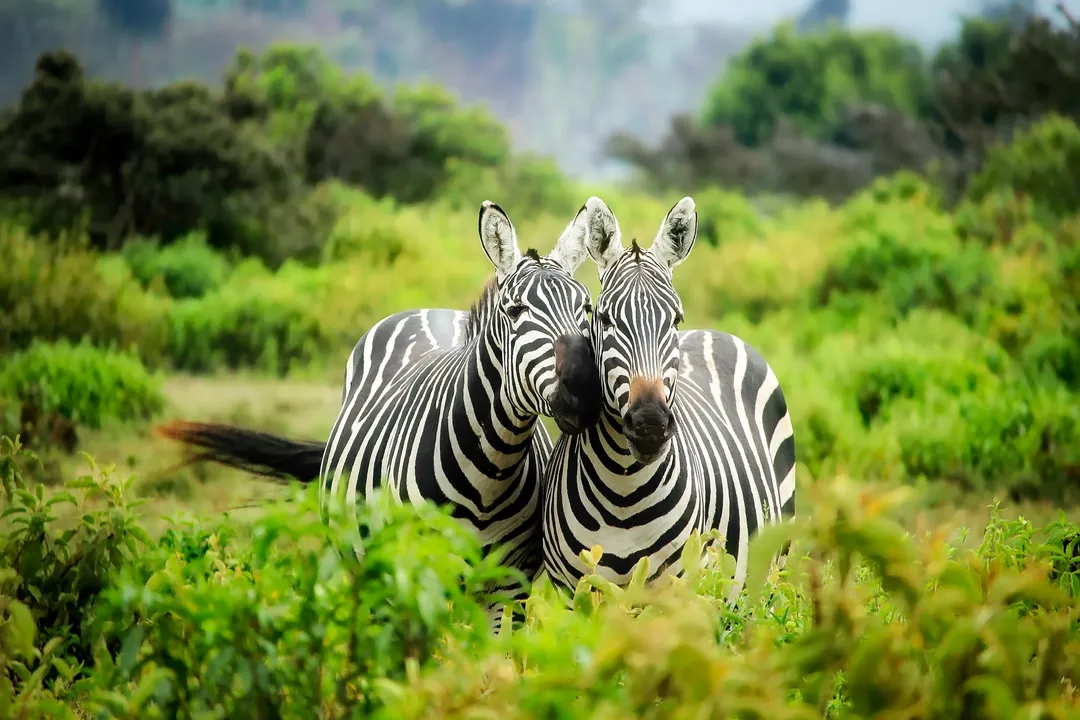
The current consensus recognizes three distinct species, each facing unique conservation challenges based on their relative abundance and habitat specialization. [1][8]
- Equus quagga (Plains Zebra): Historically the most numerous and widespread, often dominating the grasslands. [7]
- Equus grevyi (Grévy's Zebra): The largest of the species, typically found in drier, more arid regions of East Africa. [5]
- Equus zebra (Mountain Zebra): Distinguished by its habitat in the mountainous regions of southwestern Africa. [8]
It is worth noting that historical and regional taxonomic views sometimes differ slightly, particularly regarding the Plains zebra, which has sometimes been classified as Equus burchelli. [7] This fluidity highlights that classification is a living science, often refined as genetic data becomes more available. [3]
# Plains Zebra Taxonomy
The Plains zebra, Equus quagga, represents the baseline for zebra study due to its prevalence and adaptability. [7] Its taxonomy is complex because it contains several recognized subspecies, reflecting wide geographic distribution across eastern and southern Africa. [7] These subspecies exhibit variation primarily in the extent and pattern of their striping. [7] For instance, some northern populations have bold, widespread stripes, while others, like the southern subspecies, show fainter striping on the hindquarters, sometimes fading almost entirely to white on the lower legs and belly. [7]
The most compelling example of this variation is the now-extinct Quagga, which was once classified as a subspecies, Equus quagga quagga. [7] The Quagga possessed stripes only on its head, neck, and forequarters, with the rear half being plain brownish-white. [7] While scientists debate whether the Quagga represented a separate species or simply an extreme phenotypic expression of the Plains zebra subspecies, its extinction underscores how subtle variations within a species can be lost forever. [7] This historical case serves as a stark reminder of the fine lines scientists draw when defining subspecies versus distinct species.
# Grévy's Details
Grévy's zebra, Equus grevyi, is scientifically distinct enough to be placed in its own subgenus, Dolichohippus, separating it from the Equus and Hippotigris subgenera where the other two species reside. [10] This distinction emphasizes the deep evolutionary split within the zebras themselves. [3] Morphologically, E. grevyi is the largest zebra species, possessing proportionally very large, rounded ears that help dissipate heat in its arid environment. [5][10] Its stripes are narrow, closely spaced, and do not extend to the belly, which remains white. [5][10] Furthermore, unlike the Mountain zebra, the Grévy’s zebra lacks a dewlap. [5]
The ecological specialization of Grévy’s zebra, often preferring arid shrubland and grassland over lusher habitats, correlates with its classification as a separate species. [10] This adaptation results in a much smaller population size and a threatened conservation status compared to its Plains cousin. [10]
# Mountain Zebra Traits
The Mountain zebra, Equus zebra, is distinguished by its preference for steep, rocky terrain in South Africa and Namibia. [8] Taxonomically, it is sometimes treated as having two subspecies: the Cape Mountain Zebra (E. z. zebra) and Hartmann’s Mountain Zebra (E. z. hartmannae). [8] A key identification feature used in classification, beyond habitat, is the presence of a distinctive dewlap under the throat, which is absent in Grévy's zebra. [8] Additionally, the rump features a unique "gridiron" pattern of stripes where the horizontal stripes form a tight mesh before meeting the tail base. [8] This pattern is markedly different from the broad, less defined striping seen on the hindquarters of many Plains zebra populations. [8]
To provide a quick reference for readers tracking these differences, the following table summarizes some key morphological markers that underpin these distinct classifications:
| Feature | Plains Zebra (E. quagga) | Grévy's Zebra (E. grevyi) | Mountain Zebra (E. zebra) |
|---|---|---|---|
| Ear Size | Medium/Rounded | Very Large/Rounded | Medium/Upright |
| Belly Color | White or faintly striped | Distinctly White | White/Faintly Striped |
| Dewlap | Absent | Absent | Present |
| Rump Pattern | Variable; stripes may fade | Clear stripes to tail base | Distinct "Gridiron" pattern [8] |
This comparison clearly illustrates why placing these animals into separate species categories, rather than just treating them as regional variants, is scientifically necessary. [3]
# Stripe Patterns
While the genus Equus is defined by the horse-like body structure, the stripes are the most obvious characteristic setting zebras apart, and these patterns are themselves markers used in classification. [2][7] The stripes act like individual fingerprints; no two zebras have an identical pattern. [2] However, the nature of the striping—its width, coverage (i.e., does it reach the belly), and the presence or absence of faint "shadow stripes"—is consistent enough to help differentiate the species. [7][10] The stripe patterns directly reflect the evolutionary pressures and local camouflage needs of each species' habitat, tying ecological context directly into the formal scientific naming. [3]
When considering the genus Equus as a whole, it’s interesting to observe that the phenomenon of striping is a derived trait, meaning it evolved after the common ancestor of horses, asses, and zebras split off. [1] The scientific literature sometimes debates whether the stripes evolved primarily for camouflage against predators or for thermoregulation, or perhaps even to deter biting flies—a question that remains active in zoology and hints at the complexity underlying seemingly simple visual markers used in classification. [2][8] For the scientist classifying a specimen, however, the stripe pattern serves as a rapid, first-pass indicator before genetic sequencing confirms its species placement. [7]

# Classification Insights
The very act of classifying these three species highlights a common challenge in taxonomy: distinguishing where subspecies end and full species begin. Consider the Plains zebra again. If scientists chose to elevate the Quagga or other distinct subspecies to full species status based on morphology or historical separation, the total count of zebra species would rise above three. [7] This echoes debates seen in other widespread mammals where geographic isolation creates strongly defined local forms. The key differentiating factor for the three main zebra species, however, seems to be reproductive isolation coupled with significant genetic divergence within the Equus genus, which is why E. grevyi sits in its own subgenus while E. zebra and E. quagga remain closer in the Hippotigris group. [3][10] The ability to hybridize naturally—or the difficulty therein—often serves as a soft boundary line for species designation, even if genetic tests provide the definitive proof. [3]
Furthermore, from a practical conservation standpoint, understanding the precise classification is an actionable step. If a population is designated a subspecies, conservation funding and management strategies might differ vastly compared to managing a full species under the IUCN Red List criteria. [10] For instance, because the Grévy's zebra is critically endangered, its classification warrants intensive, species-specific protection programs focused on its fragile arid habitat, whereas the Plains zebra, though locally threatened in some areas, benefits from wider-ranging, general grassland protection efforts. [10] The precise name—the genus, species, and subspecies—directly dictates the legal and biological protection afforded to these magnificent animals. [1]
Related Questions
#Citations
Zebra - Wikipedia
Zebra Fact Sheet | Blog | Nature - PBS
Plains Zebra (Equus quagga) Fact Sheet: Taxonomy & History
Zebra - A-Z Animals
Grevy's Zebra Facts and Information | United Parks & Resorts
New investigations on the taxonomy of the zebras genus Equus ...
Equus zebra (mountain zebra) | INFORMATION - Animal Diversity Web
Horses and zebras | Research Starters - EBSCO