What constraint directly dictates that wood frog adults rely on small spiders and mites rather than larger prey?
Answer
The prey must be small enough to fit comfortably into the frog's mouth (gape).
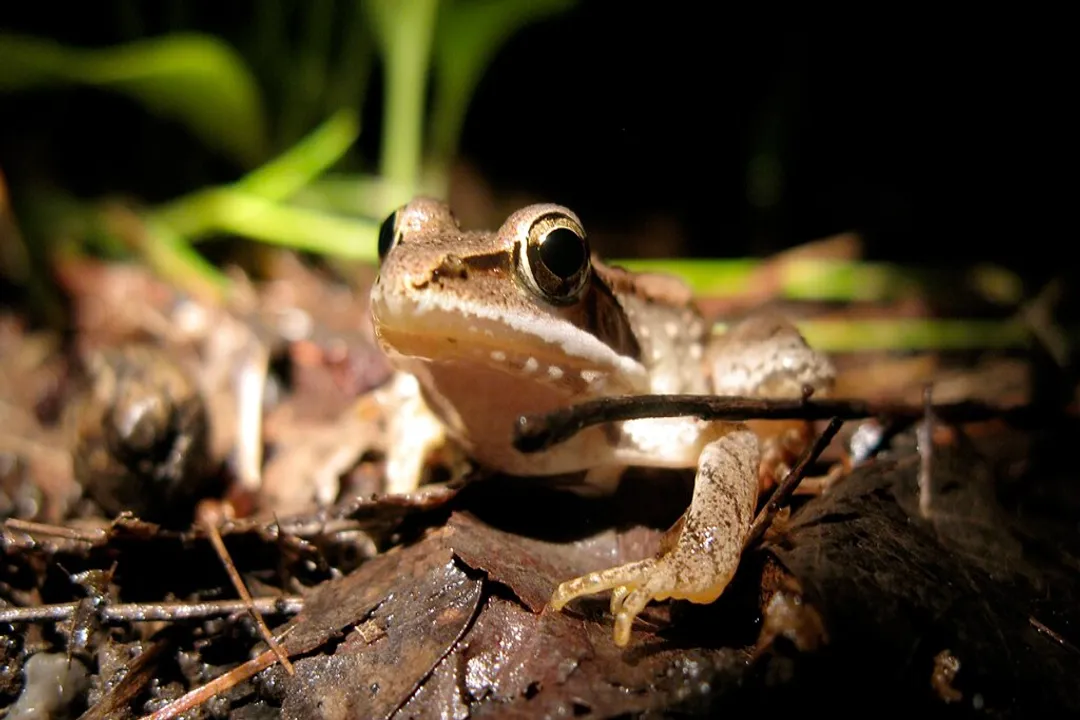
The physical anatomy of the wood frog, which is generally a small to medium-sized amphibian, imposes strict limitations on the size of the invertebrates it can successfully ingest. The size constraint is directly tied to the frog's gape, or the maximum opening capacity of its mouth. If a potential meal, such as a large beetle or a robust earthworm, exceeds this gape size, it cannot be consumed, reinforcing the reliance on smaller invertebrates like mites, springtails, and small spiders.
#Videos
Feeding Wood Frogs and an American Toad - YouTube
Related Questions
What is the primary sustenance for wood frog tadpoles emerging from gelatinous egg masses?How is the palate of the fully metamorphosed wood frog described regarding its post-hibernation feeding habits?What specific muscular organ is the wood frog's primary tool for securing prey via rapid projection?What key substances must the wood frog's digestive system rapidly retool to process after developing legs?What characteristic defines the wood frog's approach to finding food on the forest floor?Why is the wood frog's early spring emergence timing critical for its feeding success?What constraint directly dictates that wood frog adults rely on small spiders and mites rather than larger prey?What must wood frogs build up during the productive summer feeding season to ensure survival through the next winter?What type of local habitat condition might lead a researcher to find a higher proportion of ground beetles in a local wood frog diet profile?What characteristic of the wood frog's hunting method ensures energy efficiency?