What common vocalization often accompanies the raised white tail flag as a sign of alarm?
Answer
A sharp, loud snort.
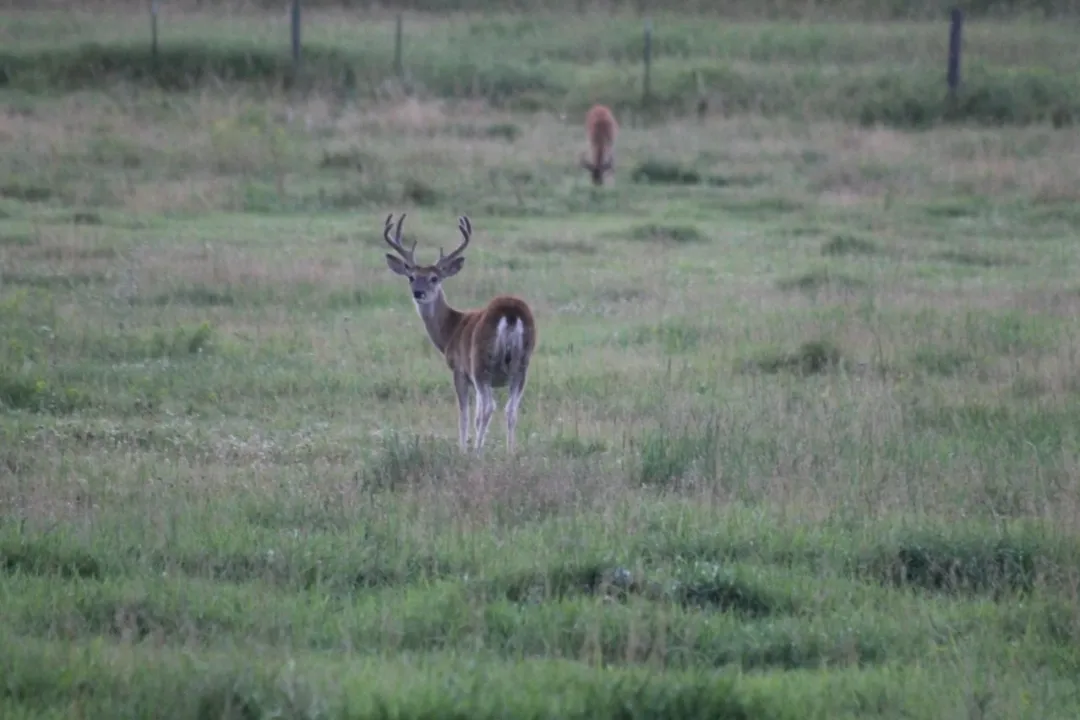
Communication among white-tailed deer relies on a combination of visual and auditory cues, especially when signaling danger. When alarm is detected, the highly visible action of flagging the white tail is frequently paired with a distinct vocalization. This warning sound is characterized as a sharp and loud snort. This auditory signal, combined with the visual flag, serves to immediately broadcast the alert throughout the immediate vicinity, prompting surrounding deer to become vigilant or initiate flight.
Related Questions
Where do white-tailed deer (*Odocoileus virginianus*) dominate ecosystems?What function does the white underside of the white-tailed deer's tail serve?What is the soft, fuzzy skin covering antlers during their spring growth phase called?How do white-tails move their legs when running for stability?What high-energy food source produced by oak trees sustains white-tailed deer through winter?Which sense is described as perhaps the most crucial for white-tailed deer survival and communication?Where are scent glands located that produce musk rubbed on vegetation to mark territory or signal reproductive status?Why are white-tailed deer fawns left hidden and alone for the first few weeks of life?What classification describes white-tailed deer based on their four-compartment stomach designed for fibrous plant matter?What localized ecological issue results from excessively dense suburban white-tail populations exceeding carrying capacities?What concept explains why Key deer are significantly smaller than their mainland white-tail cousins?What common vocalization often accompanies the raised white tail flag as a sign of alarm?