What classification describes white-tailed deer based on their four-compartment stomach designed for fibrous plant matter?
Answer
Ruminants and browsers.
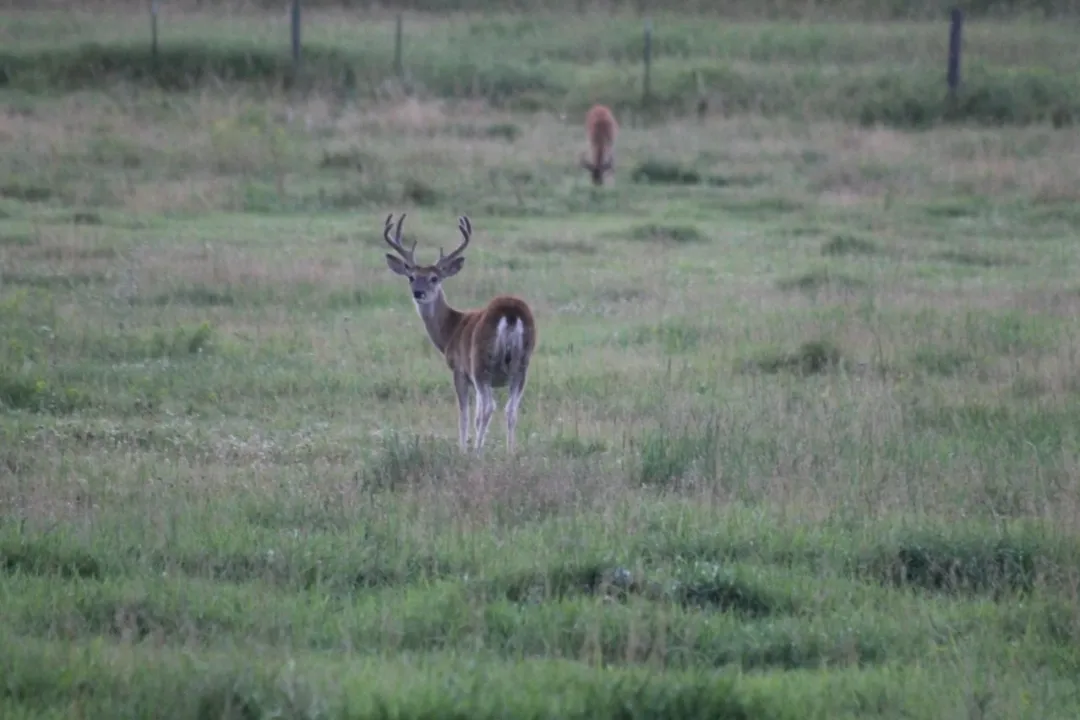
White-tailed deer are scientifically classified based on their specialized digestive anatomy and feeding style. They are identified as ruminants, meaning they possess a four-compartment stomach. This complex digestive system is essential because it allows for microbial fermentation to occur, enabling them to efficiently process tough, fibrous plant matter like cellulose found in woody stems, which many other herbivores cannot break down effectively. Furthermore, they are classified as browsers, indicating their primary feeding strategy involves consuming leaves, twigs, and buds from woody plants, especially when compared to strict grazers whose diet is dominated by grasses.
Related Questions
Where do white-tailed deer (*Odocoileus virginianus*) dominate ecosystems?What function does the white underside of the white-tailed deer's tail serve?What is the soft, fuzzy skin covering antlers during their spring growth phase called?How do white-tails move their legs when running for stability?What high-energy food source produced by oak trees sustains white-tailed deer through winter?Which sense is described as perhaps the most crucial for white-tailed deer survival and communication?Where are scent glands located that produce musk rubbed on vegetation to mark territory or signal reproductive status?Why are white-tailed deer fawns left hidden and alone for the first few weeks of life?What classification describes white-tailed deer based on their four-compartment stomach designed for fibrous plant matter?What localized ecological issue results from excessively dense suburban white-tail populations exceeding carrying capacities?What concept explains why Key deer are significantly smaller than their mainland white-tail cousins?What common vocalization often accompanies the raised white tail flag as a sign of alarm?