What combination of visual traits suggests adaptation for effective daylight vision in the *Naja nigricincta*?
Answer
Can see color and have round pupils
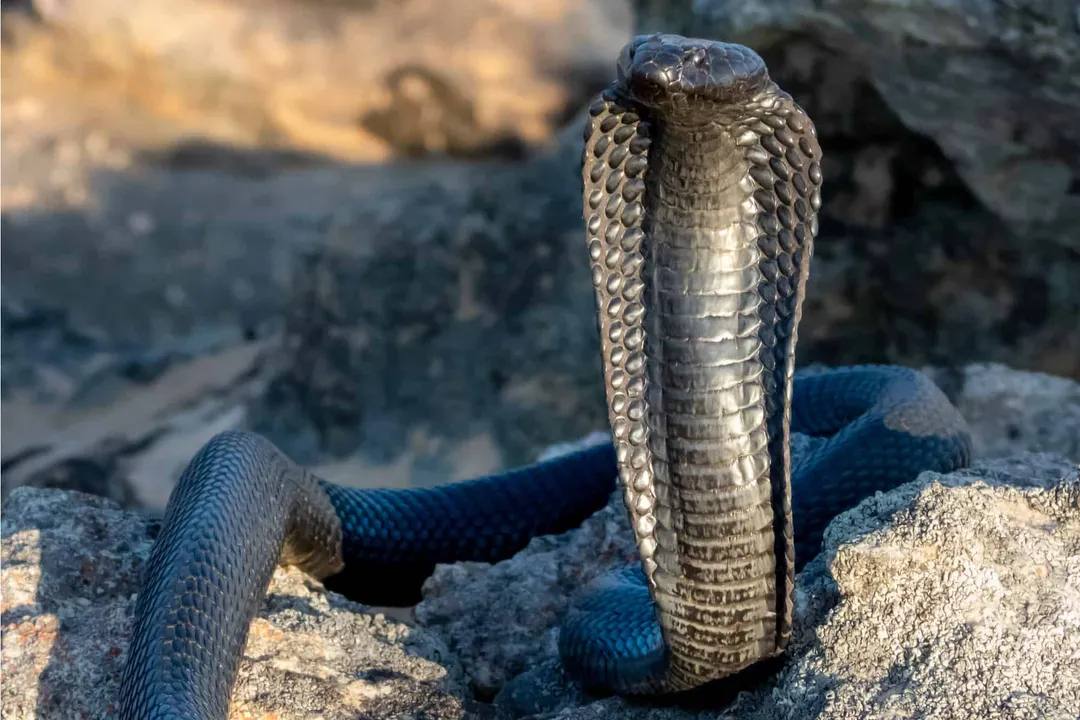
Despite being primarily nocturnal hunters, the physical characteristics of the *Naja nigricincta*'s eyes—the ability to see color and the presence of round pupils—suggest underlying adaptations for effective vision during brighter periods. Round pupils are typically associated with diurnal or crepuscular activity rather than the highly restricted vision found in strictly nocturnal animals with vertical slit pupils. These visual capabilities may be utilized during twilight hours or for tasks such as identifying potential mates, even if the bulk of hunting occurs after sunset.
Related Questions
What type of venom does the highly dangerous *Naja nigricincta* possess?What is the primary hunting activity period for the *Naja nigricincta*?How far can the Western Barred Spitting Cobra defensively spit venom?Which invertebrate class is specifically indicated as part of the flexible *Naja nigricincta* diet?What is the typical length range for an average adult Zebra Cobra?Besides terrestrial hunting, what specific locomotion skills allow the *Naja nigricincta* to forage beyond the ground layer?Which specific type of mammal is explicitly listed as a significant component of the *Naja nigricincta*'s diet?What combination of visual traits suggests adaptation for effective daylight vision in the *Naja nigricincta*?What primary ecological service does the *Naja nigricincta*'s wide-ranging diet provide to its environment?How does the Zebra Cobra typically subdue prey compared to engaging defensive threats?