Vine Snake Diet
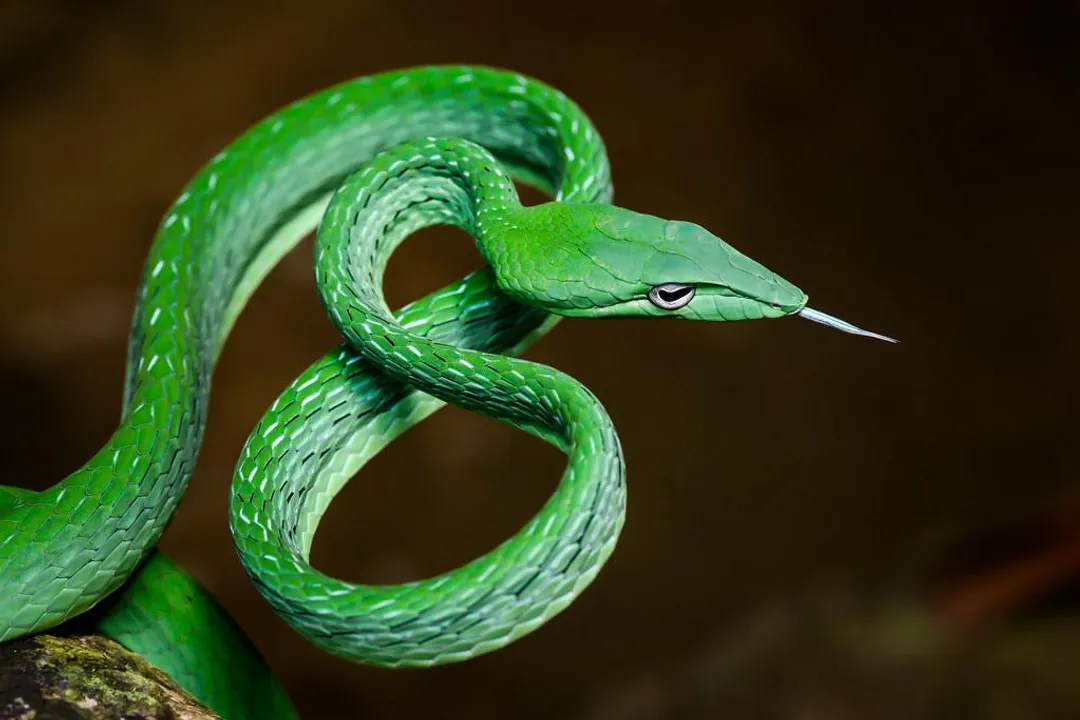
The feeding habits of the Vine Snake are perhaps one of the most critical, and often challenging, aspects of their care, especially for those kept as pets. These snakes, which include species like the Asian Vine Snake (Ahaetulla prasina), are highly specialized predators whose diet in the wild dictates what they will readily accept in captivity. [3] Unlike many common pet snakes that adapt well to readily available rodents, vine snakes demonstrate a strong preference for specific types of live vertebrate prey. [3]
# Wild Diet Composition
In their native habitats across South and Southeast Asia, vine snakes are opportunistic, arboreal carnivores. [3] Their diet is naturally skewed towards moving, slender prey found within the foliage of trees and bushes. The primary components of their wild diet consist of lizards, small frogs, and occasionally small birds. [3]
One account notes that in the wild, the diet is composed of small birds, frogs, and lizards. [2] This specialization in hunting agile, non-rodent prey is key to understanding their captive needs. Their classification as specialized predators means they often employ an ambush strategy, sitting perfectly still until prey wanders close enough to strike with lightning speed.
While the sources provided here focus primarily on the Asian Vine Snake (Ahaetulla prasina), the general description for the African species, sometimes called the Twig or Vine Snake, also suggests a diet heavy in lizards and frogs, though specific regional differences certainly exist. The focus for captive care often centers on the Asian species popular in the pet trade. [3]
# Captive Feeding Requirements
For keepers, the paramount concern is replicating the nutritional profile and behavioral stimulation of this natural diet. Vine snakes have an unusually fast metabolism, which means they require more frequent feeding than many other snakes. [3]
# Preferred Prey Items
The consensus among keepers and care sheets is that lizards form the core of the captive diet. [3]
Specific suitable prey items include:
- Green/Brown Anoles: Frequently cited as a preferred, excellent food source. [2] Some snakes seem to actively prefer these. [2]
- House Geckos: Another commonly recommended lizard feeder. [3]
- Feeder Frogs: Small frogs are also acceptable. [3]
- Button Quail: Small birds, such as button quail, can be offered. [3]
In terms of frequency, offering food two to three times per week is often recommended due to their high metabolic rate. [3] Prey size should correspond to the snake's widest point, or slightly smaller. [3]
# Non-Preferred and Potential Foods
It is important to note what these specialized snakes often reject. While some general lists might include insects or rodents for other snake species, vine snakes typically refuse them or turn their nose up at them. [2][3]
- Rodents: Many vine snakes do not do well on rodent prey. [3] Some keepers have reported that snakes refused frozen pinkies, live pinkies, and even specialized manufactured prey like Reptilinks. [2] Success with rodents is highly variable and dependent on the individual snake.
- Insects: Crickets might be occasionally offered as a treat, but they are not a staple. [3]
- Other Items: Toads and scented pinkies have also been reportedly refused. [2]
The difficulty in keeping these snakes often comes from the necessity of sourcing appropriate, consistent live lizard prey. [3][4] If a snake is stressed or newly imported, it may go extended periods, sometimes weeks, refusing various food offerings until the preferred item is presented. [2]
# Prey Preparation and Supplementation
When captive prey items are offered, keepers must consider how the food is presented and supplemented to ensure complete nutrition.
# Live versus Prepared Food
Although live prey can be offered, using frozen/thawed prey is often recommended as the safest and most humane option when appropriate prey items are available in that format. [3] If live food is used, it must be offered carefully, often left to roam in the enclosure so the snake can hunt at its leisure.
If frozen prey is used, it must be properly prepared:
- Thaw the prey item in a BPA-free plastic bag submerged in warm water. [3]
- The target temperature for offering should be around room temperature, or approximately 100°F. [3]
- Offer the meal using soft-tipped feeding tweezers. [3]
An interesting point arises with manufactured prey substitutes like Reptilinks. While some keepers might attempt these to avoid live feeding, one experienced owner noted their snake flatly refused them, suggesting that hognose snakes might have a better rate of acceptance for those products. [2]
# Essential Supplementation
While a snake primarily eating whole lizards might survive without added supplements, doing so risks nutritional deficiencies over the long term. [3] For optimal health, dusting the offered prey is recommended, particularly when offering items like insects or fish fillets (which are only occasional treats). [3] The specific recommendation provided is to lightly dust the prey item with a product like Repashy Calcium Plus LoD. [3]
Considering the fast metabolism and high activity level of these arboreal snakes, maintaining a consistent schedule of appropriate, dusted prey seems to be an area where keepers must dedicate significant time, potentially requiring them to maintain their own colony of feeder lizards to ensure supply. [2]
# Water Access Considerations
Vine Snakes are strictly arboreal and spend the vast majority of their lives off the ground. [3][4] This behavior directly impacts how water should be provided. Placing a standard water bowl on the floor of the enclosure is generally not ideal, as the snake may rarely descend to use it.
The best practice involves providing water via an elevated platform. [3] Large gecko feeding ledges are often suggested for this purpose. [3] Keepers must ensure this elevated water source remains clean, free of debris, and scrubbed weekly with a reptile-safe disinfectant. [3]
# A Keeper's Consideration: The Prey Diversity Gap
For the dedicated keeper aiming for the longest possible lifespan—which can reach up to 20 years with good care [3]—replicating the full spectrum of a wild diet presents a practical hurdle. In nature, the diet may include a broader variety of prey than what is easily sourced commercially. While we can supply anoles and geckos, ensuring a regular supply of varied sizes and types of lizards or small birds, especially for a snake with a high feeding frequency (2-3 times weekly), is a significant logistical commitment. [2][3]
One useful strategy for maintaining a healthy, captive-bred snake is to establish a feeder colony yourself, such as brown (Bahaman) anoles, which allows the keeper to control supply and ensures the food is appropriately sized and never exposed to potential external contaminants that wild-caught prey might carry. [2] This self-sufficiency, though time-intensive, directly addresses the main failure point in keeping this species: inconsistent access to preferred, nutritious food. [2][3] While the snake may judge human attempts to substitute food items, providing a stable environment with the right thermal gradient and humidity will increase the chances of acceptance when the correct prey is finally offered. [2][3]
# African vs. Asian Species Feeding Notes
It is worth briefly noting that while the care information heavily leans toward the Asian species (Ahaetulla prasina), if one encounters an African species like the Thelotornis capensis (African Twig or Vine Snake), its specific needs may vary, although the general principle of favoring lizards and frogs over rodents remains common among many snakes in this morphological group. Any keeper dealing with a species other than the commonly imported Asian Vine Snake must consult region-specific ecological data to ensure their dietary assumptions are correct.
# Prey Size and Metabolic Impact
The slender build of the vine snake, despite its potential length of 5 feet or more, means its prey item is typically quite small relative to the snake's overall mass, though the width is the critical measurement. [2][3] The rapid strike combined with the need for high-frequency feeding suggests a high surface-area-to-volume ratio in their typical prey, leading to quicker digestion and nutrient absorption compared to bulkier prey items. This explains why they might prefer several smaller lizards over one larger, slower-digesting item, which an owner might try to substitute to reduce feeding frequency. [3] For instance, if a keeper is only able to feed once per week due to supply issues, they might need to select prey items that are slightly larger than usual but still within the snake's accepted prey profile to compensate for the missed feedings, though this should be approached cautiously to avoid regurgitation. [2]
# Acceptable Prey Size Comparison
To help visualize prey sizing for an owner, consider the following general guide based on width, assuming the snake is healthy and established:
| Snake Width (Approx.) | Recommended Prey Width | Example Prey Type |
|---|---|---|
| Finger thickness | Slightly smaller than the snake | Small Anole/House Gecko |
| Pencil thickness | Same width as the snake | Medium Anole |
| Marker thickness | Slightly smaller than the snake | Small Feeder Frog |
This is a simplified adaptation, as the sources stress matching the prey width to the snake's widest point. [3] When feeding juveniles or newly imported, stressed individuals, one should err on the side of offering prey smaller than the snake's body width to encourage initial feeding success. [3]
Related Questions
#Citations
Vine Snake Care Sheet | Expert Guide for Healthy, Happy Snakes
Asian Vine Snake Care? - Reddit
How to Care for Your Vine Snake - Reptile Supply
Asian Vine Snake - Reptiles Magazine