What chemical process allows the bacteria on the Yeti Crab's setae to produce organic matter in darkness?
Answer
Chemosynthesis
Since the Yeti Crab lives in perpetual darkness miles beneath the waves, its food source cannot rely on sunlight. The bacteria that coat the crab's setae employ chemosynthesis, a primary production method unique to deep-sea ecosystems near vents. This process involves harnessing the energy stored within inorganic chemicals erupting from the Earth's interior. By oxidizing these chemicals, primarily hydrogen sulfide, the microbes convert them into the necessary organic matter that forms the base of the crab's diet, effectively replacing phytoplankton in this lightless environment.
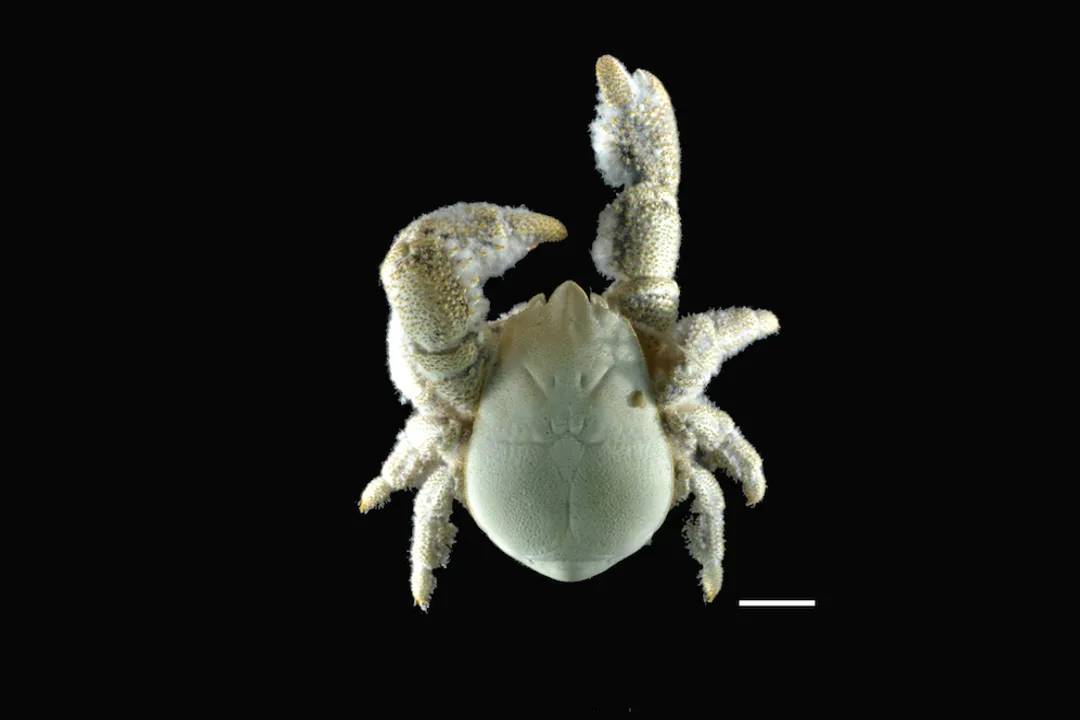
#Videos
Yeti crab eating bacteria from its claws - YouTube
Related Questions
What genus scientifically classifies the Yeti Crab, a creature thriving miles beneath the waves?What characterizes the physical conditions inhabited by *Kiwa tyleri* near the East Pacific Rise?What specialized physical structures on the Yeti Crab's arms support its actual food source?What chemical process allows the bacteria on the Yeti Crab's setae to produce organic matter in darkness?Which specific inorganic chemical is cited as the main fuel for the chemosynthetic workforce of the Yeti Crab?What symbiotic classification describes the relationship where the Yeti Crab absolutely needs the bacteria to survive?What primary energy source does the Yeti Crab's existence demonstrate a complete decoupling from?How does the Yeti Crab actively harvest the bacterial mats growing on its own appendages?What visual feature gives the Yeti Crab its evocative common name?What evidence suggests the Yeti Crab's diet is highly self-sufficient and loop-based?