What characteristic feature allowed *Wiwaxia* to crawl across the soft Cambrian seabed sediments?
Answer
A soft, muscular foot or ventral surface, perhaps grooved.
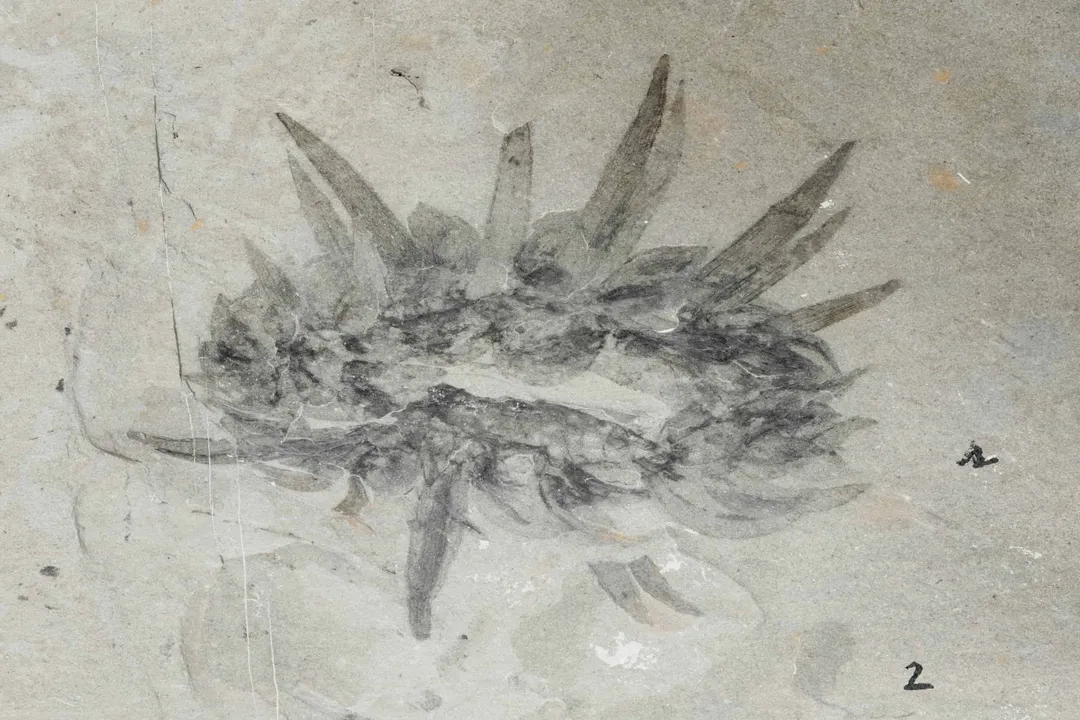
Although the dorsal surface of *Wiwaxia* was heavily armored with sclerites and spines, the underside presented a stark contrast. Evidence indicates that *Wiwaxia* possessed a soft, muscular structure on its ventral side, possibly featuring grooves. This feature functioned as a foot, enabling the organism to move across the soft, fine sediments that constituted the Cambrian seafloor. This morphology supports its identification as a low-profile benthic organism that spent its life in direct contact with the substrate, contrasting sharply with the defensive structures on its back which were primarily for protection against predators.
#Videos
the evolution of wiwaxia
Related Questions
What protected the dorsal side of *Wiwaxia corrugata* against early predators?Where does *Wiwaxia* sit phylogenetically within the Lophotrochozoa superphylum?During which geological period did *Wiwaxia* first appear, appearing approximately 508 million years ago?What characteristic feature allowed *Wiwaxia* to crawl across the soft Cambrian seabed sediments?What ecological role best describes the feeding strategy employed by *Wiwaxia*?What primary functions were hypothesized for the two prominent, anterior tentacles of *Wiwaxia*?How did *Wiwaxia*'s armor structure differ fundamentally from typical mollusks?Where are the famous, exceptionally detailed *Wiwaxia* fossils predominantly discovered?What major historical biological event does the study of *Wiwaxia* illuminate regarding animal body plans?How did *Wiwaxia*'s dermal armor contrast with the exoskeleton strategy of the arthropod *Sidneyia*?