Wiwaxia Evolution
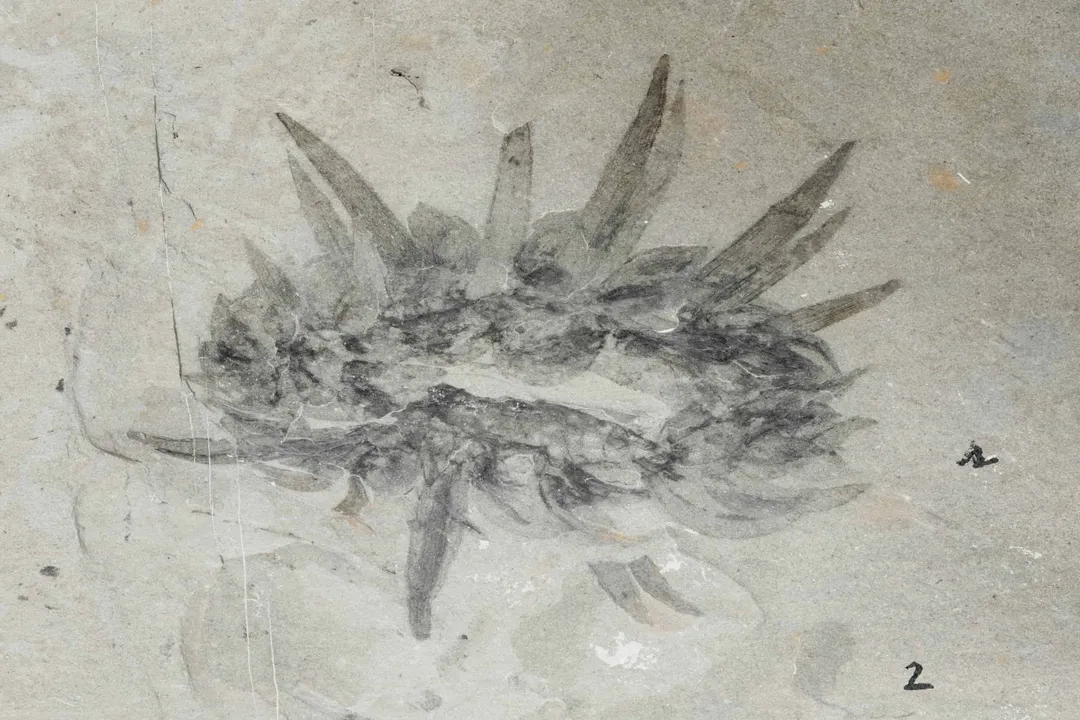
The discovery of Wiwaxia among the famous Burgess Shale fossils immediately presented paleontologists with a riddle wrapped in sclerites. This small, worm-like creature, reaching perhaps only 5 centimeters in length, was unlike anything known before or since its appearance in the Middle Cambrian period, roughly 508 million years ago. [1][5] It scurried across the ancient seafloor, possessing a bizarre array of protective structures that defy easy categorization into modern animal groups. [3][8] Understanding Wiwaxia is less about tracing a direct lineage and more about mapping the evolutionary experimentation that characterized the Cambrian explosion—a time when animal body plans were being rapidly tested and refined. [5]
# Appearance Details
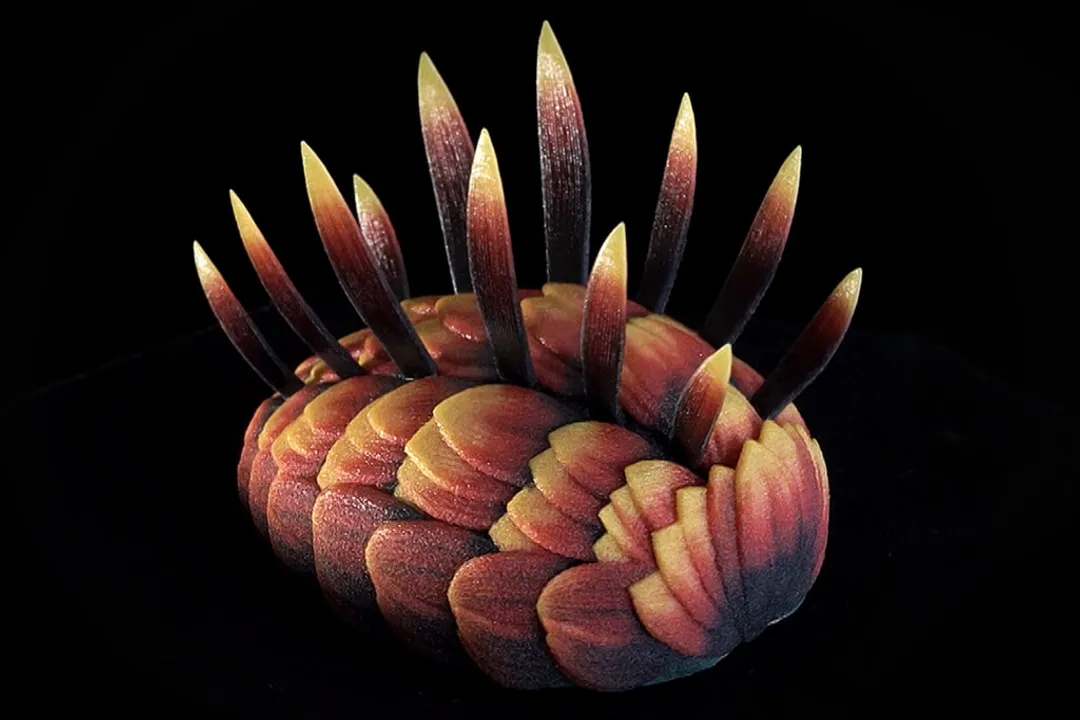
The most striking aspect of Wiwaxia corrugata is its protective covering, which sets it apart from most contemporaneous fauna. [5][7] The creature’s back was studded with numerous blade-like scales or sclerites, which often overlap. [1][5] These sclerites are interpreted as belonging to the animal’s integument, forming a flexible, shingled armor that likely offered defense against early predators. [3] Interspersed among these scales, particularly along the midline of the back, were larger, more prominent, cone-shaped spines. [1][5][8] These spines projected upward, giving the animal a bristly, almost hedgehog-like profile when viewed from above. [4][8]
While the dorsal side was heavily armored, the underside appears to have been quite different. Evidence suggests a soft, muscular foot or ventral surface, perhaps grooved, which allowed it to crawl across the soft sediments of the Cambrian seabed. [5][7] This dual nature—a heavily protected top and a soft, mobile base—bears a superficial resemblance to certain groups like modern slugs or snails, though the armor itself is distinctly non-molluscan in structure. [8] The overall shape suggests a low-profile benthic organism, spending its life interacting directly with the substrate. [4]
# Armor Composition
The precise nature of the scales and spines is key to understanding its biology. The scale-like sclerites are sometimes described as being arranged in rows or forming a mosaic pattern. [1][7] Some researchers suggest these structures might be homologous to elements found in modern brachiopods or mollusks, though this remains highly debated. [3] What is clear is the sheer density and organization of this external plating in Wiwaxia. Imagine an invertebrate not possessing a single hard shell like a clam, but instead being clad in hundreds of individual, articulating pieces of armor that can shift as the animal moved. This specific biological architecture, relying on numerous small, dermal ossifications rather than one large protective carapace, represents a unique evolutionary solution for defense in the early Phanerozoic. [5]
# Tentacles Function
Above the array of scales, Wiwaxia possessed two prominent, perhaps crown-like structures near the anterior end. [1][5] These are generally identified as pairs of tentacles, projecting forward from the animal’s head region. [8] Although the exact function is debated, in creatures with a ventral mouth, tentacles often serve a sensory or feeding purpose, sweeping the substrate for edible material. [3] Given the presumed diet of detritus or algae scraped from the seafloor, these tentacles might have helped direct food toward the mouth, which would have been located on the underside of the animal. [4][6] The presence of such specialized appendages further complicates its placement, as different modern phyla utilize tentacles for sensory reception, locomotion, or filter-feeding in varied ways. [7]

# Feeding Strategy
When considering its evolution, understanding what it ate helps situate it ecologically. Evidence points toward Wiwaxia being a grazer or detritivore. [4][6] It likely moved slowly across the seabed, scraping up algae or organic particles trapped in the sediment using its ventral structures. [4][7] This lifestyle would have required the protective spines and scales primarily as a defense mechanism against predation rather than aiding in feeding mechanics, distinguishing it from suspension feeders or active predators whose external features are often geared toward capturing prey. [5] The quiet, persistent grazing of Wiwaxia on the Cambrian mud provided a niche that was widespread but required protection in an increasingly dangerous marine environment. [4]
# Evolutionary Placement
The primary reason Wiwaxia remains such a significant, albeit frustrating, subject in paleontology is its uncertain phylogenetic position—the ongoing debate over which modern animal group it is most closely related to. [3][7] Early assessments often found it difficult to place, considering it a truly enigmatic member of the bizarre fauna of the Middle Cambrian. [1]
The debate has largely centered on its relationship to the Lophotrochozoa, a superphylum that includes modern mollusks (snails, clams), annelids (segmented worms), and brachiopods. [3][5]
Molluscan Link: Some morphological similarities, particularly the idea that the ventral grooves might relate to a creeping foot, suggested a link to gastropods (snails) or other mollusks. [1][7] However, the shell structure is completely wrong for a typical mollusk; mollusks usually possess a single shell or bivalve structure, whereas Wiwaxia has hundreds of tiny, separate plates. [3]
Annelid Link: Others noted its overall worm-like shape and segmented appearance (if one considers the rows of scales), proposing a relationship to segmented worms or their relatives. [1]
Stem-Group Lophotrochozoan: The prevailing modern view, supported by deeper phylogenetic analyses of associated Cambrian forms, suggests Wiwaxia is likely a very early offshoot, or stem-group member, within the Lophotrochozoa lineage. [5][7] This means it was related to the ancestors of mollusks and annelids, but it evolved down a path that ultimately ended in extinction, leaving no direct modern descendants. [3] It represents an early experiment in building a Lophotrochozoan body plan that featured external, dermal armor rather than a unified shell.
Reflecting on this uncertainty, it is interesting to consider that Wiwaxia shows us a moment in time when the basic blueprint for major animal groups was still incredibly flexible. If one were to map the evolutionary tree, Wiwaxia sits on a very old, branching twig of the Lophotrochozoan tree. Its failure to persist underscores the evolutionary sorting process: while the core features of annelids (segmentation, soft bodies) and mollusks (mantle, foot, shell) proved highly successful across the Phanerozoic, Wiwaxia's solution—a mobile slug covered in individually grown, overlapping scales—was less adaptive over the long haul. [5]
# Comparative Armor Evolution
When comparing Wiwaxia to other Cambrian organisms, such as the giant arthropod Sidneyia or the armored Chancia, one sees distinct evolutionary strategies emerging for survival. Arthropods developed articulated external skeletons (exoskeletons) made of chitin and mineralized plates, which were advantageous for growth via molting. Wiwaxia, conversely, seems to have evolved a system closer to dermal bone or scales, perhaps analogous to the scutes found on modern reptiles or crocodiles, but made of a different material and integrated into a soft-bodied worm-like form. [1][3] The contrast between Wiwaxia's dispersed, scale-based protection and the unified, mineralized carapace of early shelled creatures illustrates that the evolutionary arms race during the Cambrian was generating many distinct, complex armor types simultaneously before selection narrowed the field to the forms that defined later eras. [5]
# The Significance of the Fossil Record
The survival of Wiwaxia fossils, predominantly from the famous Walcott Quarry in the Burgess Shale of British Columbia, is remarkable given its likely soft-bodied nature. [5] Only under very specific, anoxic conditions, where rapid burial prevented decay, could such an organism be preserved with such fine detail. [1] Its relatively common presence in the sampled layers of the shale suggests it was not exceedingly rare in its localized environment. [5]
The continued study of Wiwaxia—including microscopic analysis of its sclerite microstructure, as suggested by ongoing modern research—provides critical anchors for understanding the deep splits within the bilaterian tree of life. [9] If researchers can confirm subtle homologies between its sclerites and structures in modern groups, even distantly related ones, it can help calibrate the timing and nature of the divergence between major animal phyla. [9] Its preservation tells a story not just of an animal, but of the catastrophic, preserving event that captured a fleeting moment of extreme biological diversity. [5]
Ultimately, Wiwaxia is a powerful reminder that the Cambrian Explosion was not just about the origin of familiar body plans, but about the flourishing of strange and wonderful evolutionary experiments that filled the oceans before most of them faded into extinction, leaving behind only fragmented, puzzling echoes in the rock record. [8]
#Videos
the evolution of wiwaxia
Related Questions
#Citations
Wiwaxia
the evolution of wiwaxia
The Cambrian: Wiwaxia
Wiwaxia
Wiwaxia corrugata - The Burgess Shale
Wiwaxia Animal Facts
Wiwaxia corrugata model from Paleozoo
Paleo Profiles: Wiwaxia - Lewis Twiby's Past and Present
Spatiotemporal distribution and morphological diversity of ...