What anatomical modifications support the powerful digging required by Zokors?
Answer
Robust skulls, heavily developed neck and shoulder musculature, and incisors protruding even when the mouth is closed.
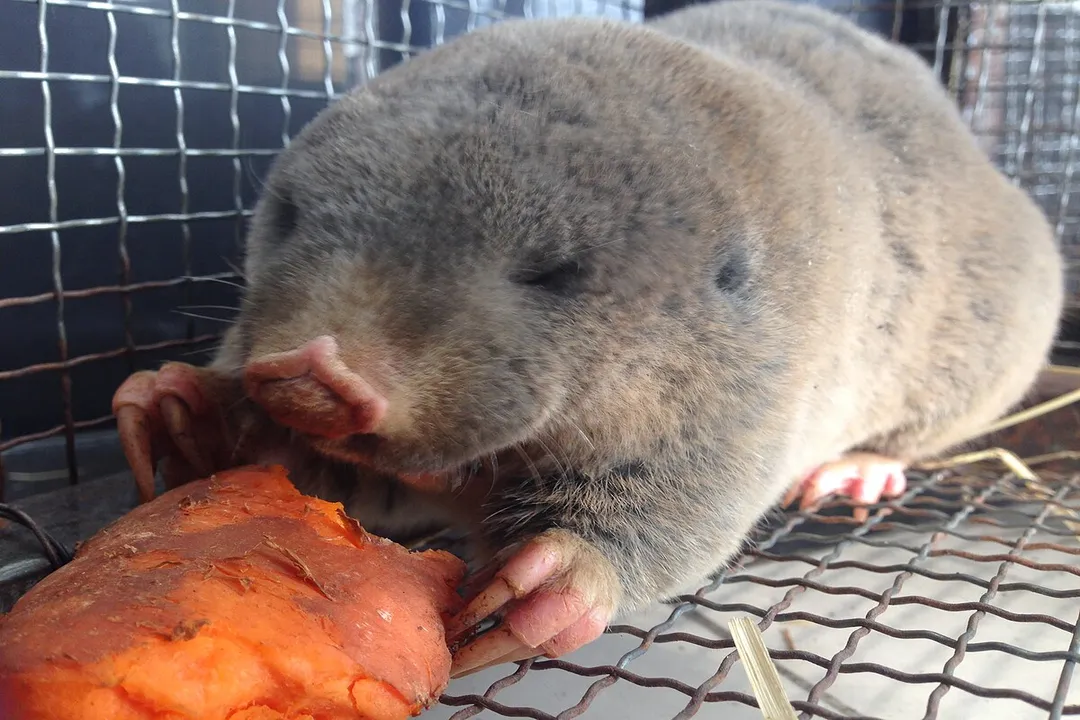
The subterranean existence of Zokors necessitates profound modifications to their skeletal and muscular systems to facilitate constant excavation. Their skulls are markedly robust, providing a strong anchor for powerful digging muscles concentrated in the neck and shoulders. A particularly distinctive feature supporting this lifestyle is the extreme prominence of their incisors, which are positioned such that they protrude outwards even when the mouth is entirely closed, enabling gnawing through soil and roots efficiently during burrow construction and foraging.
Related Questions
How did modern molecular analyses change the taxonomic placement of Zokors relative to mole rats?Which three genera are generally recognized as comprising the extant subfamily Myospalacinae?What sensory modalities dominate the sensory world of functionally blind Zokors adapted to subterranean life?What anatomical modifications support the powerful digging required by Zokors?Why is reliance solely on external physical traits considered unreliable for determining deep evolutionary relationships among Zokors?What specific geographical features were found to correlate with genetic structuring in studies on the Siberian Zokor, Eospalax fontanierii?What potential issue arises when attempting to resolve recent Zokor splits using only mitochondrial DNA markers?When Zokor species exhibit high sympatry without strong resource partitioning, what mechanism must enforce reproductive isolation?What did comparative studies reveal regarding species like Myospalax psilurus and M. baileyi concerning morphology and genetics?Molecular clock estimates often date the resolution of genus-level relationships within the Zokor lineage back to which geological period or earlier?