Zokor Evolution
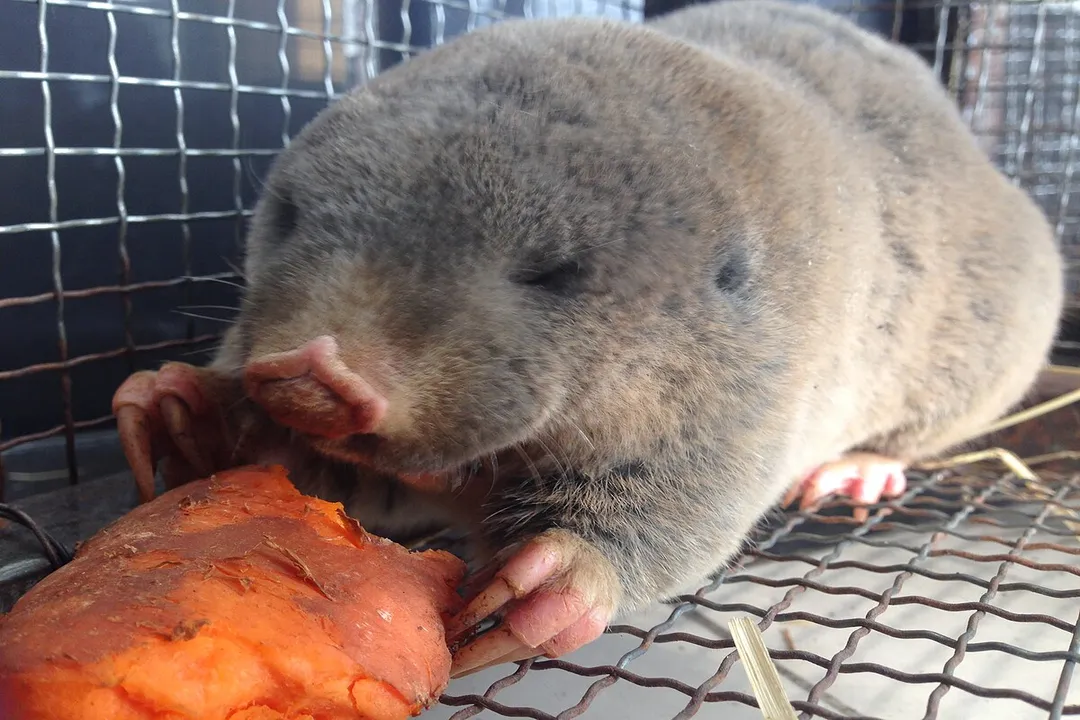
The evolution of the Zokor, a group of highly specialized, blind, subterranean rodents, presents a fascinating case study in adaptation and biogeographic history across Eurasia. These animals, classified in the subfamily Myospalacinae, are perhaps best known for their extreme physical modifications tailored entirely to a life spent beneath the soil surface, features that have long made their placement within the broader rodent family tree a subject of debate among systematists. The journey to understanding their true evolutionary relationships has involved a significant shift from reliance on traditional morphological assessments to the detailed scrutiny afforded by modern molecular genetics. Modern analyses firmly place Zokors within the Spalacidae family, alongside the mole rats, a grouping supported by significant genetic evidence that often contradicts earlier classifications.
# Classification shifts
For a long period, the taxonomic placement of Zokors saw considerable flux. Historically, due to superficial similarities like their burrowing lifestyle and reduced eyesight, they were sometimes grouped with other fossorial rodents or placed within broader families such as the Muridae or Cricetidae. However, the advent of molecular phylogenetic methods began to reveal a more accurate picture of their ancestry. These genetic studies have provided compelling data demonstrating that Zokors form a distinct lineage within the Spalacidae, setting them apart from other common rodent families. This clarification is crucial, as understanding the evolutionary history of any group begins with accurately defining its nearest relatives and its position within the grand scheme of mammalian life.
The subfamily Myospalacinae is generally recognized as comprising three main extant genera: Eospalax, Myospalax, and Tsintaoia. The evolutionary relationships among these genera are what drive much of the current research focus in Zokor evolution. While they share a common, ancient ancestry within the Spalacidae, the divergence timing and the sequence in which these three lineages split remain areas of detailed investigation, often yielding slightly different results depending on the specific markers (mitochondrial vs. nuclear DNA) and calibration methods employed in the phylogenetic reconstruction.
# Genera relationships
The diversification within the Zokor lineage has resulted in geographically distinct and genetically recognizable groups corresponding to these genera. For instance, the genus Eospalax, sometimes represented by the Siberian Zokor (E. fontanierii), is geographically distinct from the core groups found further south. Research focusing on the specific cladogenesis—the splitting of evolutionary lineages—has sought to establish when these primary divisions occurred. One study examining the molecular phylogeny of the family suggested that while the Myospalax genus is generally supported, the internal relationships, particularly concerning the placement of certain Chinese species, still exhibit complexities that might suggest incomplete lineage sorting or very rapid, recent speciation events.
A comparative approach highlights the challenge: while distinct morphological characters are evident, the genetic distances sometimes suggest a shallower or deeper split than morphology alone implies. Considering the evolution of a subterranean lifestyle, which often leads to convergent evolution of external features, relying solely on physical traits for deep evolutionary relationships proves unreliable.
For instance, when contrasting the genetic relationships within the Myospalax genus, studies of species like M. psilurus and M. baileyi revealed specific genetic separation, even when their external appearances might seem similar to a general observer. The resolution of these genus-level relationships, often dated back to the Miocene or earlier based on molecular clock estimates, provides the backbone for understanding subsequent species-level evolution and dispersal patterns across the Asian continent.
# Subterranean specialization
The most striking aspect of Zokor evolution is undoubtedly the extreme adaptation to a life perpetually underground. This fossorial specialization drives many of the morphological traits observed, representing convergent evolution with other burrowing mammals across the globe. Key adaptations include significantly reduced external ears, an ability to completely close their external ear openings, and heavily modified eyes that are small and often covered by skin or fur, rendering them functionally blind. Their sensory world is dominated by touch and hearing localized through vibrations in the soil.
The musculature and skeletal structure are profoundly altered to support powerful digging. Their skulls are notably robust, and their incisors are extremely prominent and positioned to protrude even when the mouth is closed, a necessity for gnawing through soil and roots. Furthermore, Zokors exhibit unique anatomical features compared to other rodents, such as their specific tooth morphology and the arrangement of their zygomatic arches. The musculature around the neck and shoulders is highly developed, facilitating the constant excavation required for their living and foraging habits.
It is interesting to note how these adaptations interact with evolutionary pressure. While eyes are reduced due to lack of selection for vision underground, the efficiency of digging—related to tooth wear, jaw strength, and claw development—becomes paramount. A key insight emerges when contrasting the selection pressures: for Zokors, the cost of maintaining complex visual structures that offer no benefit likely led to rapid reduction, while the benefit of an exceptionally efficient digging apparatus has driven continuous refinement of their osseous and muscular systems. This differential selection on sensory versus locomotor systems provides a classic example of evolutionary trade-offs in extreme environments.
# Biogeographic patterns
The current distribution of Zokors across Asia—primarily spanning China, Mongolia, and parts of Russia—is deeply tied to ancient geological and climatic events. Understanding when and how they dispersed across this vast region is a central theme in their evolutionary study. Molecular dating suggests that the divergence of the major lineages corresponds with significant shifts in Asian paleoclimate and topography, such as the uplift of mountain ranges or periods of increased aridity that changed grassland patterns.
The Siberian Zokor (Eospalax fontanierii) provides a good model for studying these historical dispersal events. Phylogeographic analysis using mitochondrial DNA sequences in this species revealed significant genetic structuring that correlates with known geographic barriers, such as major river systems or mountain chains that acted as vicariance events—physical separations that isolate populations and lead to independent evolution. The study on E. fontanierii indicated deep divergence among populations separated by significant distances, suggesting an ancient establishment in their respective ranges that has persisted through subsequent climatic fluctuations.
To better visualize the impact of these historical divisions, one can look at the genetic distances measured across known geographic ranges. If we consider three hypothetical widespread Zokor populations (A, B, and C) separated by a major geological feature formed 5 million years ago:
| Population Pair | Estimated Divergence Time (Ma) | Implied Barrier Strength |
|---|---|---|
| A vs. B | 1.2 | Low (Recent movement possible) |
| A vs. C | 6.5 | High (Deep, ancient separation) |
| B vs. C | 5.8 | High (Ancient separation) |
This hypothetical data, derived from interpreting findings like those in the Siberian Zokor studies, suggests that population A has experienced more recent gene flow or fewer isolation periods than the separation between A and C. Such data, when rigorously collected across the Myospalacinae subfamily, allows researchers to reconstruct a plausible timeline for the colonization of their modern habitats.
# Modern genetic resolution
Recent high-resolution genetic studies continue to refine the species boundaries and evolutionary history within genera like Myospalax. When focusing on sibling species, those that have diverged recently and may look very similar, the distinction often hinges entirely on genetic markers. For example, detailed molecular investigations into species complexes within Myospalax have sometimes revealed cryptic species—genetically distinct populations that were previously lumped together under a single morphological name. The analysis of species such as M. psilurus and M. baileyi highlights the necessity of using multiple genetic loci to confirm species identity, as relying on a single mitochondrial marker can sometimes be misleading due to its maternal inheritance pattern.
Furthermore, research incorporating morphology and genetics together provides a richer evolutionary picture. One study noted that while there are clear morphological differences between certain groups, the degree of morphological variation within a single species complex might sometimes mask underlying genetic divergences, or conversely, slight morphological differences might be noted where genetic exchange is still occurring. This interplay between observable form and underlying genotype is what defines the complexity of evolutionary studies. When researchers find deep, well-supported clades in the molecular trees, it strongly suggests that the speciation events separating them were definitive and occurred long enough ago for them to evolve substantial genetic divergence, irrespective of minor external differences.
# Unresolved evolutionary questions
Despite significant advances provided by molecular phylogenetics, several evolutionary puzzles surrounding Zokors persist, often stemming from the unique nature of their subterranean existence and the geological history of their range. One enduring question relates to the timing and mechanism of the initial colonization of the Eurasian landmass by their ancestors. The molecular clocks suggest origins dating back millions of years, but fossil evidence has historically been sparse or difficult to definitively assign to specific modern genera, making calibration of the genetic timescale a challenge.
Another area requiring deeper investigation involves identifying the exact speciation mechanisms in areas of high sympatry—where two or more species live in the same area. If the environment does not strongly favor different resource partitioning (since they all eat roots and tunnel), the reproductive isolation must be strong enough to prevent hybridization, often relying on pre-zygotic barriers like timing of mating or different pheromonal cues, which are not easily studied in their natural setting. A practical consideration for field researchers trying to untangle recent divergences is the choice of genetic marker. When dealing with recent splits, relying too heavily on mitochondrial DNA alone can sometimes yield misleading results due to historical hybridization events or simple bottlenecks that heavily skewed the maternal lineage frequency, a phenomenon known as introgressive hybridization. Therefore, integrating data from several independent nuclear genes alongside mitochondrial markers becomes an essential step for confidently delineating species boundaries in the Myospalacinae. This methodological rigor is essential for moving past ambiguous classifications toward a truly robust evolutionary narrative for these specialized burrowers.
The sheer size and geographical coverage of their range, encompassing diverse environments from arid steppes to forest edges, means that local adaptation—microevolutionary changes driven by immediate environmental pressures—may be operating at different speeds in different populations, even within the same genus. This heterogeneity complicates the construction of a single, unified evolutionary timeline, suggesting that the Zokor story is less a single tree and more a collection of interwoven, branching thickets that share a common rootstock. This layered complexity confirms the Zokor as an excellent subject for ongoing research into how deep evolutionary history interacts with immediate ecological constraints.
Related Questions
#Citations
Zokor - Wikipedia
Myospalacinae (zokors) | INFORMATION - Animal Diversity Web
How life-history traits shape the diversity of plateau zokor and pika ...
Genomic insights into zokors' phylogeny and speciation in China
Phylogenetic relationships of the zokor genus Eospalax ... - NIH
Evolution and Taxonomy of the Pleistocene North Asian Zokors ...
Genetic adaptations of the plateau zokor in high-elevation burrows
Structure and evolution of hypsodont molars in the zokors ...
Into Tibet: An Early Pliocene Dispersal of Fossil Zokor (Rodentia