What anatomical action causes the Cape Cobra to create its distinctive, broad, and rounded hood?
Answer
Flattening the ribs behind its head.
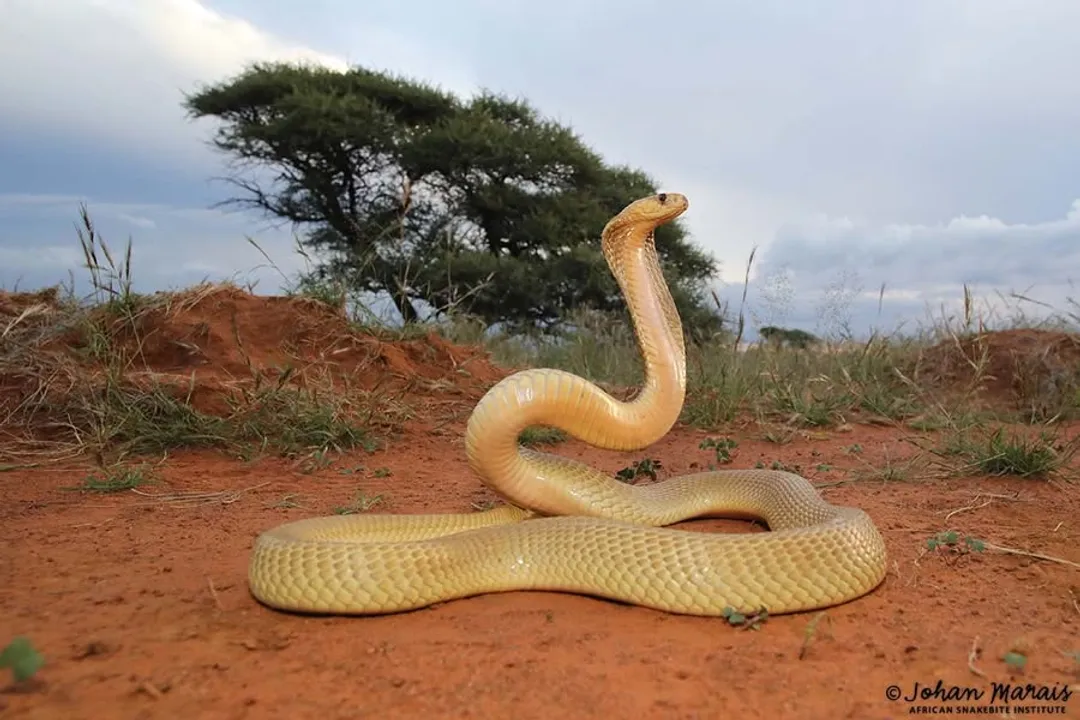
The iconic defensive hood display of the Cape Cobra is initiated by a specific physiological action involving the skeletal structure immediately behind the head. When the snake perceives a threat, it flattens the ribs in this region, causing the skin to stretch tautly over the broadened structure. This action transforms the neck into a wide, rounded, and intimidating visual barrier meant to deter potential predators or threats. This mechanism is purely voluntary and is deployed as a primary warning before any physical strike is attempted.
#Videos
Cape Cobra (Naja nivea) | Herping South Africa - Montagu - YouTube
Related Questions
What is the scientific name for the snake frequently referred to as the Yellow Cobra?Which distinction does the Cape Cobra hold regarding its venom in Africa?What physical feature frequently displayed by juvenile Naja nivea often fades as they mature?What shape are the pupils of the Cape Cobra, aiding its diurnal hunting habits?What term describes the remarkable color variation exhibited by Naja nivea across its range?What anatomical action causes the Cape Cobra to create its distinctive, broad, and rounded hood?How are the scales described generally on the body of the Cape Cobra, contrasting it with many vipers?What is the recorded maximum length that specimens of Naja nivea have reached?Where is the bright yellow phase of the Cape Cobra typically prevalent, contrasting with darker morphs?What specific head feature is consistently present at the back of the Naja nivea head across color morphs?