What adaptation helped woolly mammoths minimize thermal energy loss through their extremities compared to modern elephants?
Answer
Noticeably small ears and tails
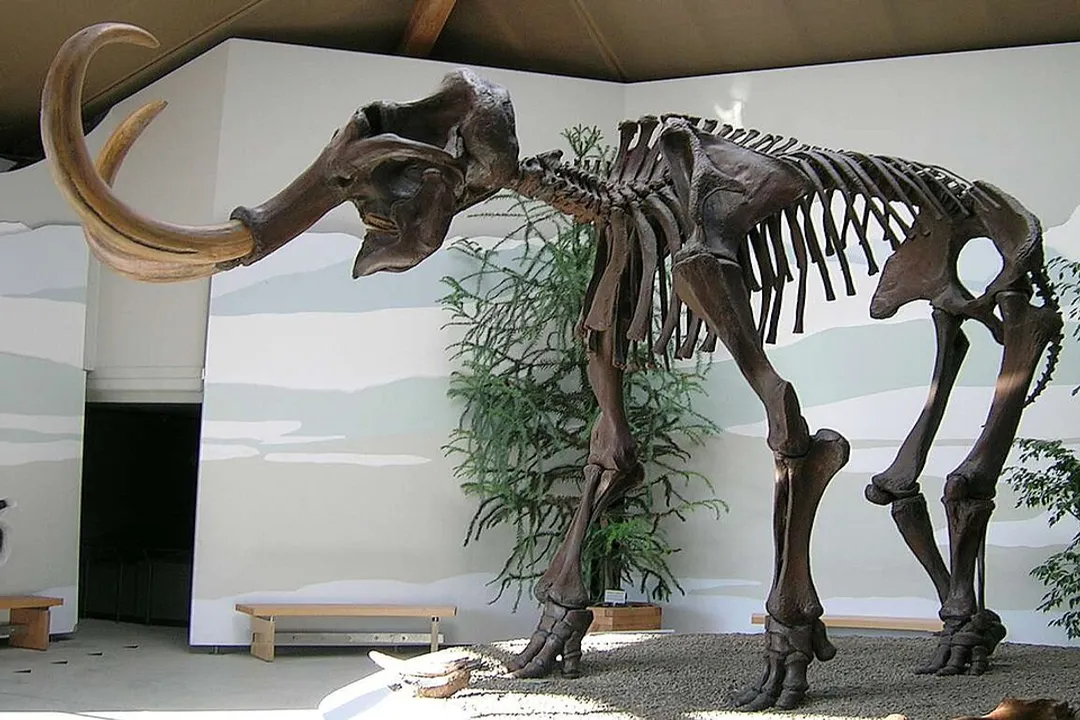
A key strategy for surviving persistently below-freezing ambient temperatures involved minimizing the surface area through which precious body heat could be lost. Unlike modern elephants living in hotter climates, which possess large ears filled with blood vessels to radiate heat away, woolly mammoths evolved noticeably small and rounded ears, along with relatively short tails. This reduction in exposed surface area significantly limited thermal exchange, embodying the principle described by Allen's rule for cold-dwelling relatives.
Related Questions
How did the shoulder height of adult male woolly mammoths compare to African savanna elephants?What constituted the innermost layer of the woolly mammoth's dense, insulating coat?What was the maximum recorded length for the woolly mammoth's long, coarse outer guard hairs?What was the primary stated function of the woolly mammoth's massive, curving tusks during winter months?What astonishing length could the elongated, heavily curved tusks of male woolly mammoths reach?What adaptation helped woolly mammoths minimize thermal energy loss through their extremities compared to modern elephants?How were the molars of woolly mammoths specialized for grazing on tough Ice Age vegetation structured?What material covered the numerous enamel plates of the mammoth's low-crowned molars?What is the leading theory regarding the function of the potential hump situated over the woolly mammoth's shoulders or back?Which ecological rules summarize the mammoth's adaptation of being bulkier with shorter limbs in cold environments?What important quality did the long guard hairs of the woolly mammoth possess to help repel moisture?What insulating resource worked in concert with the dense fur to help woolly mammoths maintain core temperature?