How were the molars of woolly mammoths specialized for grazing on tough Ice Age vegetation structured?
Answer
Low-crowned molars with numerous, tightly packed enamel plates
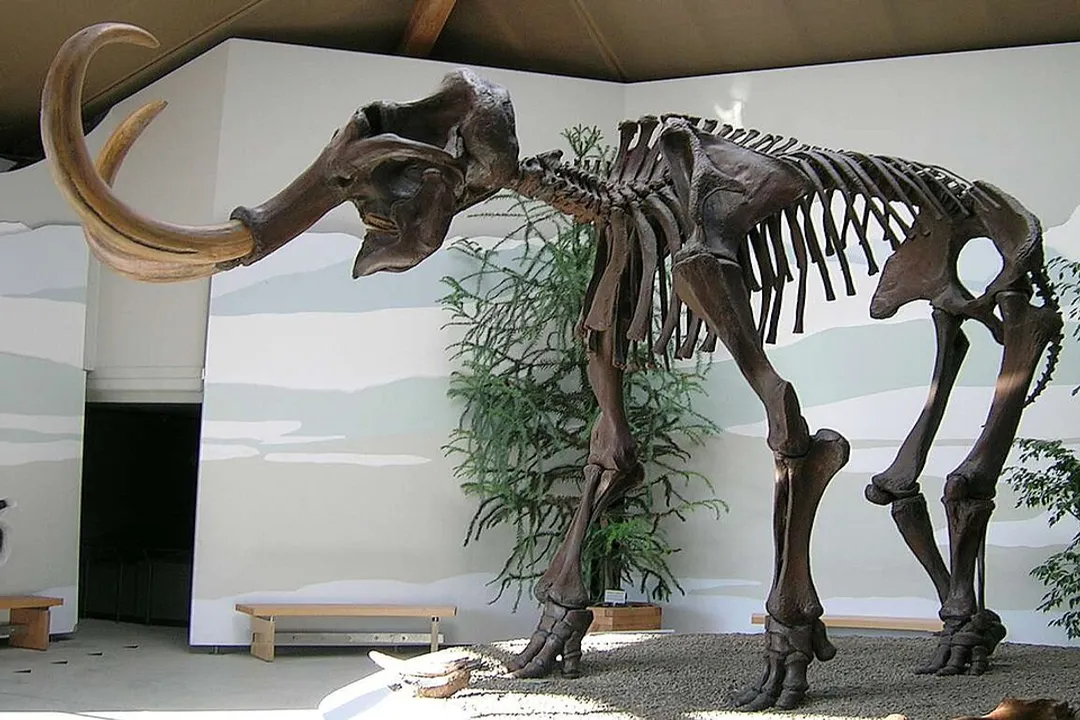
The dietary needs of the woolly mammoth centered around grazing tough, abrasive vegetation common in the Ice Age steppes, necessitating specialized dental machinery for grinding rather than simple tearing or browsing. Their molars differed significantly from modern elephants that browse softer material. Instead, mammoths featured low-crowned molars which were characterized by having numerous, tightly packed enamel plates. This structure created a hard, uneven grinding surface that efficiently processed fibrous grasses and sedges until the tooth eventually wore down and required replacement.
Related Questions
How did the shoulder height of adult male woolly mammoths compare to African savanna elephants?What constituted the innermost layer of the woolly mammoth's dense, insulating coat?What was the maximum recorded length for the woolly mammoth's long, coarse outer guard hairs?What was the primary stated function of the woolly mammoth's massive, curving tusks during winter months?What astonishing length could the elongated, heavily curved tusks of male woolly mammoths reach?What adaptation helped woolly mammoths minimize thermal energy loss through their extremities compared to modern elephants?How were the molars of woolly mammoths specialized for grazing on tough Ice Age vegetation structured?What material covered the numerous enamel plates of the mammoth's low-crowned molars?What is the leading theory regarding the function of the potential hump situated over the woolly mammoth's shoulders or back?Which ecological rules summarize the mammoth's adaptation of being bulkier with shorter limbs in cold environments?What important quality did the long guard hairs of the woolly mammoth possess to help repel moisture?What insulating resource worked in concert with the dense fur to help woolly mammoths maintain core temperature?