How is the edge of the tail fin described for Merlangius merlangus?
Answer
Straight and non-forked
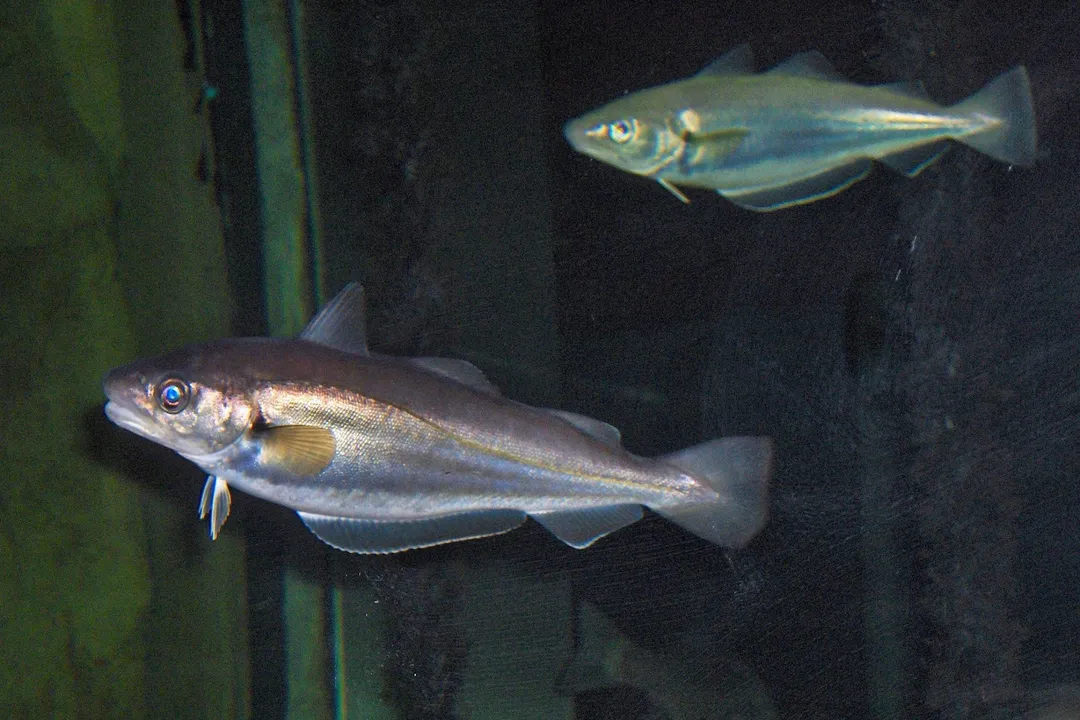
The structure of the caudal fin, or tail fin, offers another distinct morphological trait for identifying *Merlangius merlangus*. The text specifies that this species possesses a tail fin whose edge is characterized as being straight and entirely non-forked. This contrasts with the caudal fins of some other fish species which may exhibit significant V-shapes or deep forks. This straight edge is part of the overall physical profile that includes having three separated dorsal fins, with the final dorsal fin extending close to this straight tail terminus.
Related Questions
To which fish family does the true whiting, Merlangius merlangus, belong?What reliable identification marker on M. merlangus differs significantly from the corresponding feature on haddock?What happens to the prominent chin barbel on Merlangius merlangus as it reaches maturity?What forms the primary component of the carnivorous diet for adult Merlangius merlangus?What specific pre-cooking technique is recommended for small M. merlangus fillets to help structure hold up better?What specific color is the lateral line of Merlangius merlangus noted to be, distinguishing it from haddock?Between what depth range does the spawning activity for Merlangius merlangus typically occur?How is the edge of the tail fin described for Merlangius merlangus?What is the specific IUCN Red List status for M. merlangus populations found in the Baltic Sea?Which French preparation is listed as a suitable use for M. merlangus flesh due to its tendency to fall apart when cooked?