Whiting Facts
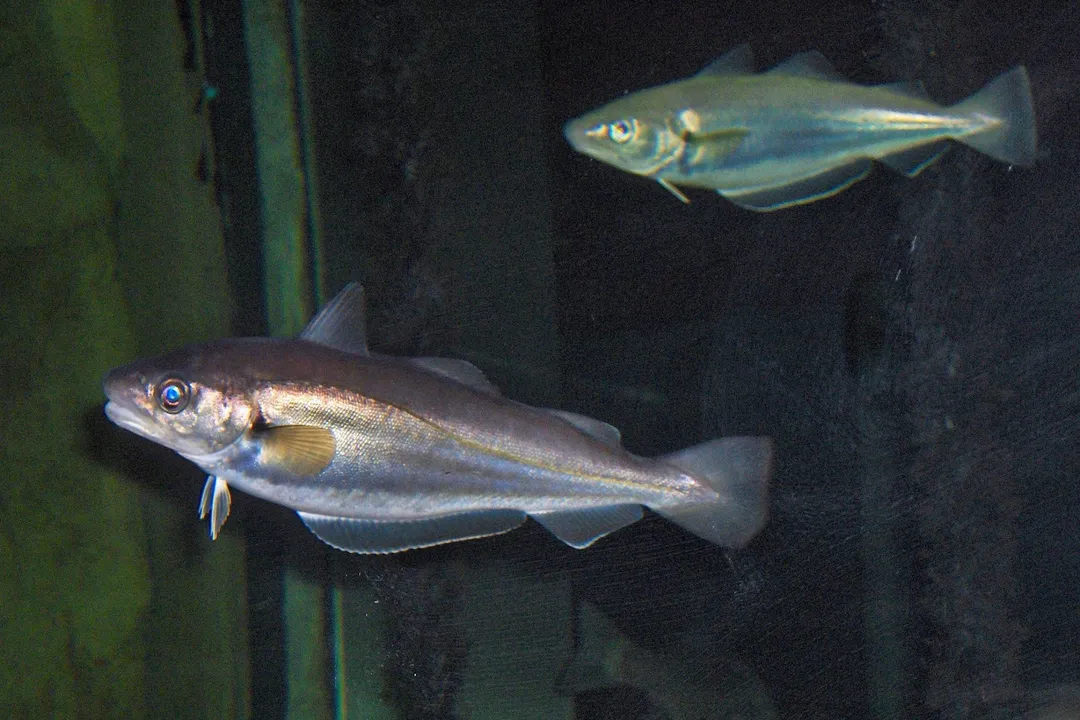
The term "whiting" often refers to a fascinating group of ray-finned fishes, but when discussing the species originally known by this English name, we are primarily talking about Merlangius merlangus, a member of the cod family, Gadidae. This fish, sometimes called merling or English whiting, is a staple in certain European waters, though its common name can create significant confusion globally, leading to its identity being applied to species as diverse as silver hake in the United States and various members of the Sillaginidae family in the Indo-Pacific. Understanding M. merlangus requires distinguishing it from its look-alikes, which can be a matter of subtle visual clues and regional dialect.
# Naming Puzzles
The primary source of confusion stems from commercial labeling and regional naming conventions. In the United States, the name "whiting" frequently designates species of hake from the genus Merluccius, such as Pacific whiting (Merluccius productus) or Florida whiting. Furthermore, silver hake (Merluccius bilinearis) is often sold commercially under the name "whiting" in the US market, alongside offshore hake. These hakes, classified in the family Merlucciidae, are distinct from the true whiting, M. merlangus, which belongs to the Gadidae family alongside cod and haddock. Another group, the Sciaenidae family in the US, includes species like Menticirrhus americanus (Carolina whiting or king whiting), further complicating simple identification. For the purposes of focusing on the European species, M. merlangus is the focus, a fish common throughout UK and Irish waters.
# Physical Profile
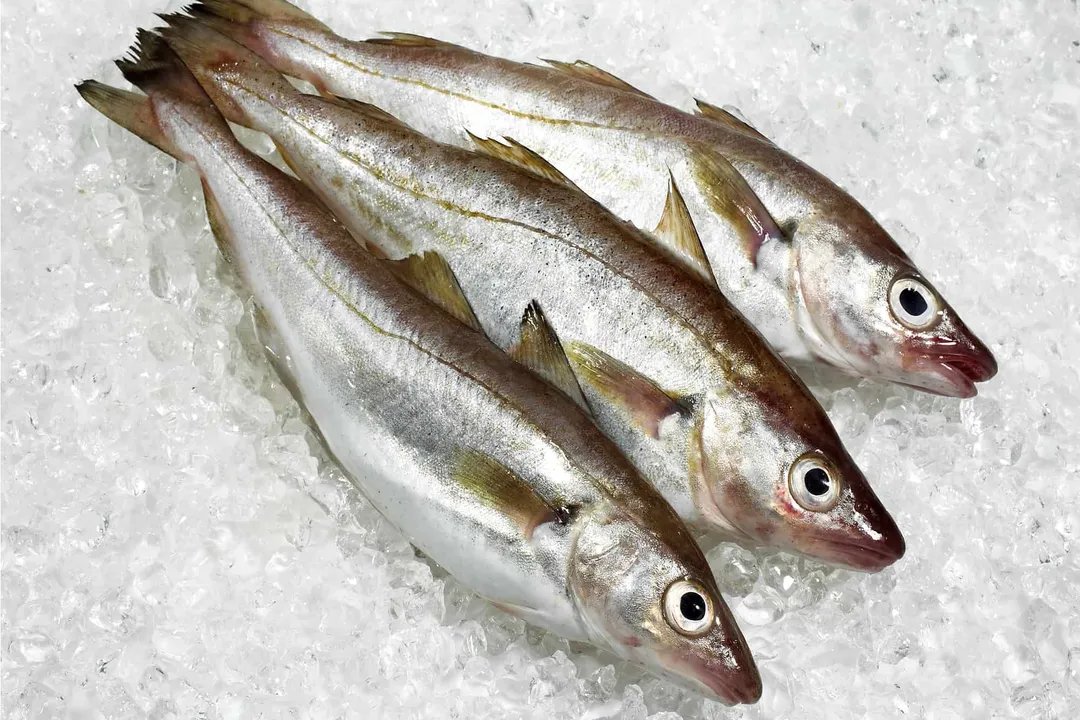
Merlangius merlangus is characterized by its elongated, cod-like body structure, featuring a small head and a distinctly pointed snout. Its coloration is typically blue-green on the dorsal side, fading to a silvery or whitish hue on the belly. One of the most reliable identification markers, especially when distinguishing it from similar species like haddock, is the presence of a small, dark spot located specifically at the base of the pectoral fins. The lateral line is noted as being brown in color. Unlike some juvenile whiting, adults lack the prominent chin barbel, which disappears upon reaching maturity. Structurally, the fish possesses three dorsal fins separated by gaps, with the third fin extending nearly to the tail, which has a straight, non-forked edge. While adults generally measure around 25 to 30 cm, this species has been recorded reaching lengths up to 70 cm. Its lifespan can be substantial, with some sources indicating they can live for about ten years, while others suggest a maximum longevity of up to 20 years.
A direct comparison can be made between the true whiting and its close relatives, which often prompts questions for both anglers and consumers. For instance, while both whiting and haddock possess a dark spot near the pectoral fin, the haddock's spot is larger and more defined, and critically, the haddock features a black lateral line, whereas M. merlangus has a brown one. Additionally, whiting is generally smaller than haddock and lacks the prominent dark thumbprint found on the haddock's gill cover. In comparison to pollock (or coley/saithe), whiting flesh is generally considered lighter and more delicate when fresh.
| Feature | Merlangius merlangus (Whiting) | Haddock (Melanogrammus aeglefinus) | Silver Hake (Merluccius bilinearis) |
|---|---|---|---|
| Family | Gadidae (True Cods) | Gadidae | Merlucciidae (Hakes) |
| Pectoral Spot | Small, dark spot at base of fin | Large, dark spot (thumbprint) | Black speckles on back/inside mouth |
| Lateral Line Color | Brown | Black | Not specified as a key differentiator |
| Maturity | Chin barbel disappears | Not specified | Large heads, sharp teeth |
| Primary Range | Eastern Atlantic, Mediterranean, North Sea | N/A | Northwest Atlantic (Maine to SC) |
# Habitat and Range
The distribution of Merlangius merlangus is concentrated in the North-Eastern Atlantic Ocean, extending into the Mediterranean Sea and the North Sea along the East Coast of Britain. Within UK and Irish waters, they are widespread during the autumn and winter months. This species exhibits a bentho-pelagic lifestyle, meaning it lives near the seabed but can move into the water column. They are typically found at depths ranging from 30 to 100 meters, preferring substrates of mud and gravel, though they are also found over sand and rock. Spawning activity, however, takes place in slightly deeper water, between 20 and 150 meters. Unlike some groundfish, juvenile whiting remain in shallower waters, often less than 30 meters deep, for about their first year before migrating to deeper adult feeding grounds. In the North Sea specifically, the species has been observed between 10 and 200 meters depth.
# Life Cycle Dynamics
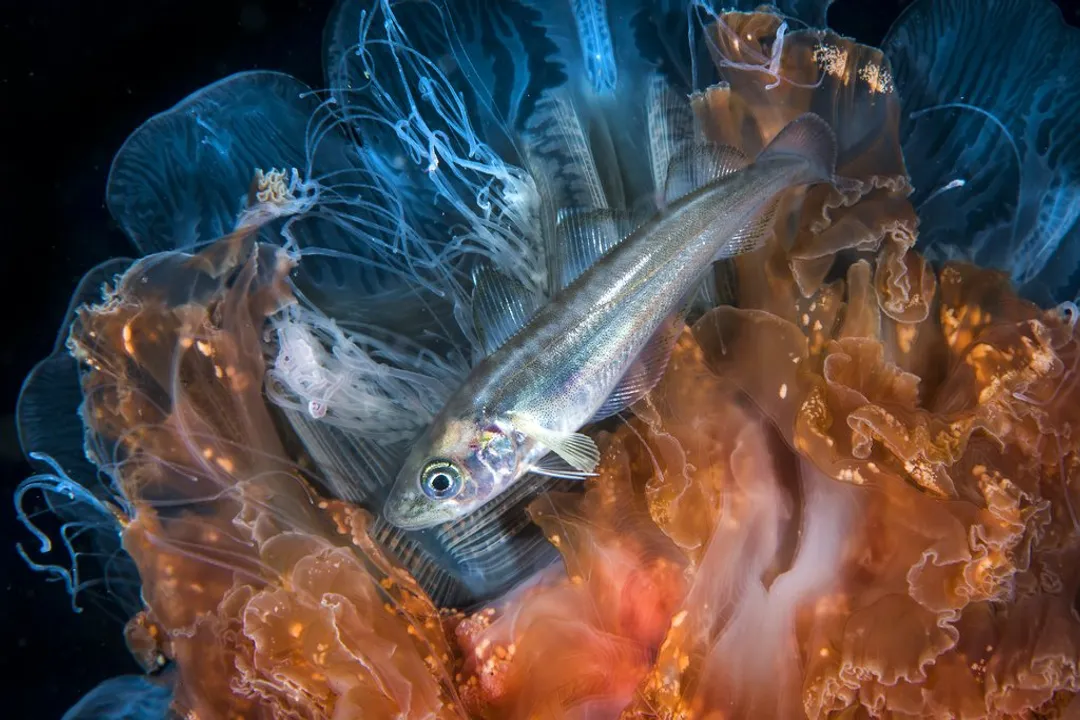
Whiting are known for being a relatively fast-growing species. They can reach approximately 6 to 7 inches in length by the end of their first year. By their second year, they grow to around 12 inches and achieve sexual maturity. Females generally grow faster than males. A notable aspect of their reproduction is their high fecundity; a 30 cm female can produce up to 400,000 eggs, while a larger female can produce up to one million. They are batch spawners, releasing eggs in several separate events during the season. The eggs are pelagic, meaning they float in the open ocean, and the resulting larvae drift with sea plankton until they reach about 10 cm in length. In the North Sea, spawning occurs over several months, starting as early as January in the south and continuing as late as September in the north. A peculiar, observable trait is that whiting fry often seek shelter under the stinging tentacles of the lion's mane jellyfish, an unusual association for survival in the water column.

# Ecological Niche
The whiting is an important predator within its ecosystem, particularly in areas like the North Sea. It is characterized as having a carnivorous diet, which becomes almost exclusively piscivorous (fish-eating) as the fish matures. Juvenile whiting consume smaller prey like sea worms, brown shrimps, and gobies. Adult diets heavily feature smaller fish such as Norway pout, sand eels, and herring, but they also consume crustaceans and molluscs. In a surprising demonstration of opportunism, they also eat the fry of other important commercial species, including cod and haddock, and even their own kin, making them somewhat cannibalistic. Conversely, whiting themselves are preyed upon by a range of larger marine life, including sharks, rays, bony fish, dolphins, seals, and whales.
# Culinary Context
For the culinary world, Merlangius merlangus is valued for its white flesh, which shares many characteristics with cod but is often considered more economical and sustainable. The texture is described as firm, light, and lean, with a flavor that is mild, sweet, and delicate. Professional chefs note that the beautiful white flesh easily falls apart, which makes it highly suitable for preparations where mincing or binding is required, such as fishcakes, mousses, or mousseline (a fish pâté popular in French cuisine). The fish is best consumed when exceptionally fresh, as its flesh flakes very quickly, making filleting difficult if it has begun to soften.
To best handle this quick degradation, a specific technique is recommended for smaller fillets: rubbing the fish with salt for about half an hour prior to cooking can mimic the effect of brining larger cuts, helping the structure hold up slightly better during heating. While available year-round, whiting is often highlighted as being at its best during the winter season, from September through April. It is sold fresh, frozen, salted, and even sun-dried or smoked. Ideal cooking methods include poaching in wine, grilling, or frying in butter, but care must be taken not to cook it too slowly, as this can cause the delicate flesh to turn mushy.

# Management Status
In parts of the North West Inshore Fisheries and Conservation Authority (NWIFCA) District in the UK, whiting has seen an increase in commercial value due to the decline of more traditional catches like cod. However, the species faces significant discard challenges. ICES advice has indicated that close to 98% of whiting caught in this district are below the Minimum Conservation Reference Size (MCRS) and are therefore discarded. Despite this high discard rate, the IUCN Red List generally places the species as "Least Concern," though populations in specific areas like the Baltic Sea are listed as Vulnerable. In the US, the silver hake fishery, which is commercially grouped with whiting, is considered sustainably managed and responsibly harvested under U.S. regulations, with both the northern and southern stocks assessed as "not overfished" and "not subject to overfishing" as of recent assessments. Commercial management in the US often employs specific gear like raised-footrope trawls in certain areas to minimize bycatch of other groundfish, though bycatch of species like red hake remains a factor.
If a home cook is looking to choose the freshest possible whiting, they should examine the fillets for brightness and firmness; the flesh should be soft but not flabby, and for a single serving, it is prudent to allow for two smaller fillets due to their inherent size. This attention to freshness is not mere preference but a functional necessity dictated by the rapid breakdown of the protein structure post-mortem, which is a crucial consideration when deciding between frying a whole fish versus turning it into a minced product like fishcakes.
Related Questions
#Citations
Whiting Fish Facts - Merlangius merlangus
Whiting (fish)
Silver Hake
Whiting - Fish
Whiting - Professional Secrets
Whiting (Merlangius merlangus) - MarLIN
Whiting | Institute of Marine Research