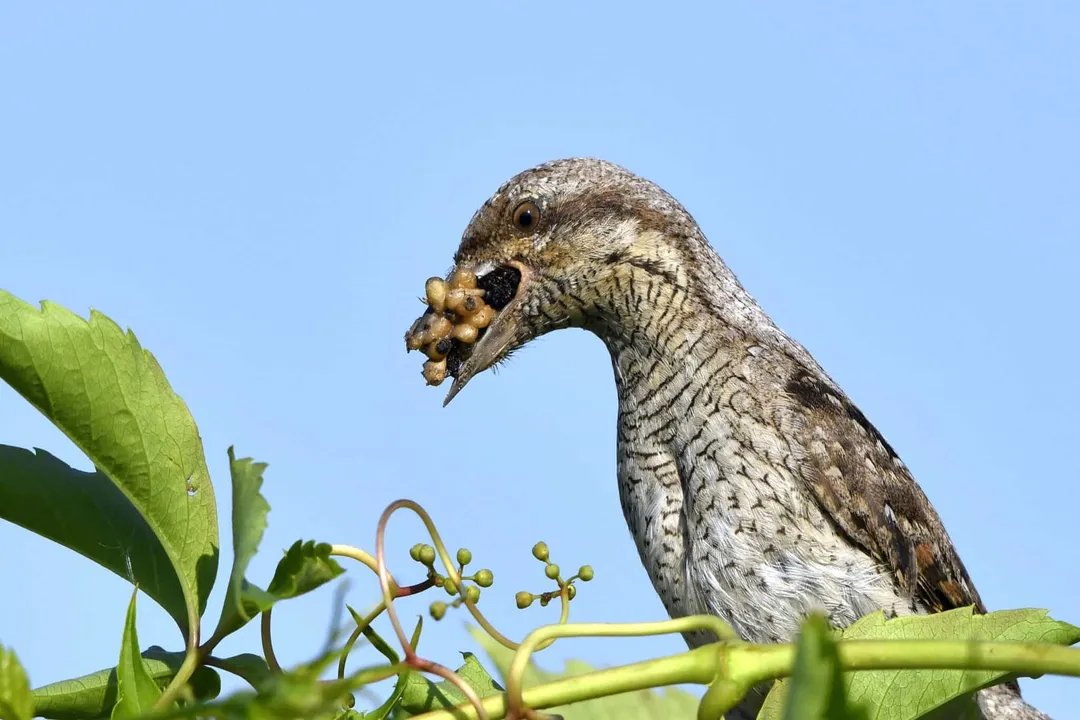
How does the Wryneck's foraging site typically contrast with the preferred haunts of many true woodpeckers?
Wrynecks spend considerable time foraging on or near the ground, unlike those staying high in the canopy.
A defining characteristic separating the Wryneck from many of its relatives within the Picidae family is its spatial orientation while foraging. While many true woodpeckers specialize in scaling and drilling into mature, tall trees, often staying within the canopy structure to find insects within the wood, the Wryneck focuses its primary foraging efforts much lower down. They spend a substantial portion of their time actively searching on the ground or immediately adjacent to it, probing for ants and larvae found in sandy or open areas. This ground-level activity means that when birdwatchers are searching for breeding Wrynecks, focusing solely on the vertical structures of trees misses the bird's essential behavior; instead, observation should concentrate on areas offering open, bare earth near scattered vertical structures used for calling or roosting.