Wryneck Locations
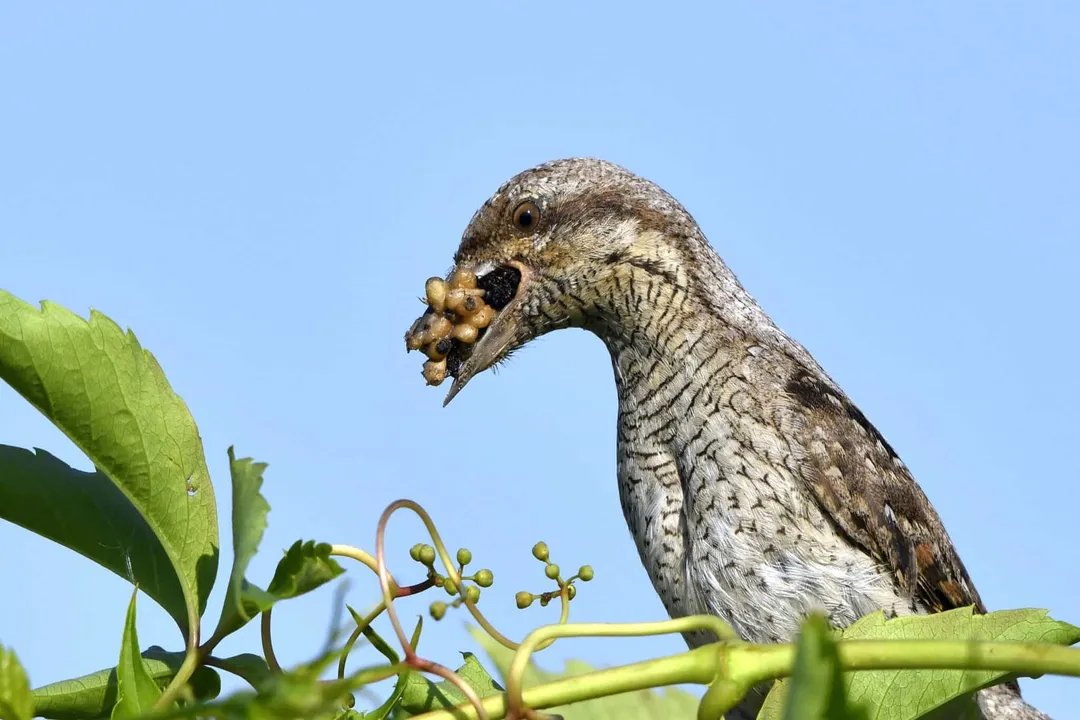
The Wryneck, often confused with a common songbird due to its muted coloration, is actually a fascinating member of the woodpecker family, Picidae. [7] While its appearance might suggest a sparrow or lark, its behavior and unique vocalizations set it apart, making its distribution across continents a compelling study in avian migration. [1] Understanding where to find this species requires looking not just at where it lives year-round, but charting its seasonal movements across vast geographical areas spanning Europe, Asia, and Africa. [5][9]
# Palearctic Home
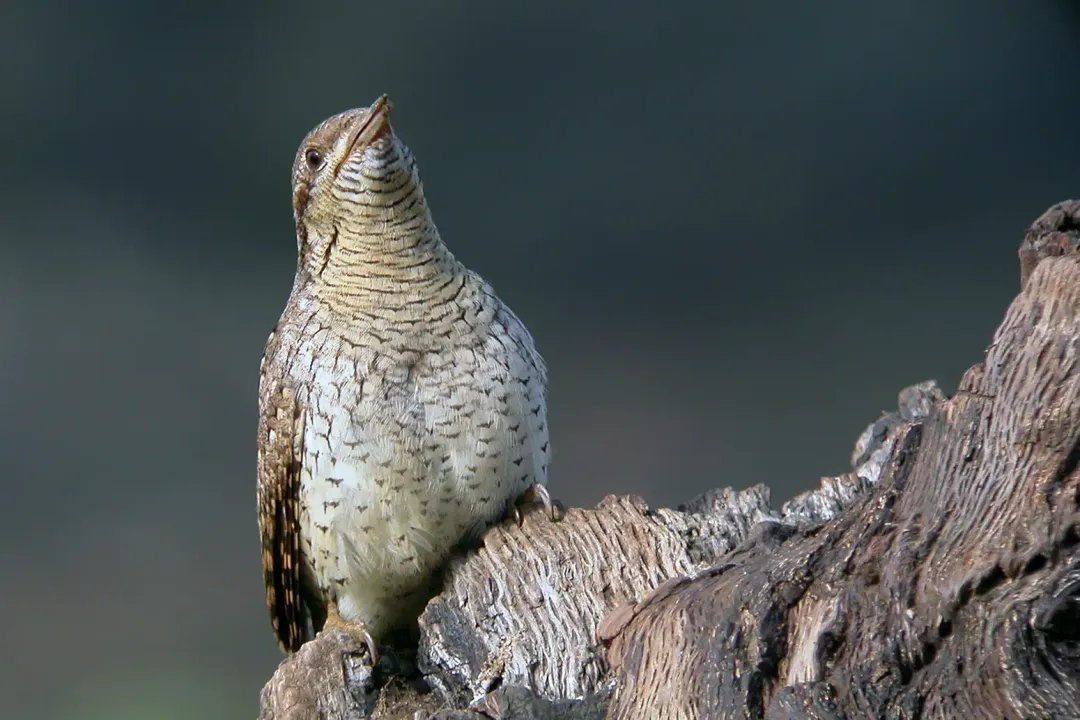
The primary breeding grounds for the Eurasian Wryneck (Jynx torquilla) are extensive, covering much of the Palearctic region. [5][6] From a broad perspective, these birds establish territories across a significant portion of Europe and Asia. [1][9] The species is distributed widely, yet often sparsely, throughout these areas. [5]
When examining the breeding distribution, the Eurasian Wryneck covers large swathes of territory across the continent. [6] In Europe, its presence is noted from the west to the east, though specific population densities can vary dramatically depending on local habitat quality and land use practices. [5] For instance, while it can be found in many countries, being present on a continent does not guarantee high local numbers. [7]
In Asia, the breeding range extends far eastward. [9] This vast northern territory necessitates a massive migratory effort when the seasons turn, as the northern breeders cannot sustain themselves through harsh winters. [1] If you are looking for a Wryneck during the summer months in the Northern Hemisphere, your search should focus on areas with appropriate open woodland structure, rather than deep, dense forests. [2]
Considering the general distribution across the Palearctic, one can observe a pattern common among many migratory birds: utilizing the northern latitudes for nesting when resources are abundant, and retreating south when conditions become challenging. [5] A key observation for any bird enthusiast mapping this species is that the Eurasian Wryneck's range contrasts sharply with the more sedentary habits of some of its woodpecker relatives; this bird is inherently defined by movement. [1][7] The sheer geographic spread across the Old World underscores its adaptability to various temperate climates, provided the local ecological needs are met. [9]
# Migration Paths
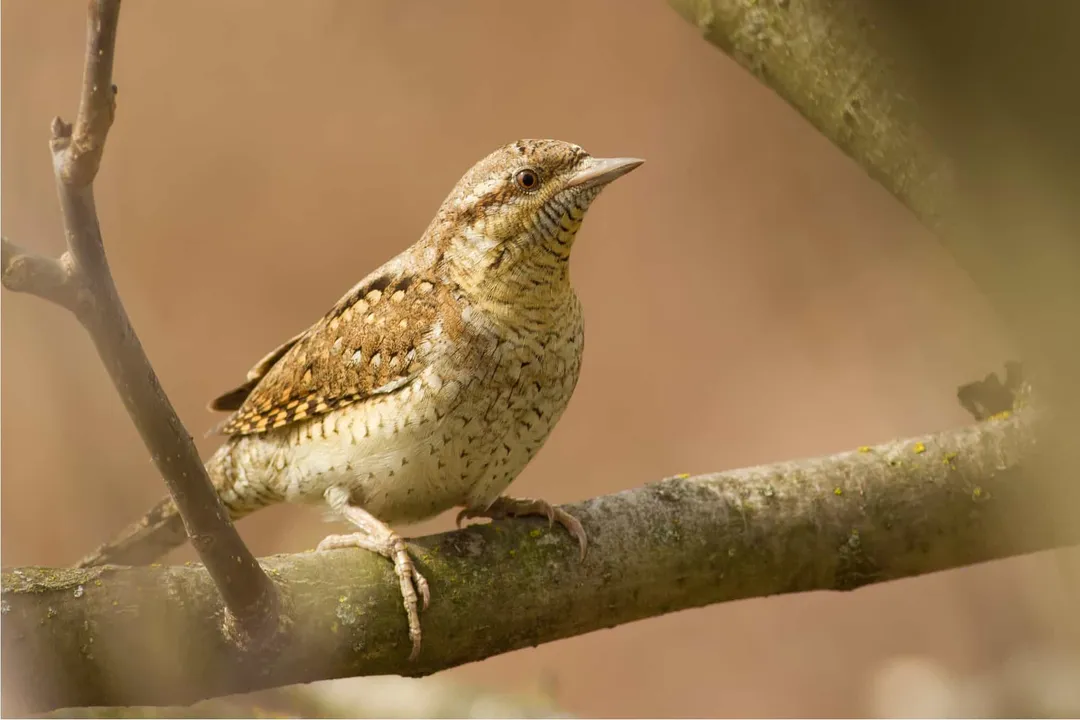
The Wryneck's migratory behavior is perhaps the most dynamic aspect of its location profile. It is a long-distance migrant, meaning its journey between breeding and wintering grounds is substantial. [1][5] The specific route taken is heavily dependent on where the bird was born. For instance, populations breeding in Western Europe often embark on a southwestward migration. [5]
This migration path frequently involves traversing significant geographical barriers. For European breeders, a notable challenge is crossing the Mediterranean Sea and, for many, the formidable Sahara Desert. [5] This trans-Saharan movement defines the arduous nature of their annual cycle, requiring the birds to build up significant fat reserves beforehand. [5] The necessity of crossing such large, resource-poor areas explains why stopover sites—locations where they rest and refuel—are absolutely critical for survival. [1]
Observing Wrynecks during the spring and autumn migration periods can sometimes be easier than spotting them on their breeding grounds or wintering sites, primarily because the concentrated movement forces them into predictable corridors. [5] Think of these migration periods as temporary, high-density 'locations' where the species is passing through specific points in relatively high numbers compared to their dispersed breeding territories. [1] A birder waiting along a known flyway in, say, Southern Europe during April or September has a higher probability of encountering a Wryneck than someone searching an arbitrary patch of suitable woodland in mid-summer. [8] This timing factor, dictated by the annual cycle, creates temporary hotspots of activity across their range that shift seasonally. [5]
# Winter Quarters
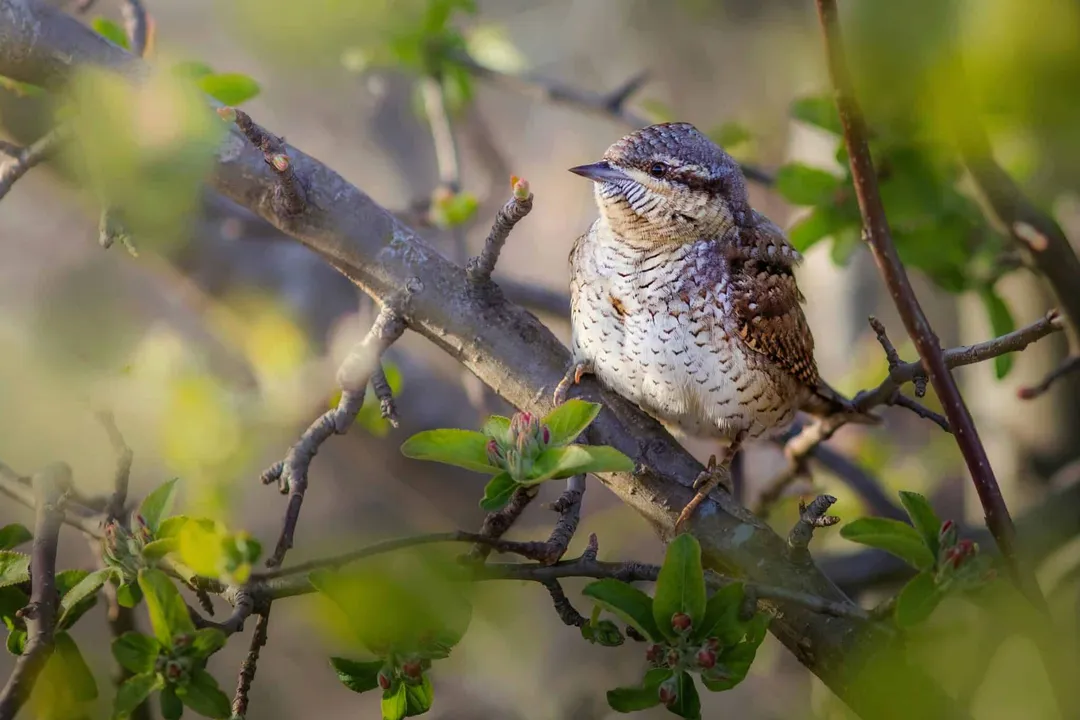
When the short summer season concludes in the Palearctic, the Wrynecks abandon their northern locations and move toward warmer climes for the winter. [9] The primary wintering regions are located in Southern Asia and tropical Africa. [1][5] This geographic shift is necessary to avoid the cold and the subsequent lack of insects that sustains them. [2]
Birds wintering in Africa generally do not travel as far south as some other Palearctic migrants, tending to remain in the northern belt of tropical Africa. [5] This proximity to their breeding grounds, though still involving a significant journey, is a common strategy among species that are insectivorous but can survive slightly cooler conditions than ultra-tropical specialists. [9]
In Southern Asia, they utilize similar habitats to those they occupy in their breeding ranges, though the specific local geography—such as the scrubland or open woodlands found in parts of the Indian subcontinent—will dictate the precise location. [1] The term "tropical Africa" encompasses a massive area, and the actual wintering location of an individual bird is tied to the precise lineage and breeding location of that bird, illustrating a complex pattern of philopatry and migration route fidelity. [5] A key difference between the summer and winter locations is the reduced pressure from predation and competition in the wintering areas, although the primary driver for the move is resource availability (insects). [2][9]
# Ideal Habitat Sites
The location of a Wryneck is always tied directly to its preferred habitat structure, regardless of whether it is breeding, migrating, or overwintering. [2] This bird is not typically found deep inside closed-canopy forests; in fact, dense woodland is often avoided. [2][7]
The species favors areas characterized by open woodland, copses, scattered trees, and clearings. [2][7] Old orchards, hedgerows, parkland, and scrubby areas fit the profile well. [2] A crucial element of its habitat requirement is the ground substrate itself. Wrynecks are insectivores, and their diet consists heavily of ants and their larvae, which they often find by probing the ground. [2] Consequently, they are strongly associated with areas that have sandy or open ground where foraging is easy. [2]
When looking for a Wryneck in its breeding territory, a birdwatcher should visualize a mosaic landscape: patches of scrub or scattered trees interspersed with bare earth or short grass. This contrasts with the preferred haunts of many true woodpeckers, who seek out mature, tall trees for drumming and nesting. [7] Wrynecks are also cavity nesters, often taking over old holes made by other birds, but the surrounding area must still offer that open foraging space. [1]
If you are birding in a location like Malaga, Spain, for example, you might find them in areas matching this description during migration, exploiting the patchy, sun-drenched scrubland mosaics typical of that Mediterranean climate zone. [8]
# Search Strategy Insight
For those specifically looking to locate a Wryneck during the breeding season, remember that their secretive nature often means where they are is less important than what the ground looks like. [2] They spend a considerable amount of time foraging on or near the ground, unlike many other woodpeckers that stay high in the canopy. [7] Therefore, instead of focusing solely on the trees, spend time observing areas of bare earth or low, sparse vegetation near scattered trees. If you spot fresh ant hills or disturbed soil in an area with some vertical structure for calling or roosting, you have hit a high-probability location, even if the bird itself remains hidden. [2] This habitat characteristic, the need for easy ground access to ants, is a limiting factor that defines their specific nesting sites within the broader wooded areas. [2]
# Mapping Presence eBird
Digital platforms dedicated to bird observations provide a more granular view of where Wrynecks are being reported outside of established range maps. [5] Services like eBird compile real-time checklists from birders globally, offering confirmation of presence in specific locations during certain times of the year. [5] While the general range map shows the potential locations, these community-sourced databases reveal the actual recent sightings. [6][5]
For instance, eBird data illustrates the migratory corridors by showing clusters of sightings in areas known for funneling passage migrants, such as coastal regions or mountain passes, during the spring and autumn months. [5] These reports offer high-trust verification of the species' presence in locations that might otherwise be overlooked based solely on broad range descriptions. [5]
When cross-referencing the Eurasian Wryneck map data with regional reports, such as those found in specific birding communities, a pattern emerges: the species is often noted as a scarce passage migrant even in areas close to its edge of the breeding range. [6][8] This suggests that while the core breeding locations are predictable, finding them elsewhere requires timing the migration perfectly. [5]
# Spotting Through Behavior
Another angle to consider when thinking about Wryneck locations relates to their display behavior. While they spend much of their time concealed, they are locatable when singing or performing their strange, snake-like neck movements. [1] The song is often delivered from an exposed perch, such as a prominent branch or even a fence post, particularly during the spring when establishing territory. [1] Therefore, a temporary "location" for the bird might be an isolated perch offering a good view over an open foraging area, rather than deep cover. [2] If you are actively searching, locating a good vantage point over prime habitat might yield better results than crashing through the dense undergrowth looking for them on the ground. [1]
# Continental Comparison
Comparing the distribution patterns of the Eurasian Wryneck across the Old World reveals contrasts in reliability of location. In the core breeding zone of Northern and Eastern Europe/Asia, the bird is an expected, albeit often shy, summer visitor. [1][9] The location is relatively fixed seasonally, tied to the onset of summer.
However, for areas on the very edge of this range, or regions they pass through—such as parts of Western Europe or the Mediterranean like Malaga—the bird's location is ephemeral; it is a transient visitor. [8] In these fringe areas, the species is recorded almost exclusively during the passage periods. A location that hosts a Wryneck in April for a three-day stopover might remain bird-silent for the rest of the year. [5] This distinction between core range residency and transient passage is vital for accurate location expectation. The reliability of finding one drops precipitously as you move away from the main breeding block into the migratory funnel zones, though the rewards for a successful sighting in a rare location can be significant for a birder. [5][8]
The overall geographic signature of the Wryneck is that of a wide-ranging, yet habitat-specific, seasonal traveler, whose location is a fleeting moment in time and space across its massive annual circuit. [1][9]
Related Questions
#Citations
Wryneck - Wikipedia
Wryneck - NatureSpot
Wryneck Bird Facts - A-Z Animals
Wryneck Bird Facts | Jynx Torquilla - RSPB
Eurasian Wryneck - eBird
Eurasian Wryneck Range Map - South Dakota Birds and Birding
Wryneck - The Wildlife Trusts
Eurasian wryneck - Birding Málaga
Eurasian Wryneck Jynx Torquilla Species Factsheet