How do vinegaroons typically immobilize their prey during foraging?
Answer
By using their large and crushing pedipalps
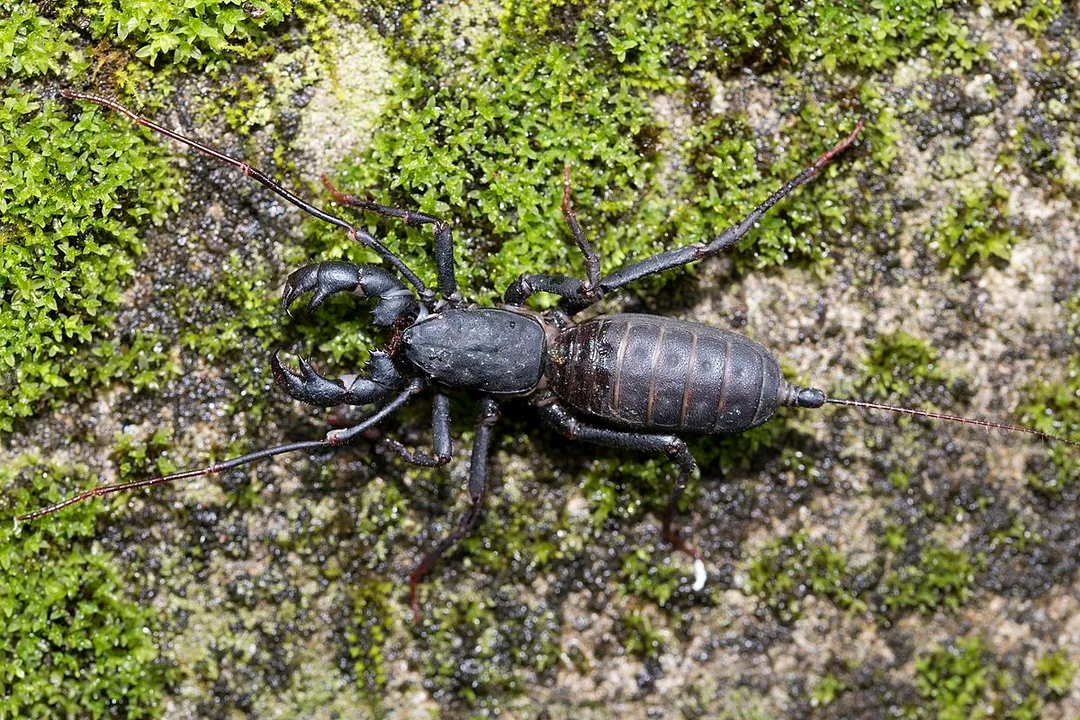
Vinegaroons are active foragers that rely on touch and chemoreception to locate food in the dark. Once prey is identified, they utilize their robust, pincer-like pedipalps to crush and immobilize the victim. They do not rely on webs or venom to subdue their prey; instead, they use their physical strength and their mouthparts, known as chelicerae, to tear and consume captured insects or small vertebrates.
#Videos
What Exactly Is: Vinegaroon | Loved and Feared - YouTube
Related Questions
Why is the common designation of whip scorpion considered misleading for the vinegaroon?What specific chemical substance is primarily responsible for the defensive spray of the vinegaroon?To which biological order do vinegaroons, also known as Thelyphonida, belong?What defines the reproductive strategy of the female Mastigoproctus regarding its offspring?What is the anatomical nature of the flagellum found on the vinegaroon?Why are vinegaroons described as nocturnal creatures in their arid habitats?How do vinegaroons typically immobilize their prey during foraging?How does the vinegaroon's defense mechanism compare to that of venom-dependent predators?Which species is frequently cited as the primary example of the vinegaroon group?What behavioral adaptation helps vinegaroons survive the environmental challenges of dry deserts?