Vinegaroon Evolution
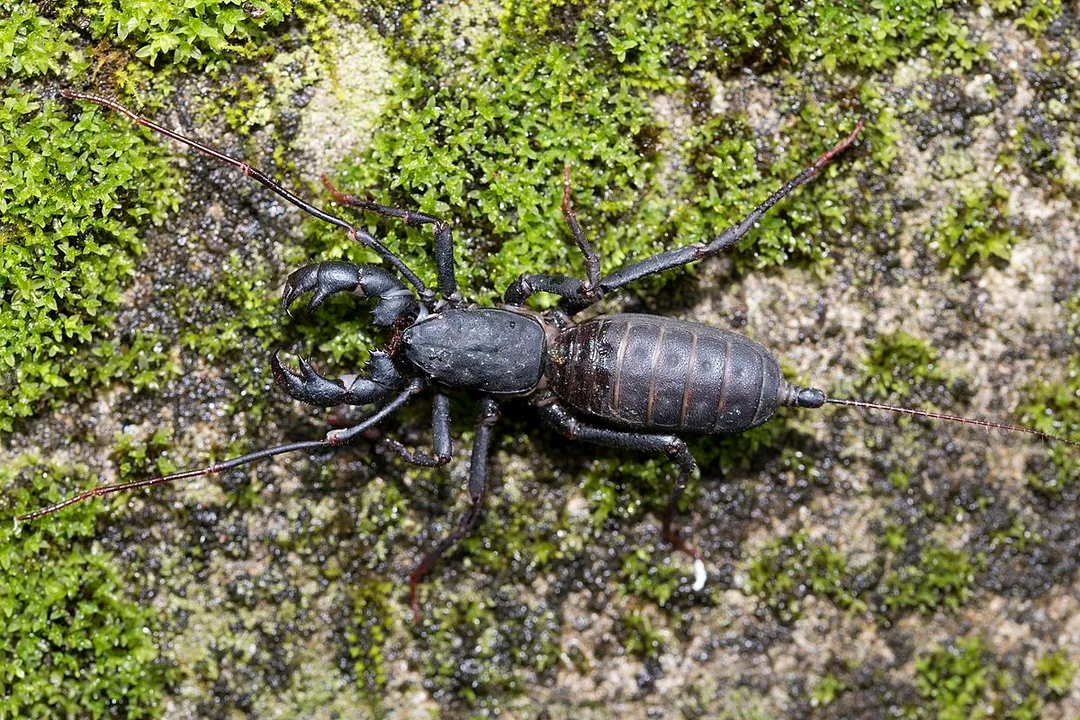
The creature commonly known as the vinegaroon is a fascinating relic of arachnid history, often misunderstood due to its intimidating appearance and powerful defensive capabilities. [2] Though sometimes referred to as a whip scorpion, this designation is somewhat misleading, as they are not true scorpions, lacking the defining stinger at the end of their tail. [8] Instead, they command attention through their robust build and a chemical defense mechanism that gives them their common name: the ability to spray a potent mixture of acetic acid and water. [2][7] These creatures, native to the arid regions of the southwestern United States and Mexico, present a compelling case study in specialized, non-venomous defense strategies that have allowed them to persist across geological timescales. [2][7]
# Arachnid Lineage
Vinegaroons belong to the order Uropygi, which is synonymous with the order Thelyphonida. [8][9] This placement distinguishes them significantly from the true scorpions of the order Scorpiones. [8] While both groups possess prominent anterior appendages used for defense and capturing prey, the vinegaroon's are specialized pedipalps, often appearing large and pincer-like, used for crushing or holding rather than striking. [8][9] Furthermore, their posterior termination differs dramatically: true scorpions possess a segmented metasoma ending in a venom-delivering telson, whereas the vinegaroon brandishes a long, whip-like tail, or flagellum, which is essentially a modified terminal segment. [8] Genomic analysis continues to refine the evolutionary relationships within Arachnida, examining lineages such as Mastigoproctus to better understand the divergence that led to these distinct survival tactics. [3][5] The genus Mastigoproctus, which includes the well-known M. giganteus, exemplifies this group. [2][9]
# Body Features
Physically, vinegaroons are imposing arthropods, with some specimens reaching lengths of up to three inches. [1][9] Their bodies are dark, often black or reddish-brown. [1] Key anatomical features center around predation and defense. The large, grasping pedipalps are crucial for immobilizing victims. [2][9] The front end also features chelicerae, the mouthparts, which are used to tear food. [8] Perhaps the most defining feature, besides the tail, is the structure responsible for their namesake spray. The spray is expelled from glands located near the tip of the abdomen, often described as the telson region, which houses the modified glands. [8] This contrasts sharply with the venom glands of true scorpions, highlighting a separate evolutionary path for deterring predators. [8]

# Chemical Warfare
The spray produced by the vinegaroon is a notable adaptation for survival in environments where visual threats or intense physical confrontations are common. [1] This defensive liquid is primarily an aqueous solution containing acetic acid, the main component of vinegar. [2][7] When threatened, the vinegaroon raises its abdomen over its body and accurately projects this acidic stream toward the aggressor. [1] The precision with which they can aim this chemical defense is remarkable, a necessary attribute when relying on chemistry instead of speed or potent venom for survival. [1] A creature like Mastigoproctus giganteus relies on this deterrent to discourage attacks from birds, mammals, or other arthropods. [2][7] While the spray is rarely medically significant to humans, it causes immediate burning and irritation, effectively halting an attack. [1][7] Observing this defense mechanism provides a real-world look at evolutionary pressure favoring a highly effective, large-volume chemical output over a small-volume, complex protein-based toxin.
# Life Cycles
The life history strategies of vinegaroons are closely tied to their need to survive long periods between feeding opportunities and to protect vulnerable offspring in harsh environments. [4][9] These arachnids can have a significant lifespan, with some sources suggesting they may live for up to seven years. [7][9] Reproduction in Mastigoproctus species involves the female laying eggs, making them oviparous, which is contrasted by the live-bearing nature of true scorpions. [9] Following hatching, the young vinegaroons climb onto the mother's back where they remain sheltered for a period while they develop. [9] This behavior demonstrates maternal care, a trait that increases offspring survival rates against environmental hazards and predation in the early instars. [9] Furthermore, studies on reproduction hint at complex mating behaviors, including evidence that a single female can store sperm from multiple males, which has implications for genetic diversity within local populations. [4] This multi-paternity possibility suggests evolutionary flexibility in maximizing reproductive success when mating opportunities are infrequent.
# Habitat and Habits
Vinegaroons are intrinsically linked to dry, desert, and arid habitats across their range. [2][7] They are overwhelmingly nocturnal, emerging from their hiding places after sunset to hunt. [1][9] During the day, and often when resting or avoiding extreme temperatures, they seek shelter under rocks, logs, or within burrows they may excavate. [6][7] This behavior is critical not just for predator avoidance but for regulating body temperature and, most importantly, preventing water loss—a defining evolutionary challenge for terrestrial arthropods in the desert. [1] Their diet consists mainly of insects, scorpions, and even small vertebrates that they overpower using their strong pedipalps and biting chelicerae. [1][2] They are not ambush predators in the way a crab spider is, but rather active foragers in their local hunting range, relying on touch and chemoreception to locate prey in the dark. [2] For those encountering them in places like the southwestern US deserts, the key to spotting one is often looking under loose debris where they might be hiding during the day. [6]
# Genomic Underpinnings
To understand the evolution of the vinegaroon, researchers are turning to molecular biology, examining the organism's entire genetic blueprint. [3][5] Studies focusing on the genome of Mastigoproctus provide deeper insight into the evolutionary history of the Thelyphonida order, helping scientists map out phylogenetic relationships relative to other arachnids. [3] By comparing their DNA sequences with those of other scorpions and spiders, researchers can pinpoint when key adaptations, like the development of the acid-secreting glands or the specialized pedipalps, occurred in the lineage. [3] While the visible anatomy tells the story of adaptation to a terrestrial, arid existence, the genetic record reveals the ancient divergence that set the Uropygi apart millions of years ago. [8] The ongoing genomic work is essential for placing the vinegaroon accurately within the broader context of arachnid evolution, confirming, for instance, that they represent a very early offshoot within the Arachnida class. [3]
# Evolutionary Trajectories
The vinegaroon's success can be viewed through the lens of specialized, yet generalized, traits. They lack the specialized venom apparatus that evolved separately in spiders and true scorpions, opting instead for a broadly effective, non-proteinaceous chemical deterrent. [8] This suggests an evolutionary pathway where metabolic investment went into producing a high-volume, easily replenished defense mechanism rather than a complex, fast-acting neurotoxin. [1] For instance, if a vinegaroon's spray gland were damaged, it would take time to regenerate the chemical reservoir, but the machinery itself is simpler than synthesizing complex venom peptides. This efficiency in defense, coupled with significant parental investment in offspring survival via brooding, creates a balanced strategy highly suited to the variable resource environment of the desert. [4][9] This contrasts with the "live fast, die young" approach seen in some shorter-lived, venom-dependent predators. Another point of interest arises from observing their habitat preferences; the consistent need for darkness and shelter under rocks or logs, even in regions with mild winters, underscores how strongly evolutionary history in drylands has dictated their current behavior—a necessity for moisture conservation that remains an ongoing selective force today. [7] The vinegaroon, therefore, represents a highly successful, ancient lineage that prioritized armored defense and parental protection in the evolutionary arms race. [8][9]
#Videos
What Exactly Is: Vinegaroon | Loved and Feared - YouTube
Related Questions
#Citations
Arachnids: Vinegaroons | Shit You Didn't Know About Biology
Vinegaroon, facts and information | National Geographic
A chromosome-level genome of the giant vinegaroon ... - bioRxiv
Reproduction and life history of the vinegaroon Mastigoproctus tohono
A chromosome-level genome of the giant vinegaroon ... - PubMed
Giant Vinegaroon habits and habitats in the American southwest
Vinegaroon Animal Facts - A-Z Animals
Uropygi - Wikipedia
Mastigoproctus giganteus | INFORMATION - Animal Diversity Web
What Exactly Is: Vinegaroon | Loved and Feared - YouTube