What feeding behavior is favored by the ray's reliance on substrate investigation?
Answer
Sifting or rooting through the substrate to locate stationary prey
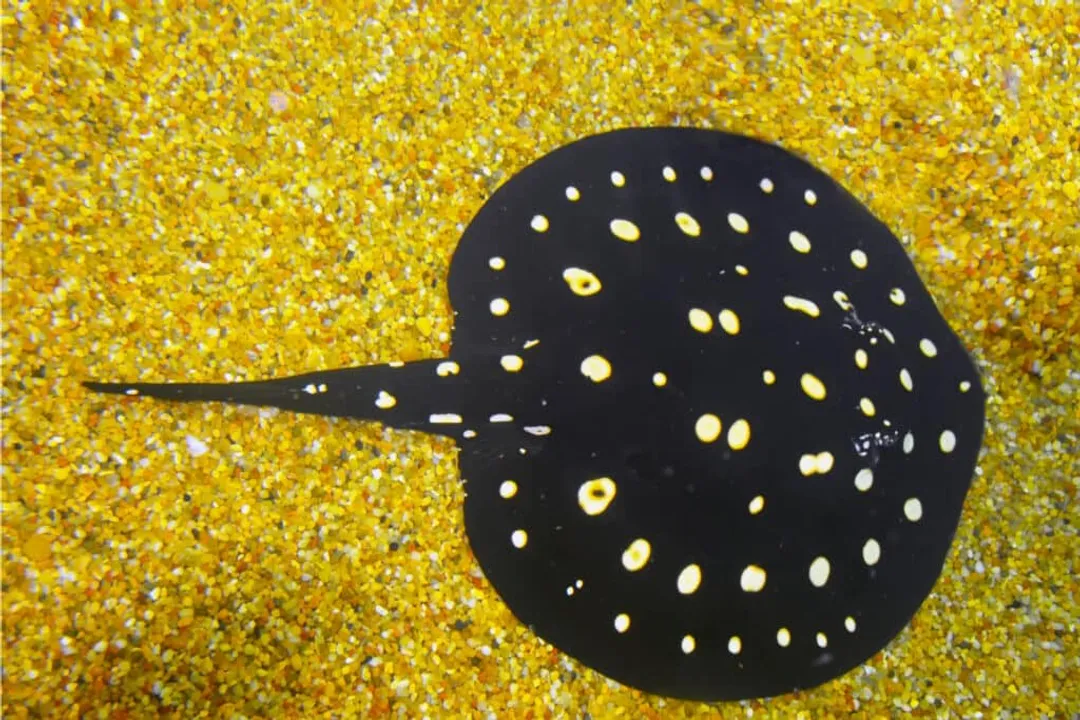
Because its primary food sources—mollusks and benthic invertebrates—are either stationary or slow-moving and often partially buried, the Xingu River Ray employs a feeding strategy involving close contact with the river bottom. This strategy involves thorough investigation, sifting, or rooting through the substrate, whether it be softer mud or rocky gravel beds, to physically locate the protected organisms. This contrasts with the hunting tactics of faster, pelagic predators, reinforcing the ray's role as a specialized benthic processor.
Related Questions
What is the scientific name for the Xingu River Ray?What primary prey category forms the bulk of the Xingu River Ray's sustenance?How are the teeth of *P. leopoldi* adapted regarding food processing?What type of environment dictates the food sources for the Xingu River Ray?What structural characteristic defines the bulk of the *P. leopoldi* diet?What feeding behavior is favored by the ray's reliance on substrate investigation?What risk arises from not providing high-calcium, hard-shelled prey in captivity?Besides mollusks, what other invertebrate groups are incorporated into the ray's diet?What does the formidable crushing structure suggest about the ray's evolutionary history?How does specialization likely affect the Xingu River Ray's ability to hunt certain prey?