How are the forelegs of Family Belostomatidae modified for predation?
Answer
Raptorial forelegs
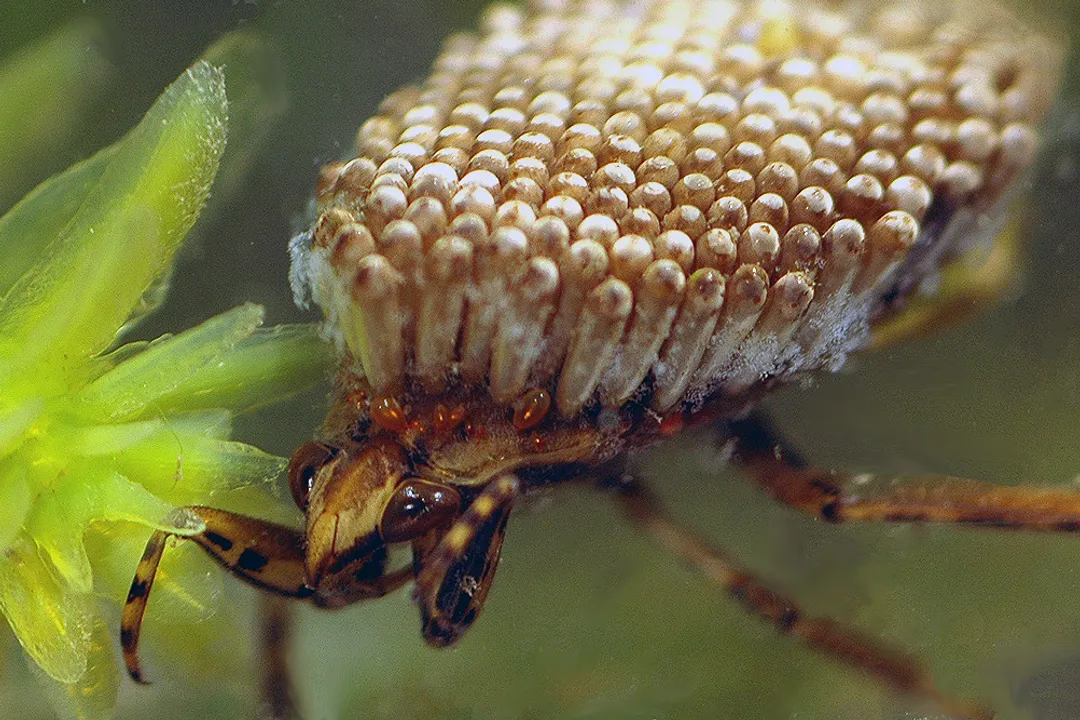
The forelegs of insects belonging to the family Belostomatidae are highly specialized into strong, grasping appendages known as raptorial forelegs. This modification is directly related to their role as formidable aquatic predators. These legs function similarly to those found on a praying mantis, providing the necessary strength and grip to effectively seize and hold slippery prey items such as small fish or tadpoles while the insect administers its bite. This structure is one of the key identifying features differentiating them from many other aquatic insects that might possess swimming or rowing appendages instead.
Related Questions
To which taxonomic Order do Giant Water Bugs, or Belostomatidae, belong?What is the specific term for the piercing-sucking mouthpart characteristic of the Order Hemiptera?What is the specific scientific Family name that encompasses the Giant Water Bugs?How are the forelegs of Family Belostomatidae modified for predation?What is one method water bugs use to breathe atmospheric air underwater?Which common name for water bugs results from their attraction to artificial light sources at night?What is the name for the modified forewing structure consistent across the Order Hemiptera?Which subfamily within Belostomatidae generally contains the truly giant members, such as the genus *Lethocerus*?What function do digestive enzymes injected by the water bug's rostrum serve during predation?What common name refers to the painful defensive bite delivered by these aquatic predators?What structure do water bugs raise to the surface to draw air, sometimes called a snorkel?