During what time frame are wombats most likely observed foraging in the wild?
Answer
Late evening or very early morning hours
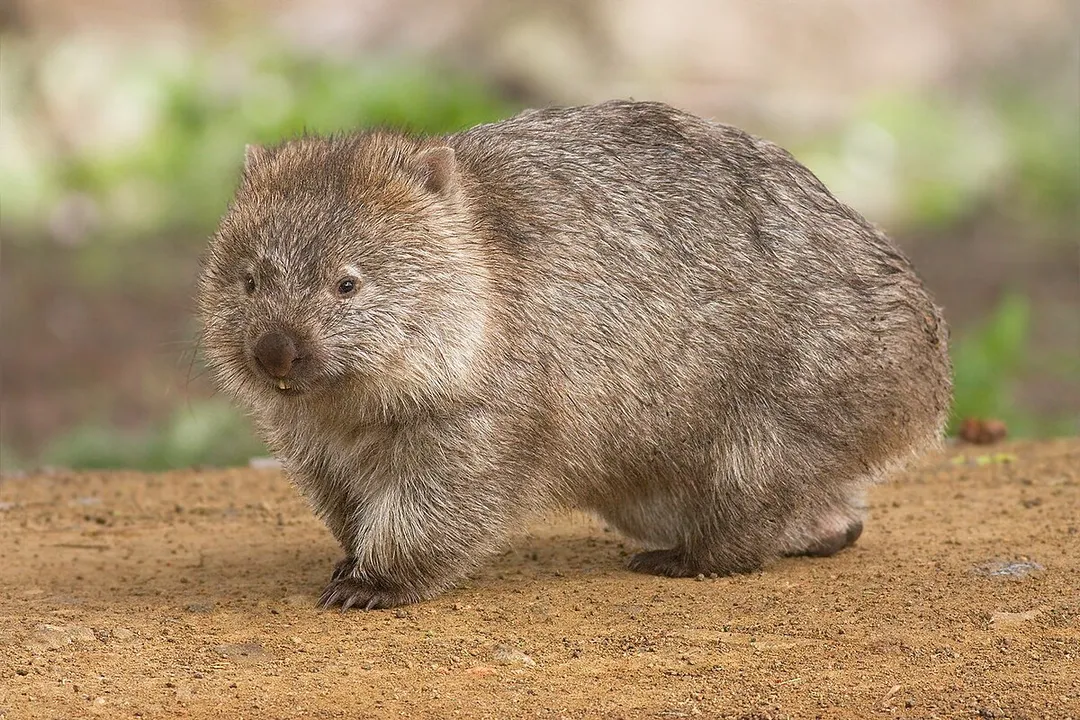
Wombats are fundamentally creatures of the night, exhibiting a primarily nocturnal activity pattern. This behavior is essential for survival, as it allows them to avoid the high daytime temperatures and remain concealed from most diurnal predators. Consequently, the highest probability of observing them active, particularly when they emerge from their underground burrows to forage for necessary grasses and roots, occurs during the twilight hours—specifically late evening as dusk settles, or very early in the morning just before sunrise. During the main part of the day, they are almost invariably underground.
Related Questions
How are the four wombat species categorized generally by physical traits?Where is the entire remaining wild population of the Northern Hairy-nosed Wombat confined?What distinctive shape characterizes the wombat scat used for territorial marking?What habitat does the Southern Hairy-nosed Wombat (*L. latifrons*) favor, unlike the Common Wombat?What geotechnical feature is a critical factor limiting wombat settlement across latitudes?Which genus characterizes the Southern, Northern, and Queensland Hairy-nosed Wombat species?To which general group does the Common Wombat (*Vombatus ursinus*) belong based on its nose?During what time frame are wombats most likely observed foraging in the wild?What National Park is cited as a prime location for Southern Hairy-nosed Wombat conservation efforts?What environmental factor prevents wombats from thriving in the arid center of Australia?