What are some fun facts about oxen?
The term "ox" often conjures images of heavy labor on an old farm, yet these animals are far more interesting than just muscle for hire. They represent a deep connection between human history and agriculture, embodying incredible strength and steadfast patience. [6] To truly appreciate an ox, one must first understand that it isn't a specific breed of cattle, but rather a role that a bovine takes on. Generally, an ox is a castrated male bovine that has been trained for draft work. [4] This castration is key; it makes the animal more manageable and less aggressive than an intact bull, yet still retaining much of the male's robust size and power. [6] While technically the term can apply to any cattle of either sex trained for work, it is overwhelmingly applied to males. [4]
# Defining Features
An ox is part of the wider group Bos taurus, but its distinction comes from its training and function. [4] Unlike horses, which are favored for speed, oxen are prized for their incredible, consistent pulling power and their steady, dependable nature. [6] They are social creatures, typically yoked together in pairs. [1] This pairing is not just traditional; the teamwork required means an ox team must develop a near-telepathic connection with its handler and each other, often remaining paired for years. [1]
When assessing the sheer physical capability of these draft animals, the numbers are impressive. A standard ox team, sometimes weighing around 2,000 pounds or more when combined, has been known to pull loads equivalent to twice its own body weight. [1] If you consider a large ox weighing in at just over 1,000 pounds, that means a single animal is regularly handling over half a ton of resistance—a feat that requires immense physical structure combined with perfect biomechanical efficiency. [1] It's worth noting that while this power is remarkable, their speed is significantly lower than that of a horse. Where a horse tires quickly under heavy strain, the ox conserves energy, making it superior for long, slow hauls of timber or heavy plows through resistant soil. [6]
# Biological Systems
The digestive tract of an ox is a marvel of evolutionary engineering, perfectly suited for processing the roughage that forms the basis of its diet. Like all cattle, oxen are ruminants, meaning they possess a complex, four-compartment stomach: the rumen, reticulum, omasum, and the true stomach, the abomasum. [2] This system allows them to thrive on tough, fibrous materials like grasses and hay that other animals cannot efficiently digest. [2] They must chew their cud, regurgitating partially digested food to re-chew it, a process that extracts maximum nutrition from low-quality forage. This efficiency is why they have been such valuable working partners across diverse global environments for millennia. [4]
Beyond what they consume, their sensory perception offers a different perspective on the world than our own. Oxen possess a truly exceptional sense of smell; it is reported that they can detect certain odors from as far away as six miles away. [2] Contrast this with their vision: while they have good peripheral sight, their ability to see clearly at a distance is relatively poor. [2] This difference in sensory priority—relying heavily on scent and close-range visual cues—shapes how they perceive threats and navigate their environment, likely contributing to their deliberate, cautious movements when working. [2] One final physical detail often overlooked is their feet. Unlike horses, oxen do not have solid hooves; they possess cloven hooves, which provide excellent grip on uneven or muddy terrain, a necessity for reliable draft work. [2]

# The Arctic Imposters
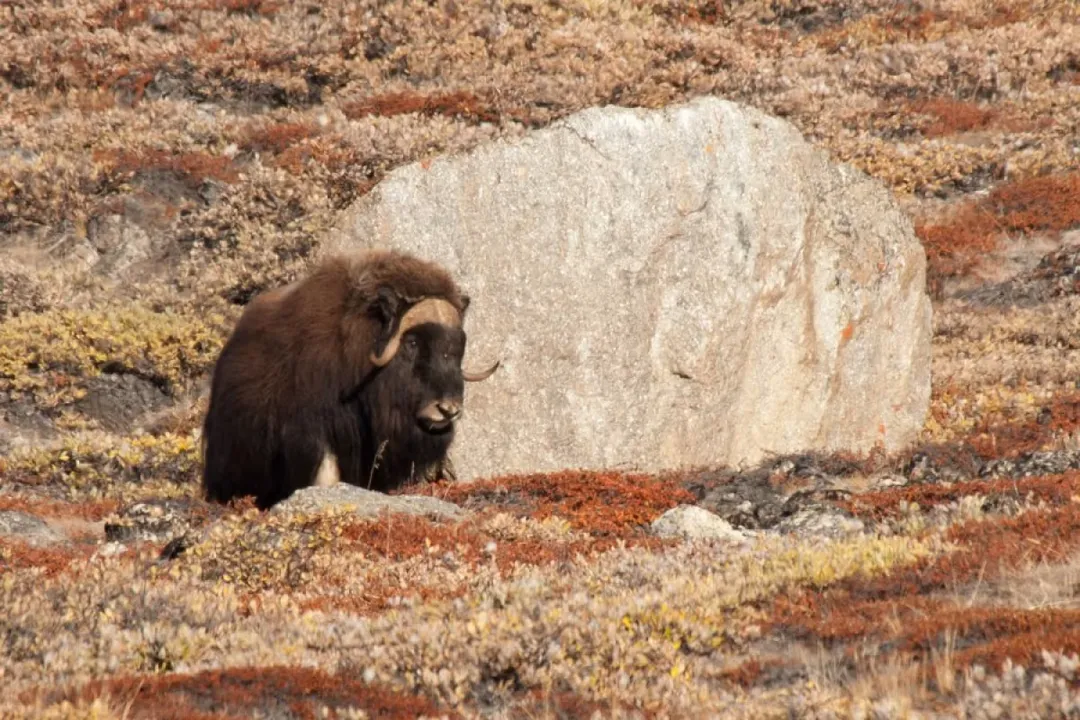
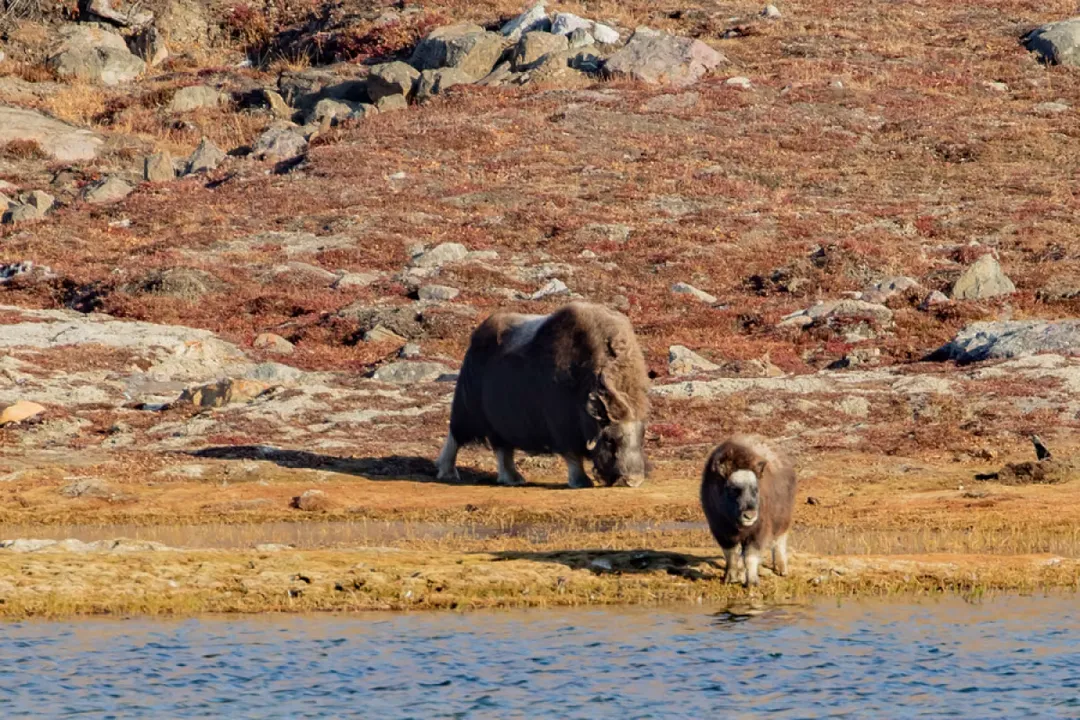
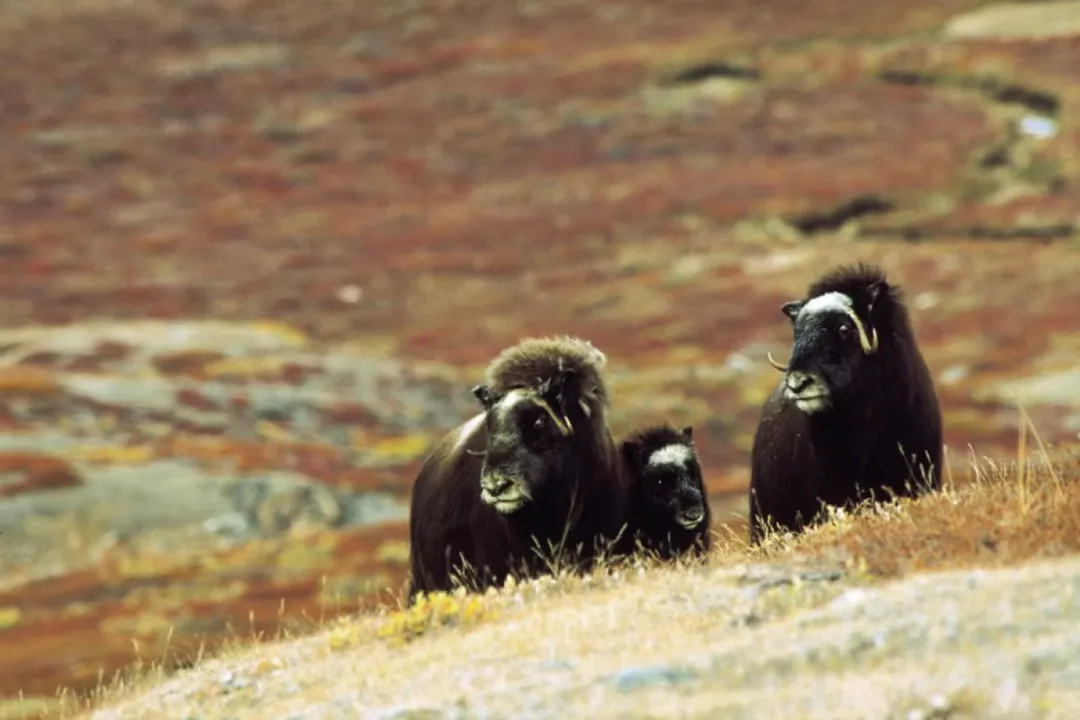
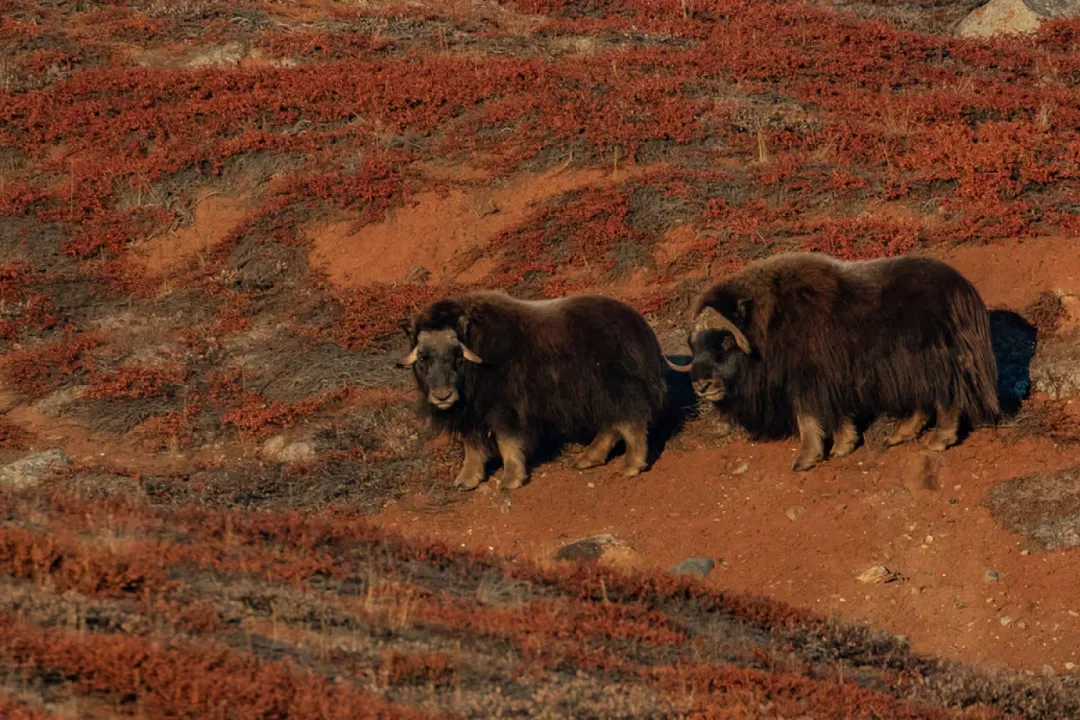
A fascinating point of confusion often arises when discussing oxen, especially in contexts involving extreme cold or unique wildlife: the Musk Ox. [5][7] Despite its name, the Musk Ox is not a true ox. True oxen belong to the Bovinae subfamily, whereas the Musk Ox belongs to the Caprinae subfamily, making it genetically closer to goats and sheep than to domestic cattle. [5][7]
These creatures are adapted to life in the Arctic regions of North America, Canada, and Greenland, surviving harsh conditions through specialized adaptations. [5][7] Their most notable feature is their dense coat. They are covered in long, shaggy outer hair, but beneath that lies qiviut, an exceptionally fine, warm underwool that sheds naturally during the warmer months. [5] This adaptation makes them incredibly resilient to freezing temperatures, a stark contrast to the domestic ox bred for temperate climates and farm labor. [5] When threatened, such as by wolves, Musk Oxen employ a highly effective defensive tactic: they form a tight, protective circle with their calves in the center, presenting a wall of horns and thick hide to the predator. [5][7] Understanding this distinction is important; while both are large, powerful bovids, their biology, habitat, and evolutionary paths are entirely separate. [7]
# Cultural Strength

The influence of the bovine worker extends deeply into human culture, most notably through the Chinese Zodiac. [3][6] The Year of the Ox follows the Year of the Rat and precedes the Year of the Tiger in the twelve-year cycle. [3] Those born under the sign are traditionally associated with positive traits mirroring the working animal itself: diligence, dependability, and determination. [3] The Ox symbolizes stability, hard work, and persistence, traits that have been foundational to agricultural societies for thousands of years. [6] This association highlights that the positive attributes we observe in the animal—its unwavering commitment to the task—have been consciously adopted as ideals for human character across centuries. [3] In many ways, the mythical Ox of the Zodiac embodies the ideal farmer or laborer: strong enough to bear the burden, patient enough to see the season through, and reliable enough to ensure survival. [6]
It’s fascinating to consider how the required bond between an ox handler and their team mirrors the human need for trusted partnership. A driver does not simply command; they must communicate subtle shifts in weight, tone, and direction, often through long reins attached to the yoke. [1] This training process demands incredible patience from the human, often taking months just to get a pair working in harmony, reinforcing the ox’s perceived character trait of steady reliability. [1] This historical reliance on these slow, powerful beasts shaped early infrastructure and settlement patterns in a way that faster, more temperamental animals like horses simply could not replicate in heavy tillage or large-scale hauling operations. [6] Their slow, steady progress was the rhythm of early civilization, a rhythm defined by the four-chambered stomach and the massive shoulder muscles of the working ox. [2]
#Videos
A Visit to the Musk Ox Farm - Alaska with kids - YouTube
Related Questions
#Citations
Ox Fact File | Learn All About Oxen | SPANA
Ox Animal Facts - Bos taurus
12 ox-cellent facts to kick off the Year of the Ox | Young Post Club
Ox - Wikipedia
Eight Facts About the Rowdy, Resilient Musk Ox
2021, Year of the OX: fun facts about oxen - Green Steps
Musk Oxen Facts | Arctic Wildlife - Aurora Expeditions
Top 10 Facts About Oxen: The Gentle Giants of the Animal Kingdom ...
A Visit to the Musk Ox Farm - Alaska with kids - YouTube