Xenoposeidon's inferred evolution suggests a history distinct from which of these groups, known for being more slender and long-necked?
Answer
Diplodocoidea
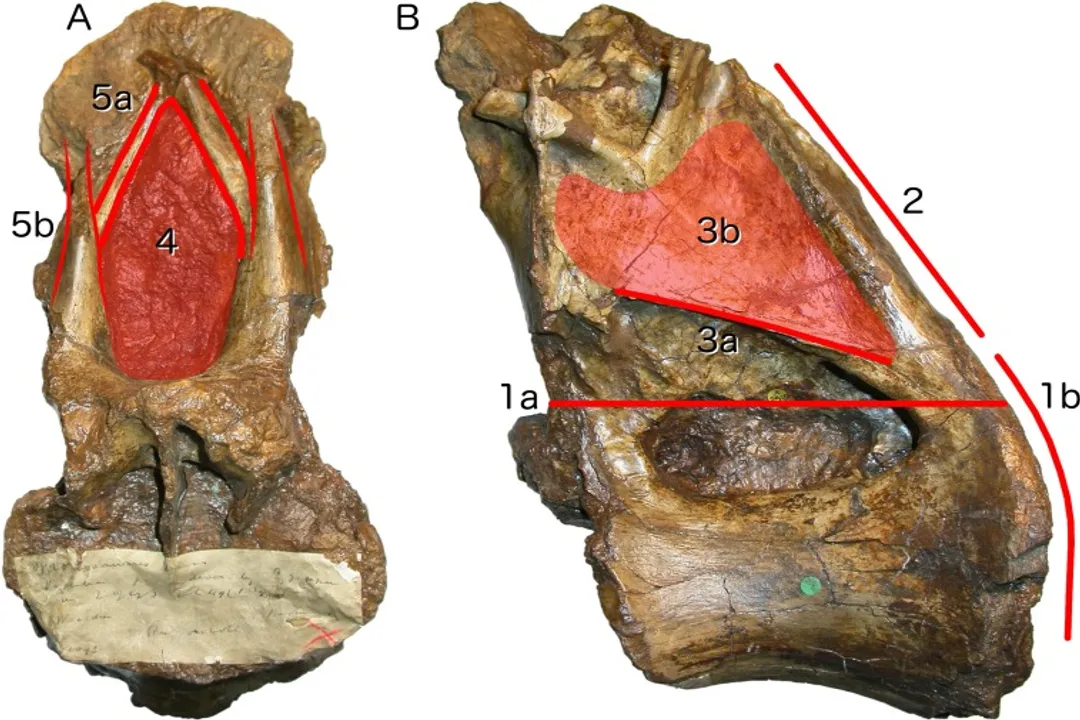
When tracing the major themes in sauropod evolution, there is a shift noted from more slender, longer-necked forms like Diplodocoidea toward the robust and immensely bulky Titanosauria. *Xenoposeidon*, even based on its limited skeletal evidence suggesting specialized, robust vertebral structures characteristic of later sauropods, appears to have evolved separately from the lineage represented by the Diplodocoidea group.
Related Questions
What does the name Xenoposeidon literally translate to?What specific skeletal element constitutes the holotype specimen of Xenoposeidon proneneukus?What older genus was Xenoposeidon originally described as belonging to before its reclassification by Mike Taylor?What characteristic of the vertebra led to the specific epithet proneneukus for Xenoposeidon?During what geological period did Xenoposeidon exist, based on its association with the Wealden clays?Within which major sauropod clade is Xenoposeidon most frequently assigned, known for dominating the Late Cretaceous?What term describes the unique traits, like those found in the Xenoposeidon vertebra, that allow carving out a separate branch on the family tree?Xenoposeidon's inferred evolution suggests a history distinct from which of these groups, known for being more slender and long-necked?Why must interpretations of Xenoposeidon's limb length or skull shape be treated with significant caution?What specific shape characterizes the Xenoposeidon centrum, contrasting it with more primitive sauropod forms?