Xenoposeidon Evolution
The appearance of Xenoposeidon on the paleontological stage was certainly dramatic, capturing the imagination with a name that immediately evokes massive scale and mythological power: "Strange Poseidon". [1] This creature, known primarily from a single, rather imposing vertebra, presents a fascinating, albeit incomplete, picture of sauropod evolution during the Cretaceous period. [4] Unlike giants known from dozens of bones, our understanding of Xenoposeidon is built almost entirely upon the characteristics of this one fossil element, forcing paleontologists to rely heavily on comparative anatomy to place it within the grand timeline of the long-necked dinosaurs. [3][5]
# Naming Origin
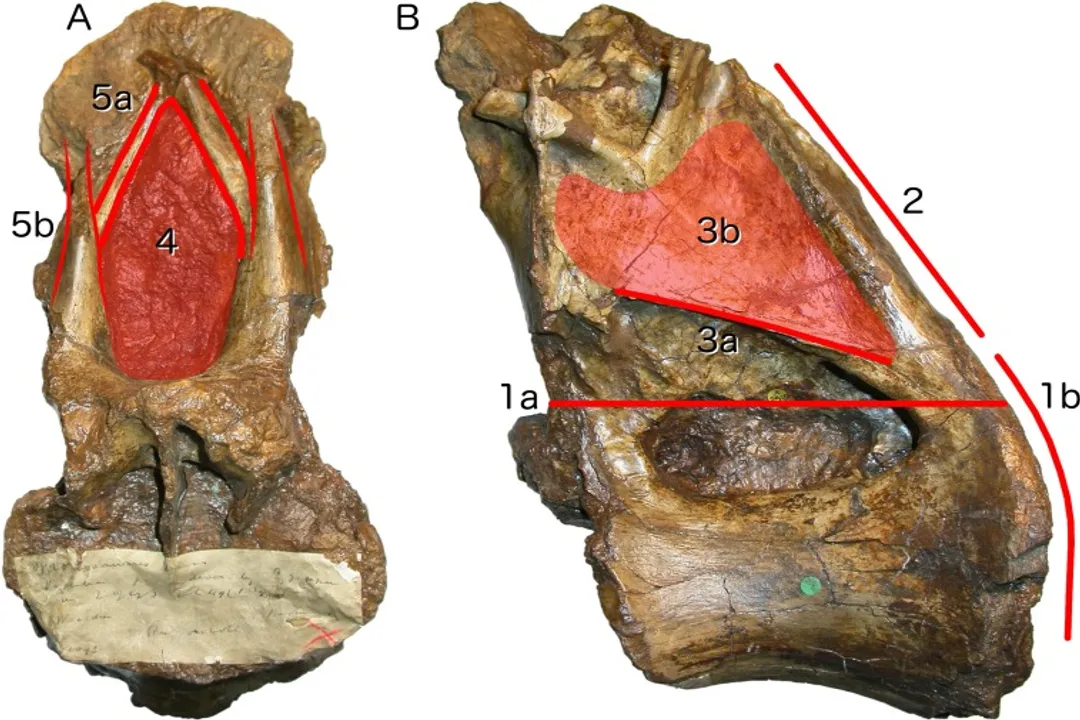
The initial recognition of Xenoposeidon stems from a piece of fossil material discovered in the United Kingdom, specifically associated with the Wealden clays, which place its existence firmly in the Early Cretaceous. [1] The specimen itself was originally described as belonging to a very large brachiosaurid, Pelorosaurus, an older classification for many massive sauropods found in that region. [3][4] However, further examination revealed that the morphology of the fossil—particularly its deep, spool-shaped centrum and other vertebral characteristics—was sufficiently distinct to warrant its own genus, Xenoposeidon proneneukus, by Mike Taylor in 2007. [3][4][5]
The decision to erect a new genus based on one bone illustrates a significant aspect of dinosaur science: sometimes, the evidence, though limited, points strongly toward a unique evolutionary trajectory that cannot be ignored simply because the sample size is small. [4] The specific epithet, proneneukus, means "prone to nodding," a reference to the shape of the vertebra, which suggested a unique posture or neck configuration compared to other known sauropods. [1][3] This naming process itself serves as a microcosm of evolutionary classification—a constant refinement where new data forces a reassessment of established relationships. [9]
# Skeletal Remains
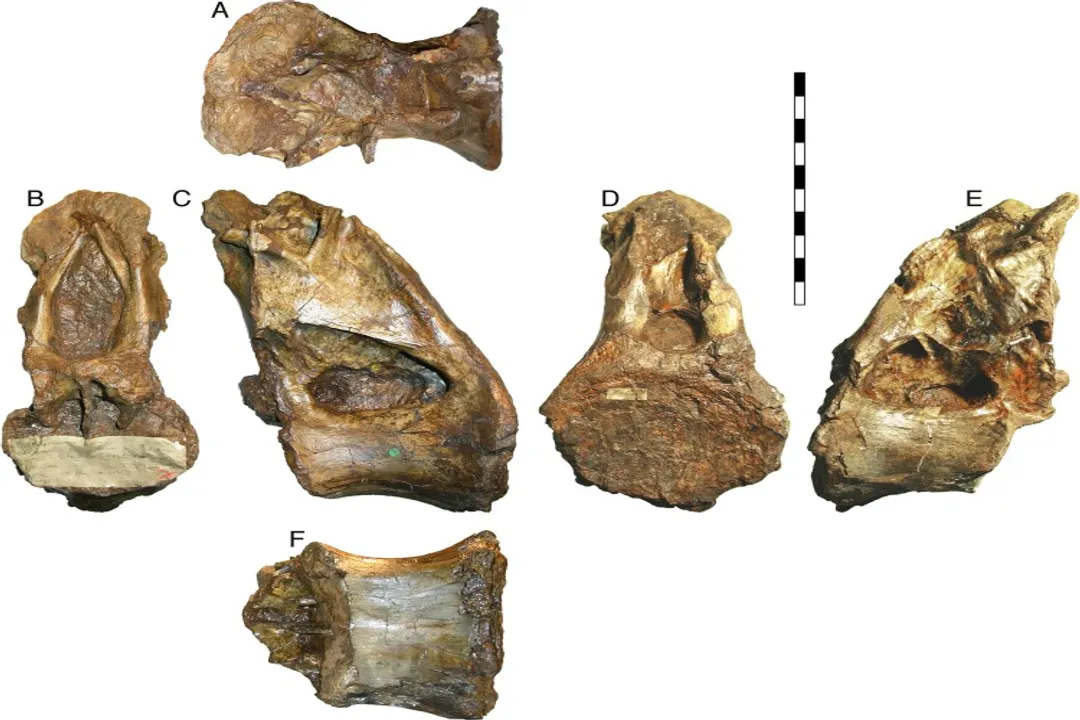
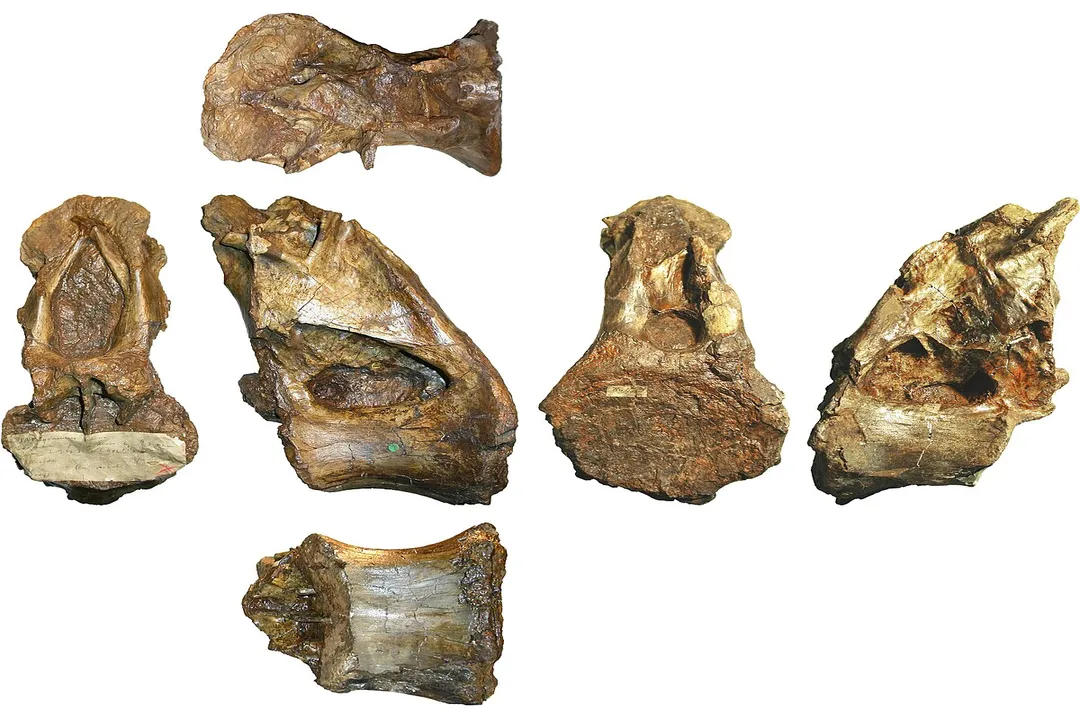
Our current knowledge base rests almost entirely on the holotype specimen, which is a cervical vertebra (a neck bone). [3][5] For a dinosaur whose total size remains speculative, knowing that the only confirmed piece is from the neck is telling. [4] The key diagnostic features cited for Xenoposeidon revolve around the structure of this vertebra, particularly its extreme depth and the shape of its neural spines and centra. [3]
When comparing Xenoposeidon to other titanosaurs or sauropods, the differences noted in the available literature suggest a potentially unique evolutionary specialization in vertebral architecture. [5][7] For instance, the structure hints at an animal that might have been quite tall, yet possibly relatively slender in its overall bulk compared to some contemporaneous or slightly later giants. [3] However, any interpretation of its overall body plan—limb length, tail structure, or skull shape—must be treated with significant caution, as these elements are entirely unknown. [4]
It is interesting to consider how much weight is placed on one bone in establishing an entire evolutionary lineage. While cladistic analyses often rely on dozens of shared derived characters, Xenoposeidon demonstrates that a few autapomorphies (unique traits) in a single, well-preserved element can be enough to carve out a separate branch on the family tree, reflecting an evolutionary side-path that warrants recognition even if its full context remains obscured. [9] This highlights a common challenge in paleontology when dealing with non-type specimens or isolated finds: drawing evolutionary conclusions from scarce physical data requires immense comparative expertise. [5]

# Phylogenetic Position
Tracing the evolutionary path of Xenoposeidon requires placing it accurately within the Sauropoda—the group containing all the long-necked dinosaurs—and specifically within the Titanosauria, the group to which it is most frequently assigned. [1][8] Titanosaurs represent the dominant and often largest land animals of the Late Cretaceous. [7]
Initial assessments suggested that the cervical vertebra showed features linking it closely to other advanced titanosaur groups. [4][5] Some analyses have placed it within the Lithostrotia, a major clade within Titanosauria, often grouping it near taxa that exhibit simplified or highly specialized vertebral structures. [7] The implication here is that Xenoposeidon was part of that evolutionary radiation that led to the largest dinosaurs known, even if it wasn't necessarily the largest itself. [3]
Its placement suggests an evolutionary history distinct from the more basal sauropods like Cetiosaurus or the North American diplodocoids. Instead, Xenoposeidon seems to have evolved features specialized for dealing with massive size and high browsing levels, a common theme among later Cretaceous sauropods. [9]
To illustrate the nuance in its placement, imagine a simple evolutionary branching diagram based on vertebral characters:
| Feature Shared | Implied Group | Contrast with Xenoposeidon |
|---|---|---|
| Deep, spool-like centrum | Advanced Titanosauria | More primitive forms have flatter centra [7] |
| Specific spinous processes | Derived Lithostrotian | Other titanosaurs show more reduced spines [5] |
| Overall massiveness | Extremely large sauropod | Less clear without limb/body fossils [4] |
The ongoing academic work surrounding Xenoposeidon often involves testing its phylogenetic position against new discoveries of other fragmentary titanosaurs. If its unique traits cluster with other European finds, it suggests a regional evolutionary ‘experiment’ in gigantism or neck morphology that separated from the main South American titanosaur trends. [3]
# Size Inference
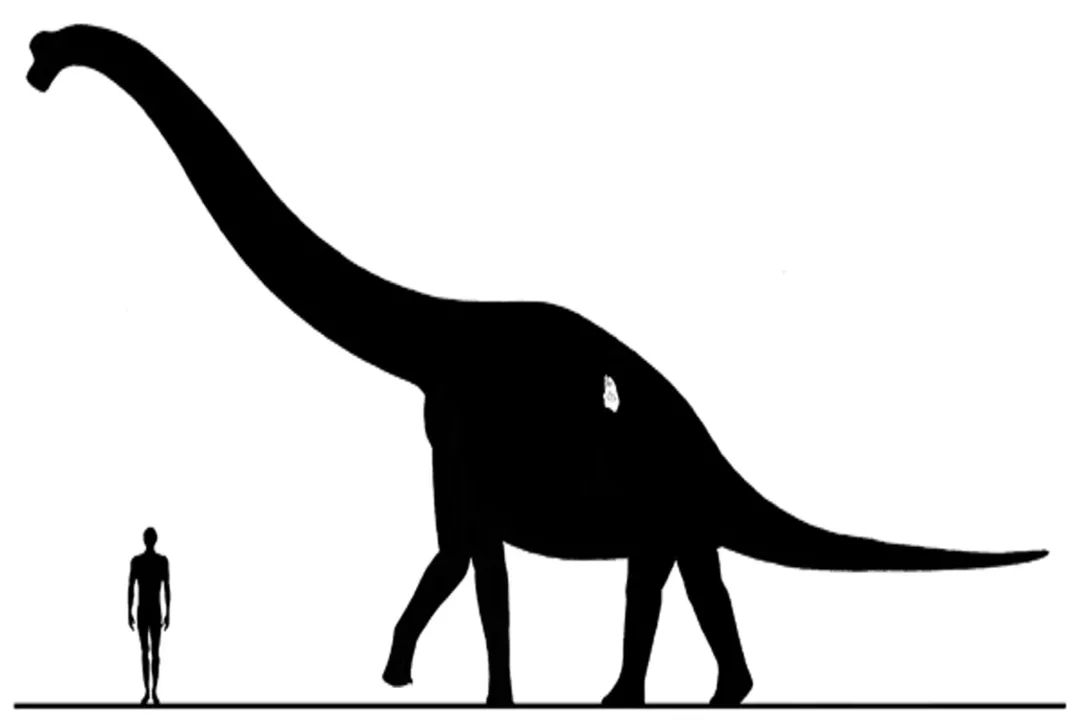
The sheer size implied by the term Xenoposeidon demands a closer look at how paleontologists estimate the dimensions of an animal known from one vertebra. [1][4] The depth and robustness of the known cervical vertebra are considerable, suggesting a very large animal. [3][5] Some initial estimations, perhaps influenced by the implied size of Pelorosaurus when the bone was first described, suggested a creature approaching the record-breaking dimensions of dinosaurs like Argentinosaurus or Patagotitan. [4]
However, a more sober scientific assessment, as discussed by experts familiar with the specimen, often tempers this enthusiasm. [3][5] While the bone is large, the actual scaling relationships for a single vertebra are fraught with uncertainty unless you have a complete vertebral series from the same or a very closely related species to use as a proxy scale. [4] It is entirely possible that Xenoposeidon possessed a relatively "oversized" neck vertebra for its body mass, meaning its total length might have been less staggering than the name suggests. [3]
This leads to an important consideration for understanding dinosaur evolution: the disparity between the implied size drawn from a compelling name and the deduced size constrained by comparative morphology. Paleontologists must constantly balance the allure of giant creatures with the need for conservative estimation based on fragmentary evidence. [5] Xenoposeidon stands as a perfect case study where the sheer proportions of one element provoke grand speculation, even as the scientific community maintains a healthy skepticism about extrapolating a complete 30-meter animal from a single neck segment. [4]
# Evolutionary Context
Xenoposeidon existed in the Early Cretaceous, placing it in an evolutionary time frame that precedes the explosion of the most famous, late-Cretaceous titanosaurs found in places like Argentina. [1] This early appearance suggests it might represent an early offshoot or an example of an evolutionary trajectory toward gigantism that evolved in relative isolation, perhaps within the European island archipelago setting of the time. [9]
The evolution of sauropods was marked by several waves of increasing size, and the presence of a large animal like Xenoposeidon during the Early Cretaceous confirms that the evolutionary drive toward massive herbivory was already well underway in this part of the world long before the final zenith of the titanosaurs. [7] It tells us that the lineage leading to the largest animals was already experimenting with specialized skeletal architectures, such as the robust neck elements seen in this taxon, to support massive bodies and long reach. [5]
When we look at the overall evolution of Sauropoda, the shift from the more slender, longer-necked forms like Diplodocoidea toward the robust, often shorter-necked but immensely bulky Titanosauria is a major theme. [7] Xenoposeidon, even in its limited form, offers a data point for the early diversification within the Titanosaurian camp, indicating that specialized vertebral structures—perhaps adaptations for feeding at different heights or resisting different stresses—were evolving concurrently with the overall increase in body mass. [3][9] Its relatively early appearance, compared to some of the truly colossal titanosaurs, positions it as an important, if shadowy, figure in understanding the initial steps taken by these massive herbivores on the path to becoming the largest land animals ever.
Related Questions
#Citations
Xenoposeidon - Wikipedia
Xenoposeidon is the earliest known rebbachisaurid sauropod ...
Introducing Xenoposeidon - Mike Taylor
10 Long, Happy Years of Xenoposeidon - Scientific American
Xenoposeidon week, day 3: the basic beast inside
Xenoposeidon proneneukus - PALAEOBLOG
Aspects of the history, anatomy, taxonomy and palaeobiology of ...
Xenoposeidon - Dinopedia - Fandom
Review History Xenoposeidon is the earliest known rebbachisaurid ...