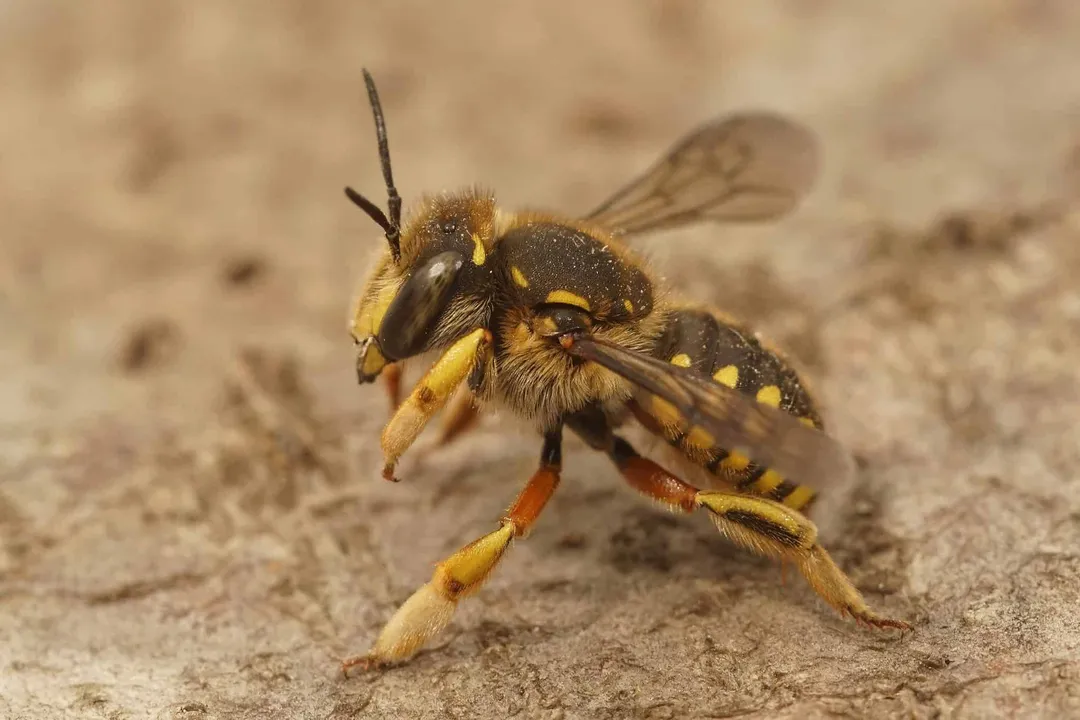
Why might the large, solitary *Anthidium manicatum* often be initially misidentified by a casual observer?
Due to its large size and robust appearance, leading to assumption it is a bumblebee
When identifying insects in the field, superficial similarities can lead to initial errors before detailed morphological checks are performed. The European Wool Carder Bee, *A. manicatum*, is described as notably large and robust in its physical build. This imposing size and general fuzzy appearance cause casual observers, who are not trained taxonomists, to often mistake it for a bumblebee (*Bombus* species), which share a similar heavy-bodied, fuzzy look. However, definitive identification requires noticing key differences, such as the location of pollen transport (scopa on the abdomen for *A. manicatum* versus corbiculae on the legs for bumblebees) and its solitary nature compared to the highly social structure of most bumblebees.