Why might a yellow anaconda be observed in Florida or other non-native regions?
Answer
In contexts related to the exotic pet trade or monitoring for potential invasive establishment.
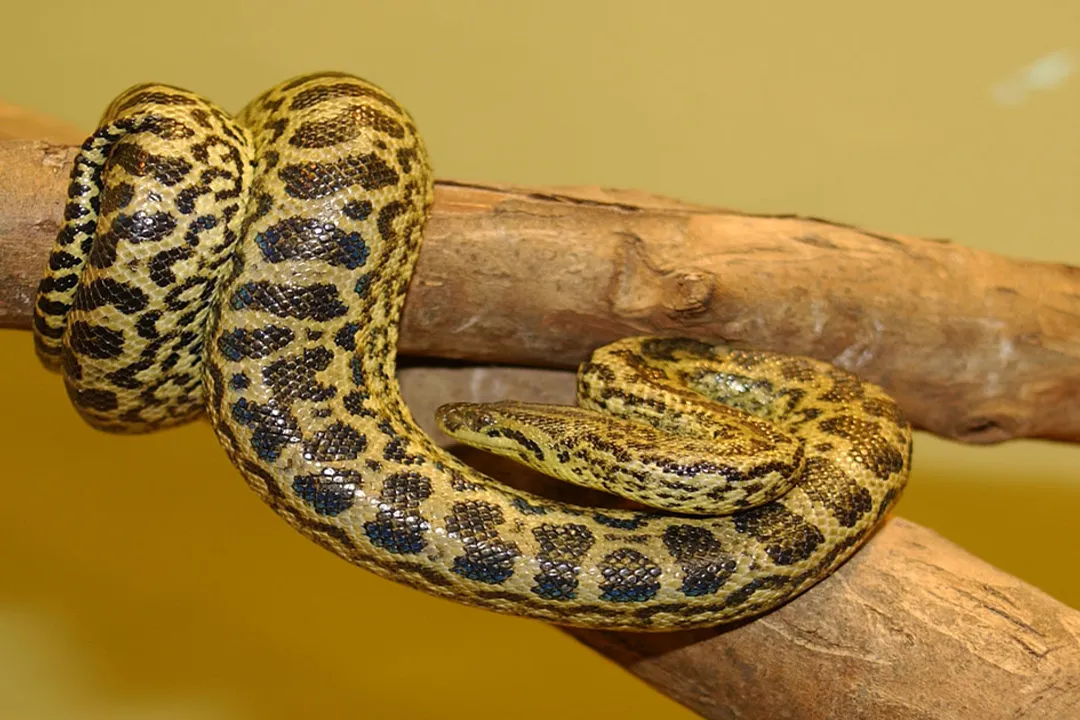
The presence of *Eunectes notaeus* outside its native South American distribution is typically linked to human activity, primarily involving the global exotic pet trade, which results in captive populations worldwide. Furthermore, regulatory agencies monitor for them due to concerns about invasive species establishment if an escaped or released animal were to survive. However, sustained breeding populations are unlikely unless the specific subtropical climate requirements for survival and reproduction are met.
Related Questions
Which countries define the native range center of the yellow anaconda, *Eunectes notaeus*?What kind of water bodies do yellow anacondas strongly prefer over fast-flowing rivers?How does the climate favored by *Eunectes notaeus* compare to that of *Eunectes murinus*?What specific wetland system in Argentina is noted for hosting the yellow anaconda?What combination of elements makes the camouflage of *Eunectes notaeus* exceptionally effective in its habitat?What challenges do researchers face when trying to pin down the precise population densities of *Eunectes notaeus*?During drier seasons, what behavioral shift influences where yellow anacondas might be detected by observers?Why might a yellow anaconda be observed in Florida or other non-native regions?What specific river basins are central to the known distribution of the yellow anaconda?What characteristic of a reported sighting should an experienced biologist use to validate it as a reliable native habitat marker?