What challenges do researchers face when trying to pin down the precise population densities of *Eunectes notaeus*?
Answer
The snake's life cycle is bound to sprawling, remote, and sometimes seasonally flooded wetlands.
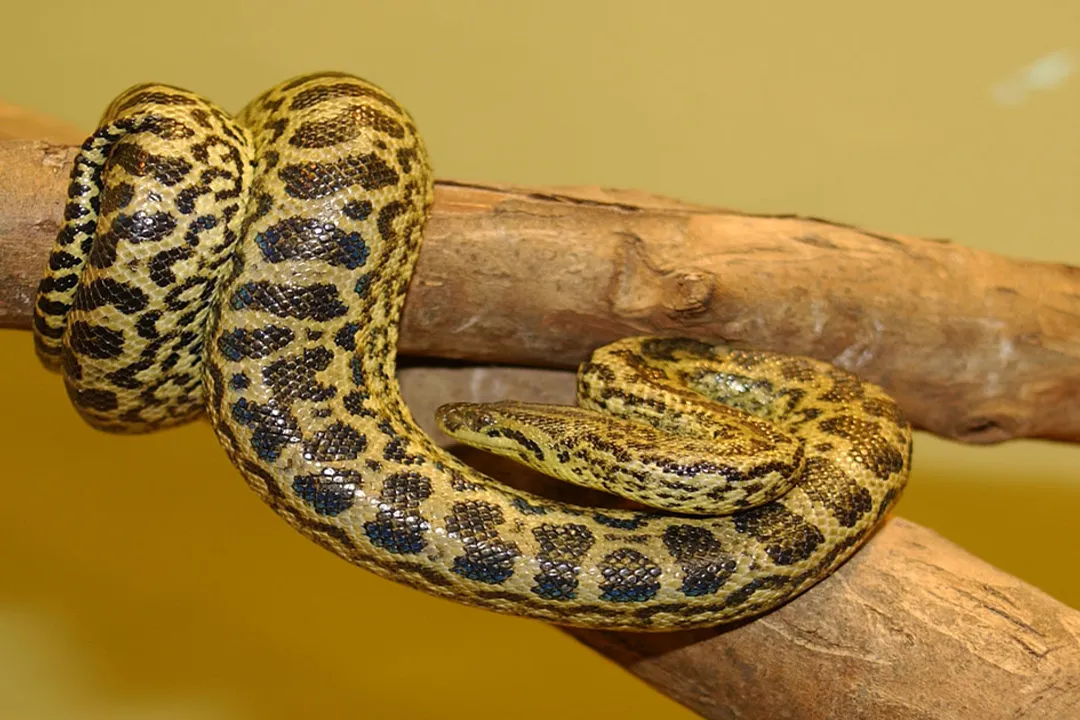
Accurately assessing population density is extremely difficult because the entire existence of the yellow anaconda is dependent on large, often inaccessible, and seasonally shifting wetland areas. The remote nature of these prime habitats, combined with the snake's effective camouflage, means that standard survey methods focusing on easily reachable areas often fail to detect the core population centers.
Related Questions
Which countries define the native range center of the yellow anaconda, *Eunectes notaeus*?What kind of water bodies do yellow anacondas strongly prefer over fast-flowing rivers?How does the climate favored by *Eunectes notaeus* compare to that of *Eunectes murinus*?What specific wetland system in Argentina is noted for hosting the yellow anaconda?What combination of elements makes the camouflage of *Eunectes notaeus* exceptionally effective in its habitat?What challenges do researchers face when trying to pin down the precise population densities of *Eunectes notaeus*?During drier seasons, what behavioral shift influences where yellow anacondas might be detected by observers?Why might a yellow anaconda be observed in Florida or other non-native regions?What specific river basins are central to the known distribution of the yellow anaconda?What characteristic of a reported sighting should an experienced biologist use to validate it as a reliable native habitat marker?