Why is observing the *Bipes biporus* above ground considered a rare occurrence?
Answer
They live almost entirely beneath the desert surface
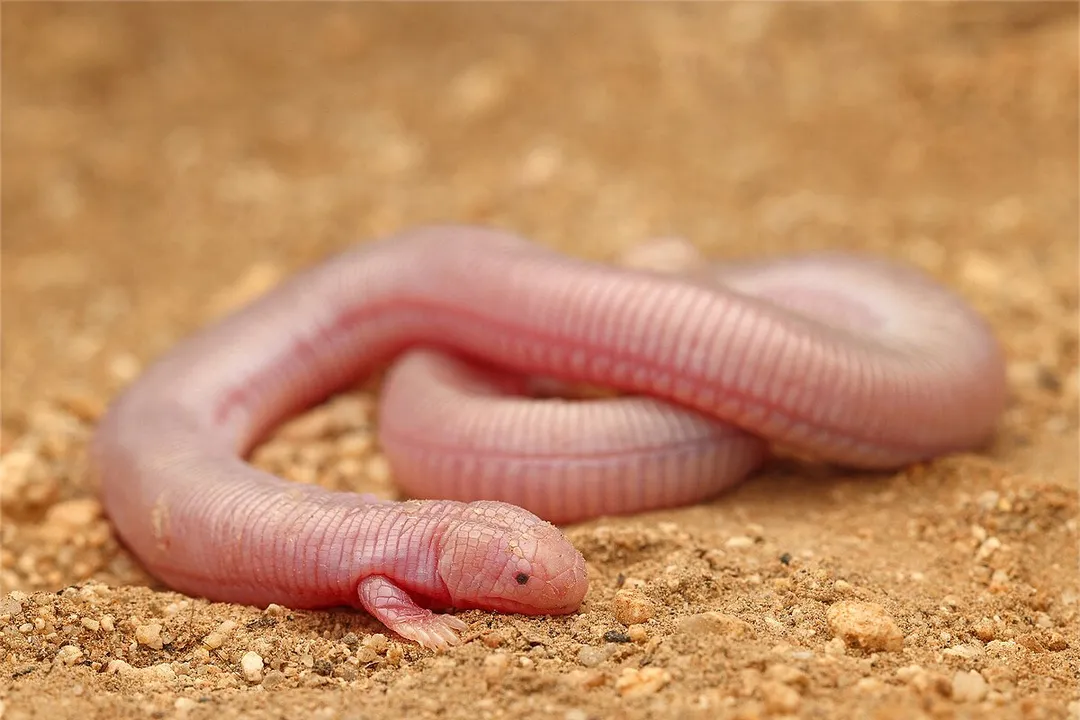
The elusiveness of the Mexican mole lizard stems directly from its fossorial lifestyle. Since the animal spends the vast majority of its life burrowing through the soil in Baja California Sur, it remains hidden from casual observation. They rarely ascend to the surface voluntarily. Instances where they might be seen outside their tunnels are exceptional, usually occurring briefly after significant heavy rains saturate the ground, or entirely by accident when human excavation or digging unearths them inadvertently.
#Videos
Bipes Aren't Coming for You | bioGraphic
Related Questions
To what specific geographic area is the entire *Bipes biporus* population naturally confined?What term describes the *Bipes biporus*'s lifestyle of spending the vast majority of its life beneath the ground?What primary food sources does the subterranean Mexican mole lizard seek in the soil?What specific body appendages does *Bipes biporus* possess in addition to its otherwise smooth, snake-like body?What does the status of *Bipes biporus* as an endemic species primarily signify about its range?What environmental characteristic defines the landscape where the Mexican mole lizard thrives?Why is observing the *Bipes biporus* above ground considered a rare occurrence?What is the primary functional role of the two spade-like forelimbs on *Bipes biporus*?What specific characteristic of the lizard's skin suggests its need to avoid direct sun exposure?Why does the combination of limited range and fossorial life place *Bipes biporus* in a precarious conservation position?