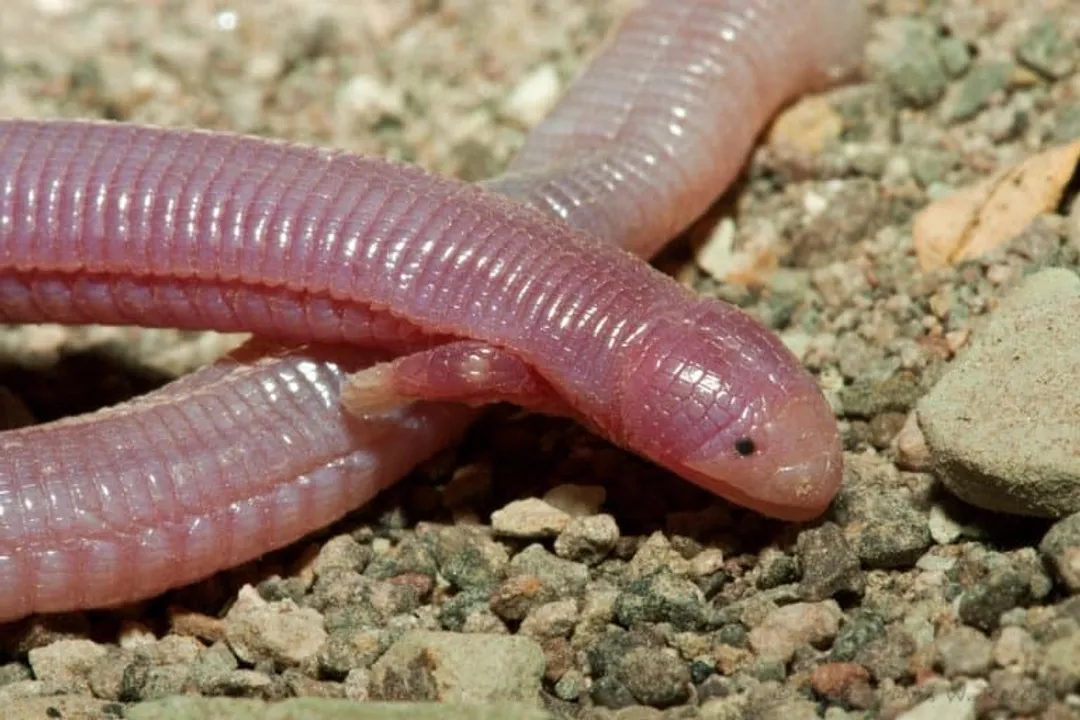
How does the Bipes biporus compensate for its greatly reduced eyes to perceive its environment?
Its skin transmits ground vibrations directly to the cochlea, allowing it to effectively 'hear' prey movements
Due to its profound commitment to a subterranean lifestyle, the eyes of the *Bipes biporus* have significantly diminished in function, only allowing the detection of general light and dark conditions, not forming images. To navigate, hunt, and survive beneath the sand, the lizard has evolved a specialized sensory adaptation. Its skin is directly linked to transmitting ground vibrations into the cochlea, which functions as a sophisticated auditory system for the underground environment. This allows the lizard to effectively 'hear' the subtle movements of its prey, such as ants and termites, moving beneath the surface, enabling precise tracking and efficient predatory strikes without relying on sight.