What specific characteristic of the lizard's skin suggests its need to avoid direct sun exposure?
Answer
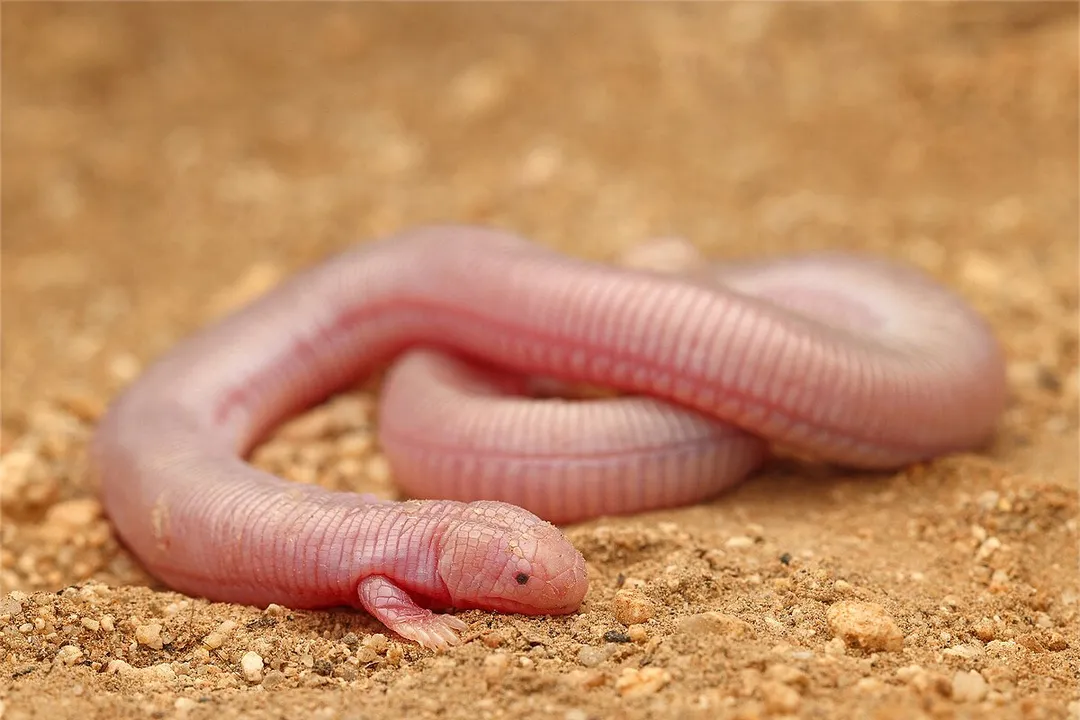
Its delicate, pink or flesh-colored appearance
Despite inhabiting a harsh desert environment, the skin of *Bipes biporus* presents a striking contrast to the expected adaptations for intense sunlight. The text notes that the lizard maintains a delicate, pink or flesh-colored appearance. This coloration strongly suggests that its skin has not evolved robust adaptations to withstand significant exposure to ultraviolet (UV) radiation, reinforcing the necessity for its strictly subterranean lifestyle where it remains insulated from the powerful desert sun.
#Videos
Bipes Aren't Coming for You | bioGraphic
Related Questions
To what specific geographic area is the entire *Bipes biporus* population naturally confined?What term describes the *Bipes biporus*'s lifestyle of spending the vast majority of its life beneath the ground?What primary food sources does the subterranean Mexican mole lizard seek in the soil?What specific body appendages does *Bipes biporus* possess in addition to its otherwise smooth, snake-like body?What does the status of *Bipes biporus* as an endemic species primarily signify about its range?What environmental characteristic defines the landscape where the Mexican mole lizard thrives?Why is observing the *Bipes biporus* above ground considered a rare occurrence?What is the primary functional role of the two spade-like forelimbs on *Bipes biporus*?What specific characteristic of the lizard's skin suggests its need to avoid direct sun exposure?Why does the combination of limited range and fossorial life place *Bipes biporus* in a precarious conservation position?