Where are stingrays found in the US?
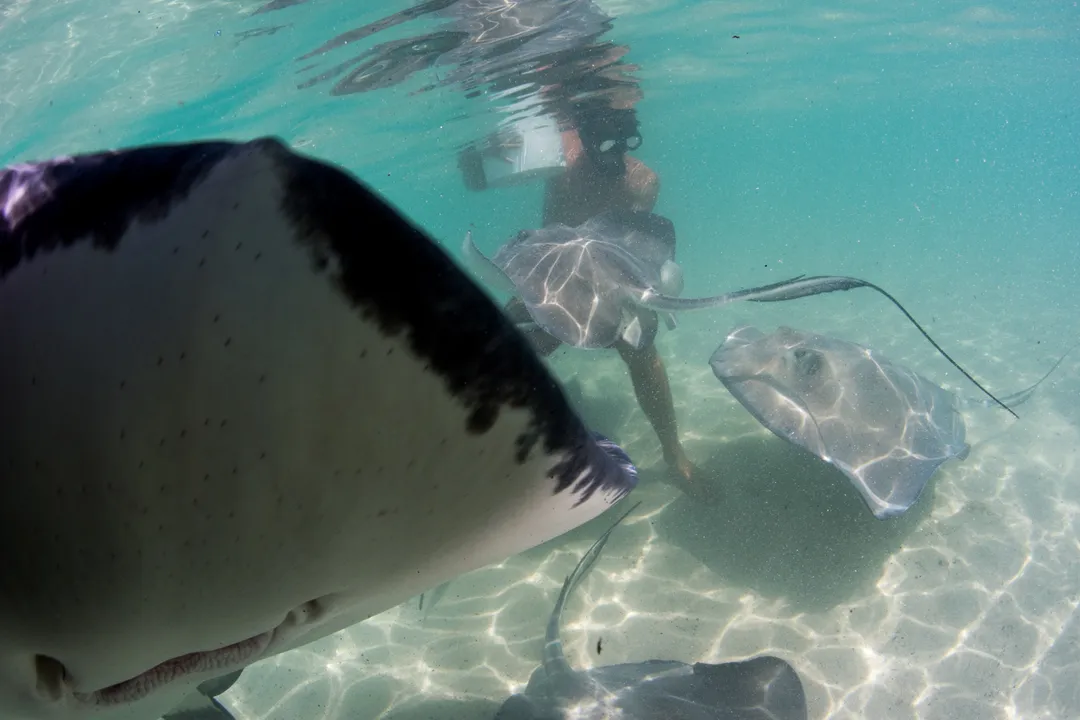
The stingray, often perceived as a creature of the deep, is actually a common sight in the shallow, sun-drenched waters along much of the United States coastline. Their presence spans from the temperate north of the Atlantic all the way down to the subtropical zones of the Gulf of Mexico, and across the Pacific shelf in the west. While most species prefer to glide along sandy bottoms, seeking buried meals, their specific distribution is tied closely to water temperature and habitat preference, leading to distinct regional groupings of these cartilaginous fish. [3][4]
# Atlantic Waters
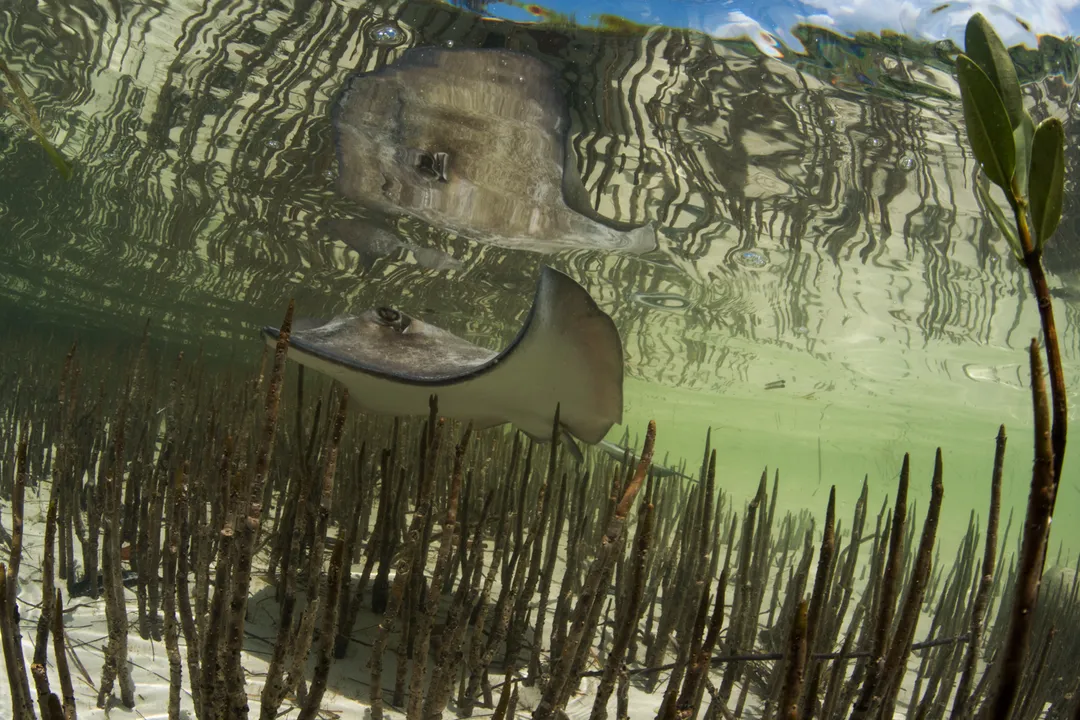
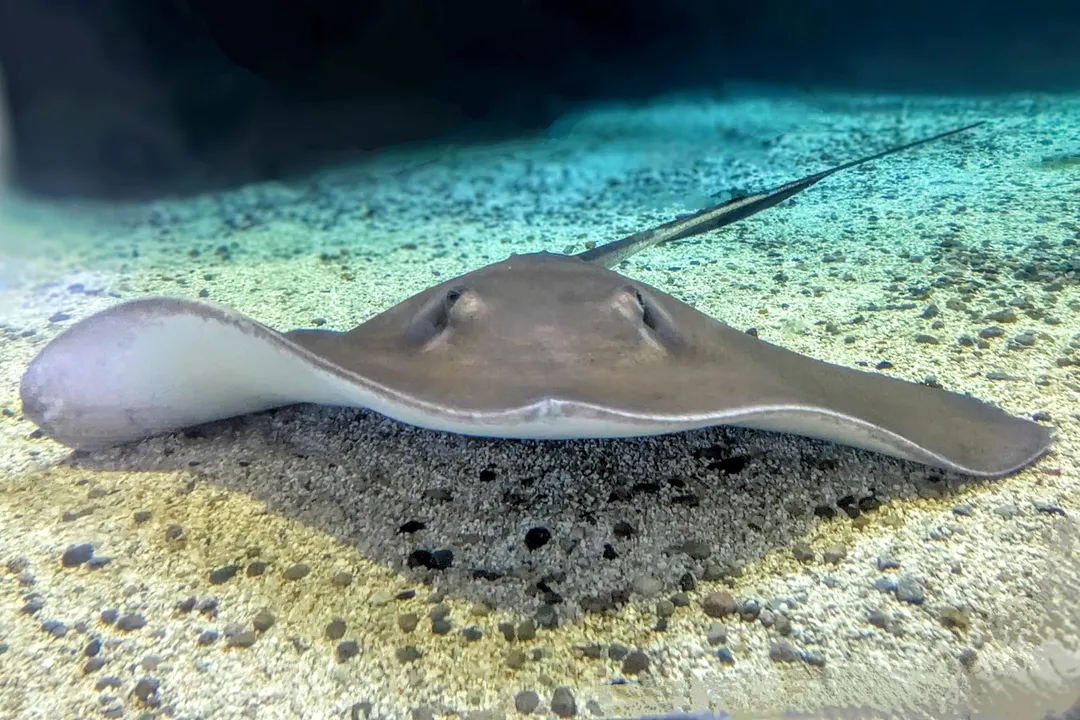
The warm waters of the eastern seaboard are prime territory for at least two species that frequently interact with beachgoers and coastal residents. The Southern Stingray (Hypanus americanus) has a very broad range, extending northward along the coast as far as New Jersey, though they are most concentrated in the Caribbean and the Gulf of Mexico. [1][6] These rays favor shallow coastal areas, particularly sea grass beds, algal fields, and estuarine habitats. [1]
Closely related, and sometimes overlapping in range, is the Atlantic Stingray (Hypanus sabina). This species is generally found from the Chesapeake Bay southwards down to Florida, and continuing along the Gulf coast toward Mexico. [7] Atlantic Stingrays are very particular about temperature, preferring waters above (). [7] As the water cools in the late fall, they undertake seasonal migrations, moving from the shallow inshore areas to deeper, warmer spots to wait out the winter. [7]
It's worth noting the distinction in size; the Southern Stingray can reach a width of up to $1.5$ meters, while the Atlantic Stingray is one of the smaller rays in its family, maxing out around $14$ inches in disc width for females. [7] This size difference might subtly influence where they aggregate versus where smaller species might seek refuge.
# Freshwater Realm
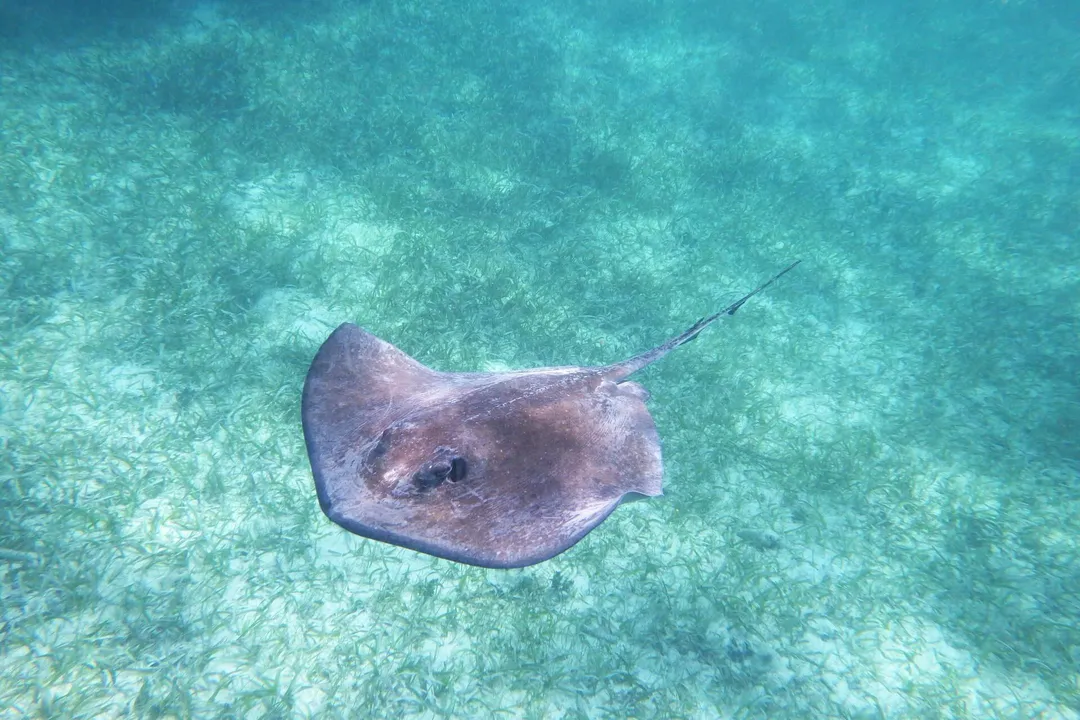
Perhaps the most remarkable story regarding US stingrays involves a permanent population thriving where most marine life cannot survive. The St. Johns River system in Northern Florida harbors the only self-sustaining, year-round freshwater population of elasmobranchs (sharks, skates, and rays) in North America. [3][7] This population consists of the Atlantic Stingray. [3][7]
These rays possess an extraordinary physiological adaptation, allowing them to manage the drastic salinity changes between fresh and saltwater environments. [3] When in freshwater, they counteract osmosis—the tendency to absorb too much water in a less salty solution—by increasing urine output tenfold and reducing the salt concentration of their body fluids. [3] This ability to acclimate quickly suggests a remarkable environmental plasticity that allows them to maintain a permanent foothold miles from the ocean, consuming snails, worms, and insect larvae in the river bottoms. [3] While Southern Stingrays have occasionally been reported as rare transients in the river, the Atlantic Stingray maintains the permanent presence. [3]
# Pacific Encounters
Moving west, stingrays are certainly present along the Southern California coast in the Pacific Ocean. [2] While the sources don't specify the exact species dominating the shallow wading zones there as clearly as in Florida, the presence of rays capable of delivering strong electrical charges is confirmed. [3]
The Pacific electric ray is a notable resident here. [3] While they typically inhabit deeper, colder waters and are primarily nocturnal, they possess the ability to discharge up to $50$ volts. [3] In contrast to the common defensive stab from a tail spine, these rays use electricity to deter predators like sea lions, who appear to quickly learn to avoid them after a few shocks. [3] Researchers in Southern California, noting high rates of reported injuries (sometimes hundreds per summer in small beach stretches), are actively studying the movement patterns of these rays to better inform beachgoers about high-risk times and locations. [3]
# Other Notable Rays
Beyond the highly documented Atlantic and Southern species, the broader US waters host several other ray types, though perhaps less frequently encountered by the casual beachgoer in the sand flats. The Cownose Ray is well-known in the Chesapeake Bay area, famous for preying on clams and oysters, and it migrates south toward Florida in the winter. [3] In the Pacific range, from Oregon to Mexico, the Bat Ray is found, often gathering in large schools of a hundred or more. [3] Furthermore, the Spotted Eagle Ray is a widespread species recognizable by its dark body dotted with white spots. [3] For those near the very deep, cold waters, the powerful Atlantic Torpedo Ray, which can reach six feet across, occurs from Nova Scotia down to Florida, but it is rarely a concern for swimmers as it stays deep and is mostly active at night. [3]
# Defense and Habitat Use
Regardless of coast, the common thread among most stingrays is their behavior: they are bottom dwellers that spend much of their time sifting through sand for crustaceans, mollusks, and worms. [1][2] They locate this hidden food using sensitive electroreceptors on their snouts, known as the Ampullae of Lorenzini. [3][7]
This tendency to search or rest on sandy bottoms is what places them directly in the path of humans wading in shallow water. [2] Their primary defense mechanism is the sharp, venom-laced spine near the tail base, deployed reflexively if they feel stepped on or trapped. [3][4] When resting or hiding, they often use their fins to kick up sand and cover their bodies completely. [2] If you are enjoying the warm shallows where these rays are common, remembering this habit is crucial. The best practice in these environments, especially where stingrays are known to frequent areas like the sandy flats of Florida, is the "stingray shuffle"—shuffling your feet instead of walking normally. [2] This vibration alerts the buried ray to your presence, encouraging it to swim away rather than waiting to be stepped upon, which is the trigger for defensive action. [2] It is important to remember that this defense is almost never an act of aggression toward humans, but purely reactive. [3][4]
Considering how many rays occupy the prime, knee-deep wading areas along the southeastern US—the very same warm, shallow habitat favored by vacationers—it's insightful to realize that the risk is inherently tied to the environment they share, not one they seek to inhabit in a predatory way toward people. For instance, in areas like Seal Beach, California, the concentration of injuries suggests that localized factors, perhaps even warm water discharge from power plants, might be concentrating the rays, turning a typically sparse population into a predictable, if cautious, gathering. [3]
The locations where stingrays are found in the US—from the temperate bay mouths of the North Atlantic to the tropical flats of Florida and the cooler Pacific depths near Southern California—demonstrate a wide tolerance for varied conditions, provided there is a soft bottom for feeding and burying. While the freshwater rays of Florida remain a true biological anomaly, the rays of the coastlines are best regarded as essential bottom-feeders whose presence requires only a mindful shuffle to coexist peacefully.
Related Questions
#Citations
Phantoms of the Deep - National Wildlife Federation
What are stingrays and how can you avoid being stung?
Sorting out the Stingrays - NIGEL MARSH PHOTOGRAPHY
Southern Stingray | Oceana
Southern Stingray | Our Animals | Fort Wayne Zoo
Atlantic Stingray – Discover Fishes - Florida Museum of Natural History
Southern stingray - Save Our Seas Foundation