Where are Carpet Vipers found?
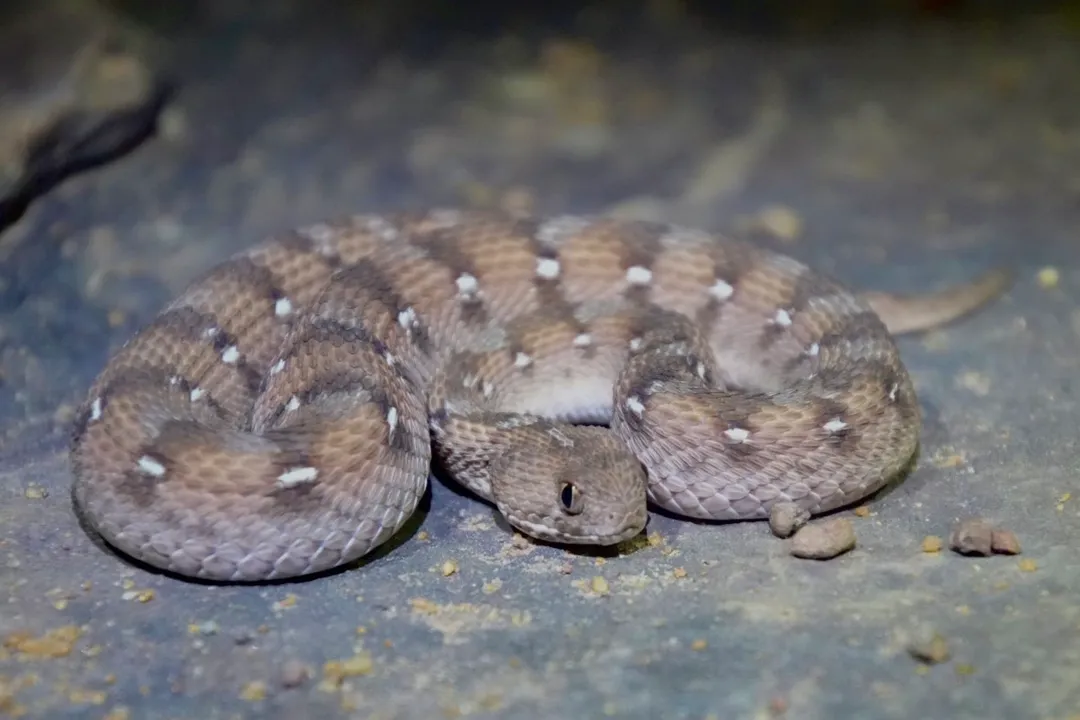
The Carpet Viper, belonging to the genus Echis, occupies a vast and varied geographic expanse that spans much of Africa, the Middle East, and into Asia. This wide distribution means that "Carpet Viper" doesn't refer to a single snake but rather a group of highly venomous species whose specific ranges are often dictated by continent or region. Understanding precisely where they are found requires differentiating between the primary species, as their territories rarely overlap significantly.
# Genus Spread

The genus Echis establishes a major belt across the Old World, generally favoring arid and semi-arid environments. This range essentially stretches from the Atlantic coast of West Africa eastward across the Sahara's southern edges, through the Arabian Peninsula, and into the Indian subcontinent. The sheer breadth of this territory—covering multiple continents and diverse climatic zones—is remarkable for a single genus of vipers. While the general distribution is massive, pinpointing an exact location requires narrowing the focus to species like Echis ocellatus, Echis pyramidum, or Echis carinatus.
# West African Presence

One of the most frequently discussed populations resides in West Africa, primarily represented by the West African Carpet Viper, Echis ocellatus. Its documented territory begins around Senegal and stretches eastward. Specifically, this species covers countries including Gambia, Guinea-Bissau, Guinea, Sierra Leone, Liberia, Ivory Coast, Burkina Faso, Ghana, Togo, Benin, and Nigeria. Moving eastwards, its range continues into Cameroon and Chad, and south into the northern reaches of the Central African Republic and the Democratic Republic of the Congo (DRC). Some accounts also place sightings in Nigeria. These vipers are known to prefer savanna landscapes, and they are frequently encountered in disturbed areas, such as farmland and within villages, which speaks to a degree of human tolerance or adaptation within their known habitat areas.
# North East Africa
Shifting focus to the northern and eastern flanks of the continent brings us to the range of the North East African Carpet Viper, scientifically known as Echis pyramidum. This species occupies a distinct geographical niche compared to its western cousin, E. ocellatus. The distribution for E. pyramidum includes Egypt, Sudan, Eritrea, Ethiopia, Djibouti, Somalia, and extends down into Northern Kenya. This region is characterized by semi-arid and arid conditions, often featuring deserts and rocky hillsides, though savannas are also included in its habitat profile. It is interesting to note that while both E. ocellatus and E. pyramidum inhabit African savannas, their territories are generally separated, with E. ocellatus dominating the western block and E. pyramidum covering the central-eastern block. A report from East Africa also noted the presence of an unidentified Echis species in Uganda, suggesting potential range overlap or another species in that immediate vicinity.
# Arabian Peninsula Habitats
Moving eastward across the Red Sea, the Carpet Viper's presence is marked by Echis coloratus, often called Burton's Carpet Viper. This species is firmly established across the Arabian Peninsula. Specific countries within its known habitat include Oman, the United Arab Emirates (UAE), Saudi Arabia, Jordan, and Yemen. The environments here contrast somewhat with the West African savannas; E. coloratus is specifically associated with rocky slopes, wadis (dry riverbeds), and vast gravel plains common to the peninsula's geology. This specialization in rocky, desert-edge terrain highlights how local topography plays as much a role as general climate in defining where these snakes establish populations.
# Asian Continuation
The eastern extent of the Echis genus range terminates in South Asia, primarily with the Indian Saw-scaled Viper, Echis carinatus. This species is found in India and Sri Lanka. While the sources don't detail the precise habitats for E. carinatus, its presence confirms the genus's deep penetration into the arid and semi-arid zones of the Asian continent.
# Mapping Species Distribution
To better visualize the distinct separation of these primary populations, a summary comparison is useful. The distribution suggests that a person encountering a Carpet Viper in West Africa is dealing with a different species than someone in Egypt or India, which has significant implications for medical response:
| Region | Primary Species | Notable Habitat Type |
|---|---|---|
| West Africa | E. ocellatus | Savanna, disturbed farmland |
| North/East Africa | E. pyramidum | Desert edges, rocky hillsides |
| Arabian Peninsula | E. coloratus | Wadis, gravel plains |
| South Asia | E. carinatus | Arid/Semi-arid regions |
This territorial segmentation within the genus is an excellent example of allopatric speciation driven by major geographic barriers, such as large seas or significant non-conducive habitats separating the initial ancestral groups. An observer in a Sudanese desert is unlikely to find the same snake that a field worker encounters in a Nigerian farm, even if both call their snake a "Carpet Viper".
# Contextualizing Local Encounters
When dealing with species that exhibit such wide geographic variation, the local context becomes surprisingly informative for anticipating encounters. For example, recognizing that Echis ocellatus frequently occupies disturbed areas in West Africa—meaning areas with increased human activity, agriculture, or deforestation—suggests a higher probability of human-snake contact in those modified landscapes compared to pristine wilderness. Conversely, when studying or traveling through the Arabian Peninsula, knowledge that E. coloratus prefers wadis means that following seasonal riverbeds, while perhaps necessary for water, concentrates exposure risk along those specific geographical features. This is an area where conservation planning and public health education must be hyper-localized; a safety protocol developed for a Sri Lankan tea plantation working near E. carinatus habitat would miss the mark for someone working in the arid borderlands of Jordan occupied by E. coloratus. The common name, while useful for quick identification, actually masks significant biological and ecological differences across continents.
# Geographical Barriers and Range Limits
The boundaries established by the genus Echis are defined as much by what lies between the known populations as by the populations themselves. The gap between the West African E. ocellatus and the North African E. pyramidum is influenced by the vast Sahara, which acts as a significant dispersal barrier for savanna-adapted species. Similarly, the separation between the African populations and the Arabian/Asian species is maintained by major bodies of water. The persistence of these distinct ranges underscores the importance of geography in shaping species evolution and distribution patterns across the Old World tropics and subtropics. For anyone working in herpetology or emergency medicine in these zones, treating all "Carpet Vipers" identically based solely on the common name would be a critical error in field identification and subsequent medical management. Knowing the precise political border or environmental transition point a person is near can often narrow the species down to one of the known variants, such as E. ocellatus in Benin or E. pyramidum in Egypt.
Related Questions
#Citations
Echis ocellatus - Wikipedia
Carpet Viper - A-Z Animals
The amazing Saw-scaled carpet viper (Echis leucogaster)
West African Carpet Viper - Eswatini Antivenom Foundation
North-east African Carpet Viper - African Snakebite Institute
Saw-scaled or Carpet Vipers - African Reptiles & Venom
Burton's Carpet Viper - Wandering through Wadis