Where can spider beetles be found?
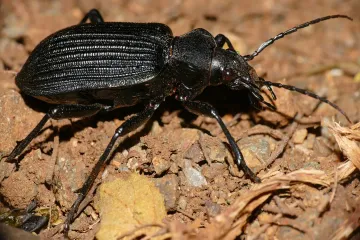
Spider beetles, despite their often innocuous appearance, are commonly encountered as household pests, especially when they infest stored commodities. [1][4] These tiny insects are generally dark brown to black and possess a very rounded, almost globe-like body shape, sometimes leading to them being mistaken for other small, dark pantry pests. [1][8] The key to understanding where these pests are found lies in recognizing their dual nature: they are attracted to specific food sources but require secure, dark places to live and reproduce. [4][6]
# Food Sources
The primary reason spider beetles are found inside human dwellings or storage areas is their dependence on dried organic materials for sustenance. [1][4][5] They are classic stored-product pests, meaning you are most likely to find them where these goods are stored: kitchens, pantries, food processing plants, and warehouses. [5][6]
Different species of spider beetles target slightly different materials, although there is significant overlap in their diets. [3][8] The American spider beetle (Mezium americanum) shows a strong preference for items like dried fruits, cereals, dog and cat food, and sometimes even tobacco. [3][9] They can also infest spices, birdseed, and cocoa beans. [1][6] If you are finding them exclusively near one type of food, you have located the current epicenter of the infestation. [4]
The Shiny spider beetle (Gibbium psylloides) also targets dried materials, frequently found near dried fruit, seeds, and grain products. [8] In rare cases, these beetles have been documented infesting stored museum specimens, such as dried animal materials. [8] When considering how small these insects are—often only about to of an inch long—it becomes clear how easily a contaminated food package can escape notice until the population multiplies. [1] For instance, a single infested bag of flour might contain hundreds of these small, reddish-brown or black, spherical pests before becoming apparent. [1][4]
# Shelter Areas
While food dictates why they are present, shelter dictates where they settle in undisturbed locations. [4] Adult spider beetles thrive in dark, dry, and undisturbed settings. [4] If you find scattered individuals far from the immediate vicinity of stored food, this often suggests that the infestation has matured, and they are dispersing to establish secondary harborage sites within the structure itself. [1]
Common indoor hiding spots include:
- Cracks and crevices in walls or cabinets. [1]
- Behind baseboards or window casings. [4]
- In wall voids where insulation or debris has collected. [1]
- Underneath or behind heavy equipment in storage areas. [6]
- In accumulated debris or lint near window sills or door frames. [4]
When investigating an infestation, it is helpful to visualize the insect's size relative to common household items. Imagine a grain of coarse salt or a cracked peppercorn; that approximates the size of many adult spider beetles, allowing them to occupy spaces that seem impossibly small. [1] If they are successfully reproducing within the structure, it means there is likely a continuous, albeit hidden, food supply nearby, or they have managed to find enough residual debris to support the developing larvae. [6]
# Species Variation
While pest control literature often lumps them together, knowing the specific type can sometimes narrow down the likely origin or preferred environment. [8] For example, the American spider beetle is well-established across North America, often tied directly to human food storage. [3][9] In contrast, the Shiny spider beetle can sometimes be found in drier, more secluded parts of a building, suggesting a preference for less trafficked structural voids once an initial food source is exhausted. [8]
Another species sometimes encountered is the Black Widow spider beetle (Ptinus villiger), which, like its relatives, feeds on stored products but may also be associated with structural materials or stored plant debris if food sources are scarce. [5] It is important to note that while these beetles are excellent at hiding, they are generally not known to infest structural wood like termites or powderpost beetles; their focus remains on dried organic matter. [6]
# Outside Entry
Although they are primarily pests of stored products found indoors, spider beetles do occasionally enter structures from the outside world. [4] They may wander in seeking warmth, especially as outside temperatures drop, or simply by accidentally hitching a ride on infested materials brought into the home. [4][9]
When they are found primarily around window sills or door frames, but nowhere else inside, the infestation source is likely external or transient. [4] They might originate from an adjacent shed, garage, or an outdoor pile of stored debris that contains materials like dried leaves, seeds, or old bird nests. [6] The likelihood of finding them outside decreases significantly in very cold climates unless they have found a protected, heated microclimate, such as a crawlspace or an infrequently used storage building. [5]
# Finding Patterns
Mapping where you find the beetles can be more informative than simply noting their presence. If you find a cluster of beetles on a shelf near a jar of dried beans, the source is obvious. [4] However, if you find an occasional specimen moving across a clean floor, consider the ceiling above it. [1] Spider beetles can drop from high harborage areas or crawl down wall voids. Observing the vertical distribution of sightings can point toward an infestation point high up in shelving or attic storage areas that have not been cleaned in years. [1]
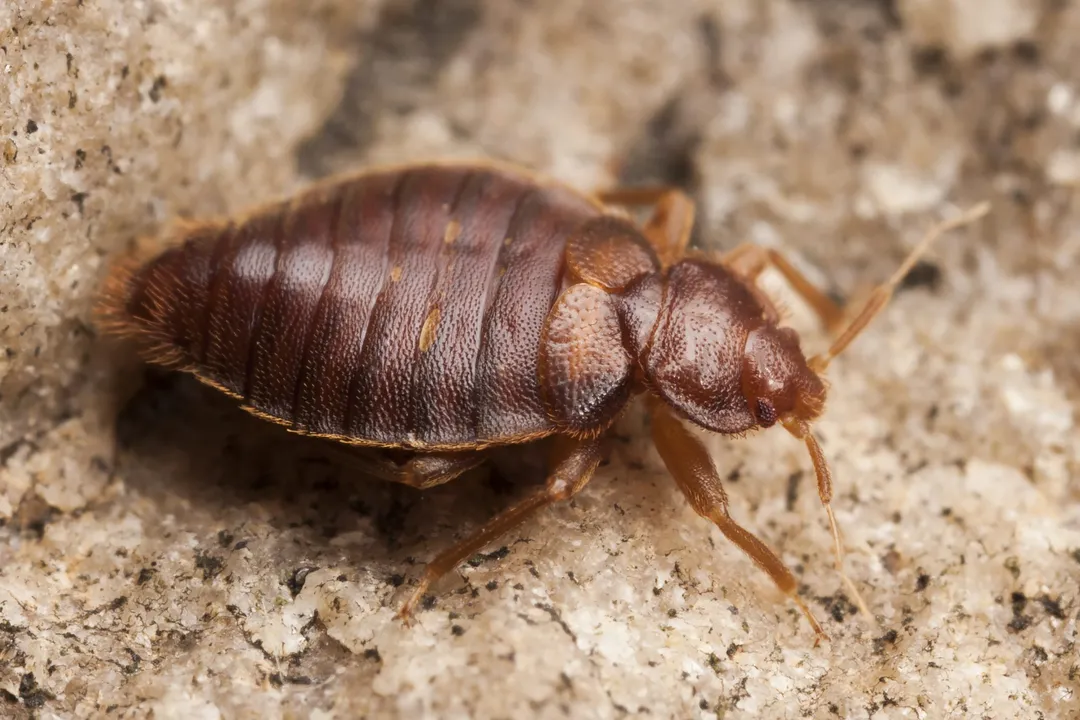
One crucial observation distinguishing them from more notorious pests like bed bugs relates to their movement patterns. [10] While bed bugs typically hide close to where they feed (e.g., mattresses or upholstery) and emerge to feed, spider beetles are often found actively searching for food or new hiding spots, meaning they can be distributed over a wider area than expected, even if the main colony is localized. [10] If you find a rounded, dark beetle on a bed, it is far more likely to be a spider beetle that wandered in from the pantry than a flattened bed bug, which usually stays near the seams of the bedding. [10]
# Pest Management
Locating the source is the first step toward elimination, as control is ineffective if the infested material remains. [1][6] Since their location hinges on finding their food, a thorough inventory of the pantry is mandatory. [1] This means checking not just obvious items like flour and rice, but also pet foods, spices, dried flowers used for decoration, and even stored seed packets. [3][9] Any product showing signs of infestation—including webbing, tiny holes, or the presence of the beetles themselves—must be immediately discarded, ideally sealed in a plastic bag before being taken out to the exterior trash bin. [1][6]
For hard-to-reach structural hiding spots, like wall voids where they may have established a breeding colony away from primary food stores, sanitation and targeted treatment are necessary. [4] Vacuuming deeply into cracks and crevices is an important initial action to physically remove adults and larvae. [4] After vacuuming, sealing the accessible cracks with caulk can help deny them future entry into these protected spaces, creating a less favorable environment for persistent populations. [1] This two-pronged approach—eliminating the food source and sealing the shelter—is what generally resolves a spider beetle presence in a home or facility. [4]
Related Questions
#Citations
Spider Beetles - Penn State Extension
Spider Beetles | Facts & Identification, Control & Prevention
How to Get Rid of American Spider Beetles: Control & Facts - Orkin
5 facts about spider beetles - Ehrlich Pest Control
Spider Beetle - Defense Centers for Public Health - Aberdeen
[PDF] Spider Beetles - Western Colorado Insects
Friends! My parents have been finding these mystery mites around ...
[PDF] Shiny spider beetle Gibbium aequinoctiale - Museum Pests
American Spider Beetle - Veseris
The Difference Between Spider Beetles and Bed Bugs