Where can Cedar Waxwings be found?
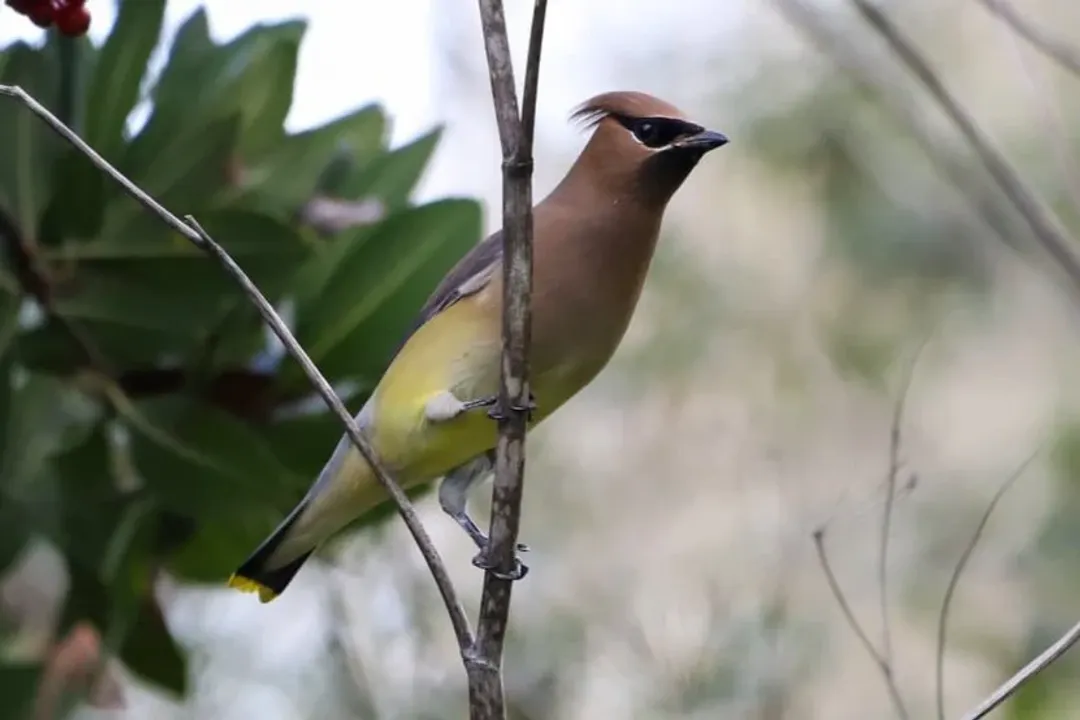
The appearance of the Cedar Waxwing, with its sleek, masked face, pale yellow belly, and distinctive waxy red tips on the secondary feathers, often makes birders stop and stare, wondering just where these elegant birds originate and where they might be headed next. Unlike many songbirds whose ranges are relatively fixed, pinning down the Cedar Waxwing requires understanding a nomadic lifestyle dictated almost entirely by the availability of soft, fleshy fruits, which form the cornerstone of their diet. [2][4] Their movements are less about following a predictable calendar and more about tracking the next ripe berry patch, making their location dynamic across the seasons. [4][6]
# North America Breeding
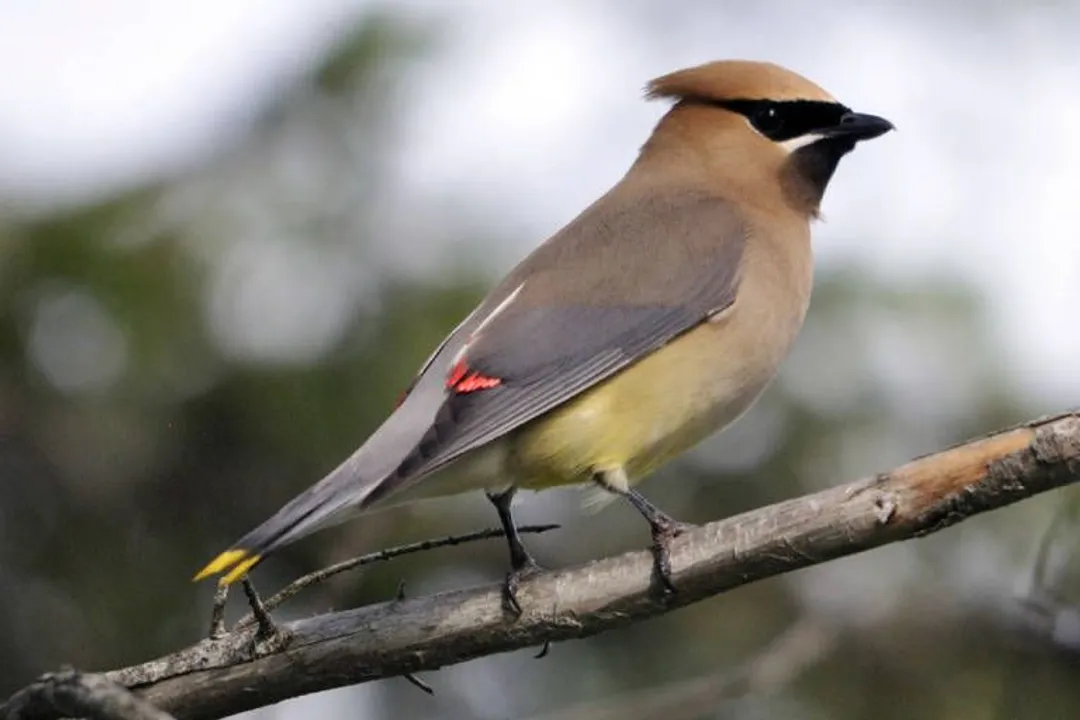
The general breeding range for Cedar Waxwings spans a vast area across the northern reaches of North America. [6] In the summer months, you can expect to find them breeding from Alaska and across much of Canada, extending south into the northern United States. [1][4] Within the US, their breeding territories typically include states in the Northeast, the upper Midwest, and parts of the Pacific Northwest. [1] When looking for them during the nesting season, they prefer open areas that feature scattered trees, rather than dense, mature forests. [4] This preference often puts them near forest edges, shrubby fields, and often surprisingly close to human habitation, provided there are suitable nesting trees and nearby food sources. [6][9]
It is worth noting that while the general map shows a wide northern band, the actual density varies greatly year to year depending on the success of the previous year's fruiting season and local weather conditions. [4] For instance, a particularly poor berry crop in the boreal forest one year might push the birds further south into New England or the Great Lakes region even during the summer months, a slight deviation from the expected summer distribution. [1]
# Wintering South
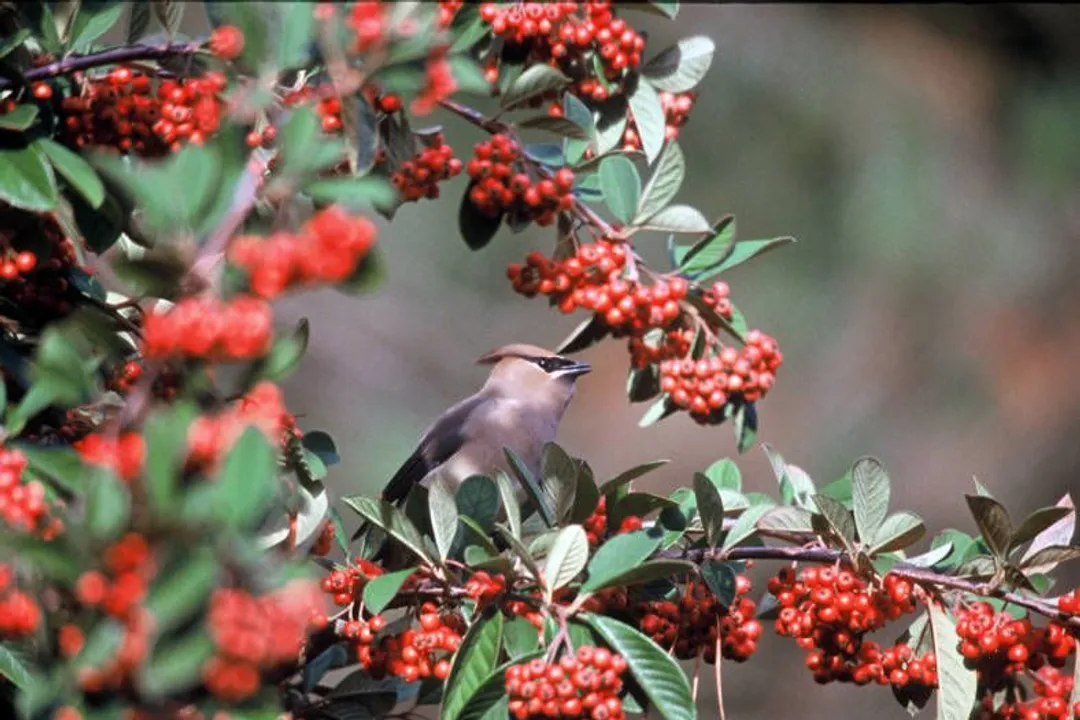
As autumn approaches, many Cedar Waxwings begin to move south, leaving their northern breeding grounds behind. [6] Their winter range extends deeply into the southern United States, Mexico, and sometimes even further south into Central America. [1][4] In the US, while they can be found across the southern tier of states, their presence in the Deep South and Gulf Coast states is often highest during the winter months when they are passing through or settling for the season. [1][9] For example, Florida often sees influxes of these visitors during the winter, whereas they are less common there during the height of summer. [9]
However, the extent of this southward movement is highly variable. [2] If a winter is mild and local fruit crops remain accessible through the cold months in, say, the Mid-Atlantic or Southern Midwest, many waxwings might opt for a much shorter migration, perhaps only moving a few hundred miles instead of a full continental shift. [4] This flexibility is a defining characteristic of their population distribution.
# Nomadic Movement
The key to understanding where to find a Cedar Waxwing at any given time is recognizing their nomadic nature. [2][4] They are not strictly migratory in the way a warbler might be, where birds return to the exact same nesting territory annually. Instead, they are often described as irruptive, meaning large numbers may appear in an area one year, only to be completely absent the next. [4]
This erratic movement pattern is a direct function of their diet. Cedar Waxwings primarily consume insects during the breeding season, but fruits and berries make up the vast majority of their non-breeding diet. [6] When the fruit crops—like mountain ash, serviceberries, dogwood, and cedar berries—fail or are heavily depleted in one region, the entire flock must move until they find a successful food source. [2][8]
An interesting distinction to make when observing their movements is comparing the northern populations with those in the West. While many populations shift east to west or north to south, some populations in the Pacific Northwest appear to be more resident, suggesting that if food availability is relatively stable year-round in certain western valleys or coastal regions, the need for long-distance travel is minimized. [1] Tracking local agricultural or natural fruit harvests can, therefore, be more informative than consulting generalized range maps for predicting their presence in winter. [8]
# Habitat Proximity
When they are in an area, where do they actually perch, feed, and rest? Cedar Waxwings are highly adaptable regarding habitat, which contributes to their frequent appearance near human development. [6][9] They are not creatures of the deep, unbroken wilderness; rather, they favor edges. [4]
Look for them in:
- Orchards and Gardens: Areas rich in cultivated berries or fruit trees are magnets for these birds. [2]
- Suburban Landscapes: Parks, large yards with mature berry-producing shrubs, and near rivers or lakes where fruiting vegetation thrives. [9]
- Open Woodlands: Areas where the canopy is broken, allowing sunlight to reach the understory and promote shrub and small tree growth. [4]
- Urban Centers: During winter or migration, large flocks might settle temporarily in cities, often concentrated around single landscape trees heavily laden with lingering berries. [5]
If you are trying to locate a flock outside of peak migration, focus your search on trees that hold their fruit late into the season. For instance, while many native shrubs drop their berries quickly, certain cultivars of holly or the lingering fruit of the American Mountain Ash can hold food well into the colder months, offering a vital stopover point for hungry waxwings. [8] Observing which trees your neighbors have planted can give you a localized advantage over general range expectations.
# Finding Flocks
Cedar Waxwings are gregarious birds, rarely seen alone, preferring to travel and feed in noisy, active flocks that can number in the dozens or even hundreds. [4][7] This flocking behavior is an important clue for observers. Once you spot one, you are highly likely to find many more nearby. [4] They tend to feed cooperatively, stripping a small tree bare before moving on as a unit.
If you are actively searching for them, especially during migration across the US in spring or fall, consider looking for them near water sources, as they will stop to drink and bathe. [2] If you locate a flock, listen for their high, thin, trilling call, which carries surprisingly well even when the birds are high up in a tree. [7] Because they often feed high in fruiting trees, binoculars or spotting scopes are frequently necessary to appreciate the subtle details of their plumage, such as those characteristic wax tips. [2][7]
The presence of a specific fruit can act as a reliable, albeit temporary, beacon. While sources confirm a general diet of berries, a useful field observation involves noting which local species they favor during your specific time of year. In some areas of the Southeast, for example, they may gorge on beautyberry in November, whereas in the Northeast, late-hanging crabapples might hold them hostage until December. [9] This local fruit dependence means that an experienced birder in Florida might target citrus groves or certain palms in January, while a birder in Michigan might be scanning utility wires or tall deciduous trees for their roosting spots in that same month. [1][5] Understanding the local horticulture adjacent to general migration corridors significantly increases the chances of a sighting.
# Distribution Summary
To summarize the geographical picture: Cedar Waxwings utilize nearly all of North America outside of the most extreme northern tundra and arid deserts. [1][3] Their year-round presence is most likely in the milder western United States, particularly along the Pacific coast, where some populations remain year-round, possibly due to better overall resource availability throughout the year. [1][3]
We can visualize their distribution patterns across the continent, acknowledging that these are general guidelines influenced by food supply:
| Season | Primary Range Focus | Key Habitat Indicator | Movement Style |
|---|---|---|---|
| Summer | Alaska, Canada, Northern US | Young forests, forest edges | Breeding |
| Winter | Southern US, Mexico, Central America | Areas with persistent winter berries | Variable, often short-distance south |
| Migration | Entire continent | Stopover points with temporary high-calorie fruit sources | Highly nomadic and irregular |
This movement means that a backyard in Seattle might see them consistently for different periods than a backyard in Boston, even if both are technically within the general range boundaries shown on continental maps. [1] The critical takeaway for any birder hoping to locate one is to look where the food is, not just where the map says they should be. [8]
# Beyond the Map
It is easy to rely solely on range maps published by organizations like the Cornell Lab of Ornithology, [1][6] but these maps average out several years of data and do not account for the spectacular year-to-year variation driven by local crops. [4] A map showing a bird as "absent" in a particular southern state during January is often only true for the average year. If that state experiences a bumper crop of invasive honeysuckle berries or native juniper, a substantial flock of Cedar Waxwings could easily be passing through or overwintering there, defying the expected pattern. [2][9]
Therefore, when trying to find these birds, consider them as a mobile, fruit-seeking entity rather than a fixed resident. If you see flocks of Bohemian Waxwings (their northern cousins, if they are irrupting south), the Cedar Waxwings might not be far behind, as both species track similar fluctuating food resources, though the Cedars generally stick to warmer climes when winter sets in. [4] Observing the movements of similar nomadic species can sometimes provide a clue to the presence of the waxwings before you spot them yourself. [4] Their sleek, streamlined look and flocking habits make them unmistakable once they decide your local berry tree is the best dining spot around. [7]
Related Questions
#Citations
Cedar Waxwing Range Map - All About Birds
Cedar Waxwing | Audubon Field Guide
California NatureMapping - Cedar Waxwing Fact Sheet
Cedar waxwing - Wikipedia
Cedar Waxwing - Santa Clara Valley Bird Alliance
Cedar Waxwing - Cosley Zoo
Plant It and They Will Come: Cedar Waxwings & Serviceberries
WEC464/UW520: Cedar Waxwing (Bombycilla cedrorum)