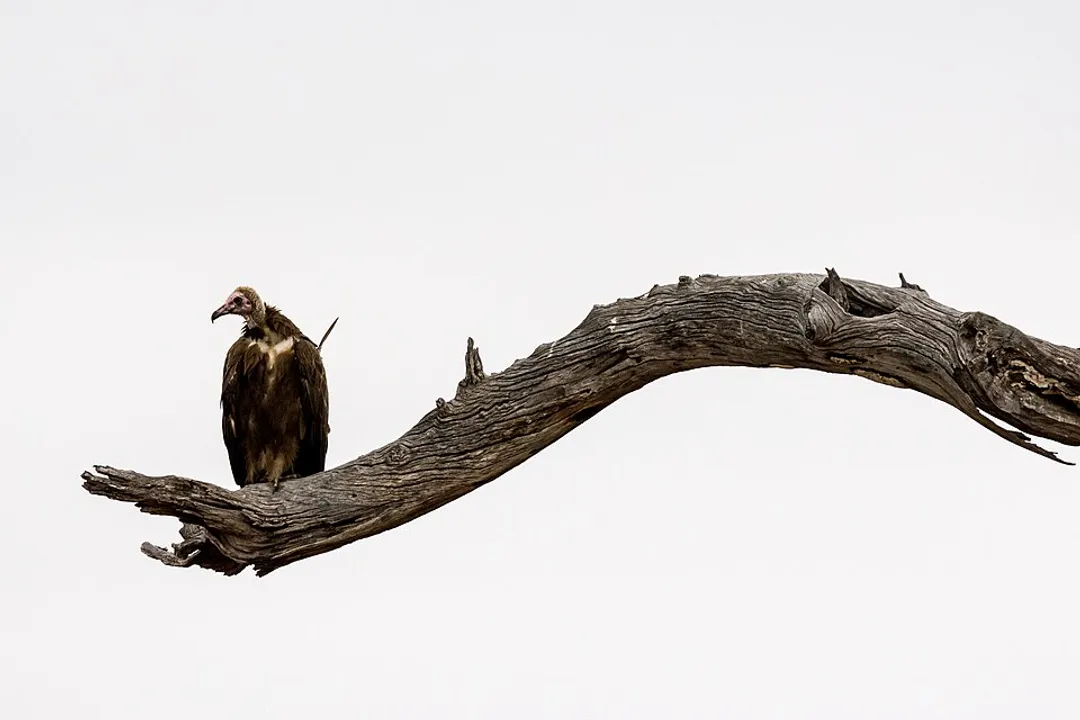
Why do many vulture species possess a lack of feathers on their heads and necks?
Answer
To prevent pathogens from accumulating when feeding on carcasses
The lack of feathers on the head and neck is an adaptation for hygiene. When a vulture feeds by plunging its head into a carcass, feathered skin would become matted with blood, tissue, and bacteria, creating a breeding ground for pathogens that would be difficult to clean. Bare skin prevents this accumulation and allows the skin to be sterilized by the sun's ultraviolet rays.
Related Questions
To which bird family do Old World Vultures belong?Why do many vulture species possess a lack of feathers on their heads and necks?How do vultures conserve energy while searching for food in the sky?What pH level is typically found in a vulture stomach for neutralizing toxins?What unique sensory ability distinguishes the Turkey Vulture from many other species?Which specific bacteria can a vulture stomach neutralize during digestion?Where are New World Vultures, such as the California Condor, naturally located?How do vultures limit the spread of diseases within an ecosystem?What environmental factor acts as a natural disinfectant for the bare skin of a vulture?What is a major cause of population decline for vultures globally?