What is the closest relative to the vulture?
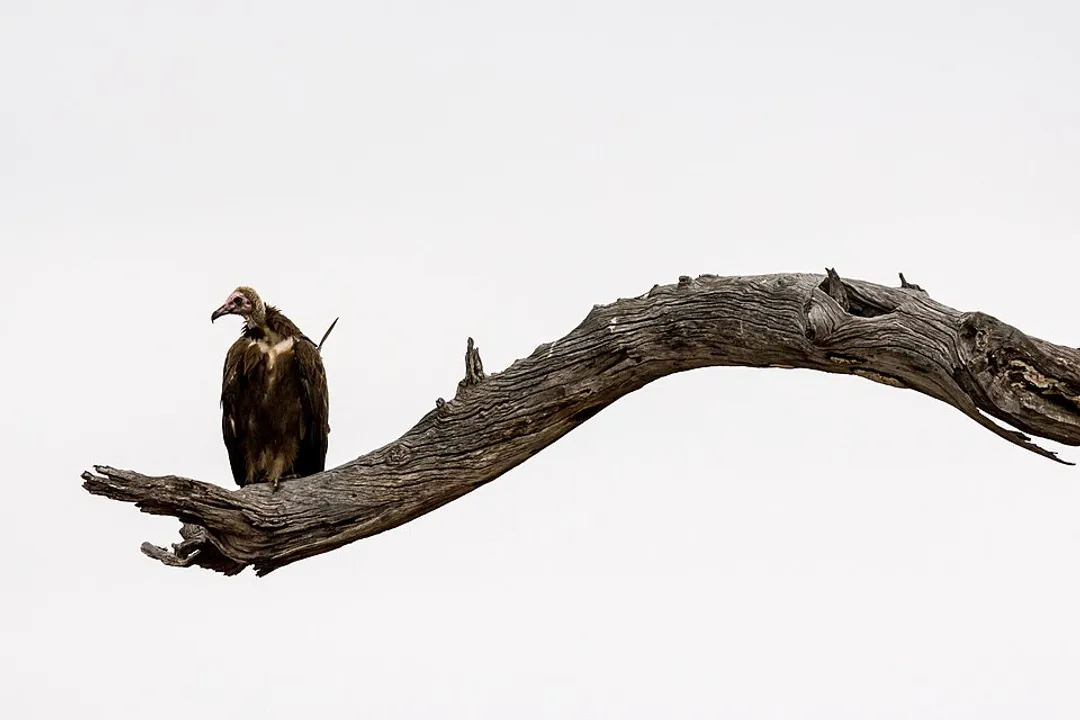
The question of which bird shares the closest lineage with the vulture is surprisingly complex, immediately dividing the avian world into two distinct groups based on geography: New World Vultures and Old World Vultures. [4] Despite sharing a common ecological role—scavenging dead animals—these two sets of birds are not as closely related as their similar appearance and habits might suggest. To truly identify a vulture’s nearest kin, we must first determine which hemisphere’s scavenger we are examining, as their evolutionary paths diverged long ago. [4]
# Evolutionary Split

Vultures, as a whole, represent a fascinating case of convergent evolution, where unrelated species evolve similar traits to adapt to similar environments or diets. [4] The term "vulture" itself isn't a single, neat taxonomic group. It is an umbrella term covering birds in two different families. [4]
Old World Vultures belong to the family Accipitridae. [4] This placement immediately tells us their closest relatives are the familiar birds of prey: the hawks, eagles, and kites. [4] They are, genetically speaking, true raptors, sharing a recent common ancestor with species like the Bald Eagle or the Red-tailed Hawk.
New World Vultures, on the other hand, are placed in the family Cathartidae. [4] Their exact placement has long been debated. While traditionally grouped with other raptors, some molecular evidence has suggested a closer relationship with the storks. [4] This uncertainty in lineage underscores why distinguishing them from their Old World cousins is so important for understanding avian phylogeny.
# New World Relatives
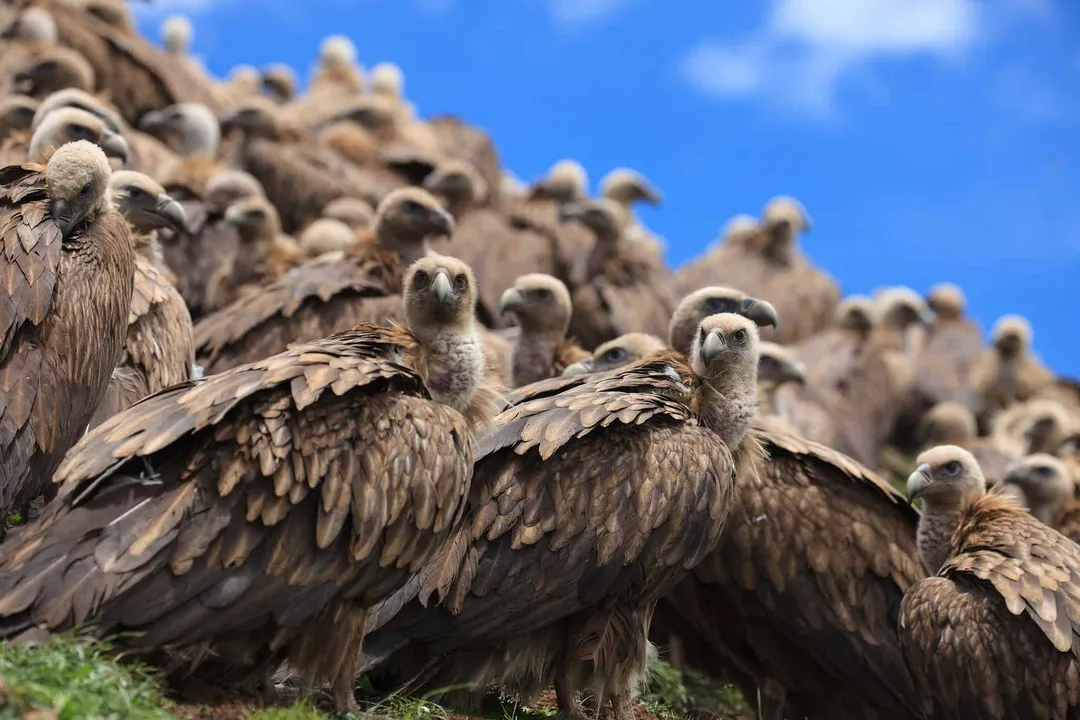
For the birds found in the Americas, such as the well-known Turkey Vulture (Cathartes aura), the family Cathartidae is the focus. [2] Although the relationship to storks is sometimes debated in scientific circles, in a broader sense, they are still viewed as sharing a deep ancestry with the Accipitriformes order, which includes hawks and eagles, even if they are in a distinct family within that grouping. [2]
One unique characteristic of the Turkey Vulture highlights its distinct adaptation: its reliance on smell. [9] While most birds of prey depend almost entirely on keen eyesight to spot carrion from great heights, the Turkey Vulture possesses a highly developed sense of smell. [9] This is facilitated by nostrils that remain open even while flying, an adaptation that allows them to detect the gases produced by decaying flesh. [2] This specialized sensory tool sets them apart even from their closest New World kin, suggesting a very strong evolutionary pressure toward this specific scavenging niche. When considering the closest relatives, we look at other members of the Cathartidae family, such as the larger Condors, which are indeed classified as New World Vultures. [5]
# Old World Kinship
The vultures of Africa, Asia, and Europe tell a clearer story regarding their immediate relatives. Since they reside in the Accipitridae family, their closest living relatives are unequivocally the other members of that group. [4]
If you are looking at a Griffon Vulture or an Egyptian Vulture, their closest genetic neighbors are the eagles and kites. [4] They share the typical raptor anatomy, including powerful legs and talons (though often less used for hunting than eagles), and they rely primarily on sight to find food, much like a hawk circling overhead. [4]
# The Buzzard Misunderstanding
Perhaps the most common source of confusion when trying to pinpoint a vulture’s relative stems from common names, particularly the use of the word "buzzard". [1][8] In North America, the term "buzzard" is frequently, and somewhat confusingly, applied to the Turkey Vulture. [1] However, taxonomically speaking, a buzzard is not a vulture; it is a type of hawk or eagle. [1][8]
This regional naming convention obscures the biological reality. For example, the Red-tailed Hawk is often called a buzzard in the United States. [8] A Red-tailed Hawk is a true raptor in the Accipitridae family, which means the bird commonly called a buzzard in one area is evolutionarily closer to an Old World Vulture than it is to the bird actually named a Turkey Vulture. [1]
A few quick comparisons reveal the distinction between a New World Vulture (like the Turkey Vulture) and a bird often called a buzzard (like a hawk):
| Feature | Turkey Vulture (New World Vulture) | Red-tailed Hawk (Buzzard/True Raptor) |
|---|---|---|
| Head | Featherless, red skin (adults) [1] | Fully feathered head [1] |
| Flight Posture | Wings held in a dihedral (shallow 'V') [2] | Wings generally held flat when soaring [2] |
| Primary Sense | Smell (Olfaction) [9] | Sight (Vision) [9] |
| Bill Shape | More hooked than some buzzards [1] | Distinctive raptor bill [1] |
Understanding this naming quirk is essential for tracing relationships. If someone refers to a "buzzard" as a relative of the vulture, they are often unknowingly pointing to a true raptor, which is the closest relative to the Old World Vultures, but not the New World Vultures. [4] This overlap in common terminology makes it difficult for the casual observer to trace the true biological tree without understanding regional dialects in ornithology. [8]
# Flight Style and Anatomy
Examining the mechanics of flight offers another clue to separation and relatedness. While both Old World and New World vultures are masters of soaring—using thermals to ride the air currents with minimal effort—their wing postures differ slightly. [2] New World Vultures, particularly the Turkey Vulture, often soar with their wings angled up in a shallow dihedral shape, sometimes appearing unstable to the untrained eye. [2] This posture helps stabilize them in the often bumpy, warm air they utilize. [2] Old World Vultures, being true raptors, tend to soar with their wings flatter, similar to eagles. [2]
Furthermore, the head structure speaks volumes about their ecological paths. The characteristic bald head seen on most vultures is an adaptation for sanitary feeding. When plunging their heads deep into a carcass, the lack of feathers prevents blood and bacteria from clinging to them, which would be difficult to clean and could lead to infection. [9] While this feature is shared across both New and Old World vultures, the fact that it evolved independently in two separate families confirms that it is a strong case of convergent evolution driven by diet, rather than a shared recent ancestor. [4]
# Tracing the Closest Lineage
So, what is the definitive closest relative? The answer rests on context:
For Old World Vultures: The closest relatives are unambiguously the hawks, eagles, and kites (the rest of the Accipitridae family). [4] They are essentially specialized, carrion-eating members of the raptor guild.
For New World Vultures: The closest relatives are within their own family, Cathartidae, which includes the Condors. [5] The deeper connection is fuzzier, possibly linking them distantly to storks, though the shared Accipitriformes order with hawks remains relevant for classification purposes. [4]
If one were forced to choose a single type of bird that represents the evolutionary sister group to the entire vulture concept—that is, the closest relative to the idea of a vulture—it would have to be the hawks/eagles. [4] This is because the Old World Vultures are direct members of that family, and the New World Vultures are placed within the same broad order, Accipitriformes. [2][4] The stork hypothesis for New World Vultures is less established than their general grouping with other large soaring birds of prey. [4]
The difference in feeding strategy between the smell-reliant Turkey Vulture and the sight-reliant hawks, even when both are scavenging, suggests that while the body structure is similar, the sensory apparatus developed independently along distinct lines, even within the Americas. [9] This points to the evolutionary pressure of the scavenging diet shaping two separate branches of the avian tree, resulting in birds that look and act alike but whose ancestry separates them by millions of years. [4] Thus, when examining the closest living relatives, the answer is less a single species and more the entire collection of true birds of prey—the hawks and eagles—which share the scaffolding upon which the vulture structure was later built. [4]
#Videos
Why Those Birds You Call Buzzards Are Actually VULTURES?
Related Questions
#Citations
Vulture vs. Buzzard: What's the Difference? - A-Z Animals
Turkey Vulture Similar Species Comparison - All About Birds
Fellow bird nerds, what's the difference between vultures ... - Reddit
Vulture - Wikipedia
How are condors and vultures different and alike? Are there ... - Quora
Why Those Birds You Call Buzzards Are Actually VULTURES?
A turkey vulture relative : California Condors - Facebook
My favorite facts about Turkey Vultures - Buffalo Bill Center of the West