Why do common warthogs enter existing burrows backwards when retreating for shelter?
Answer
To position their tough, heavily tusked face and protective warts toward the entrance
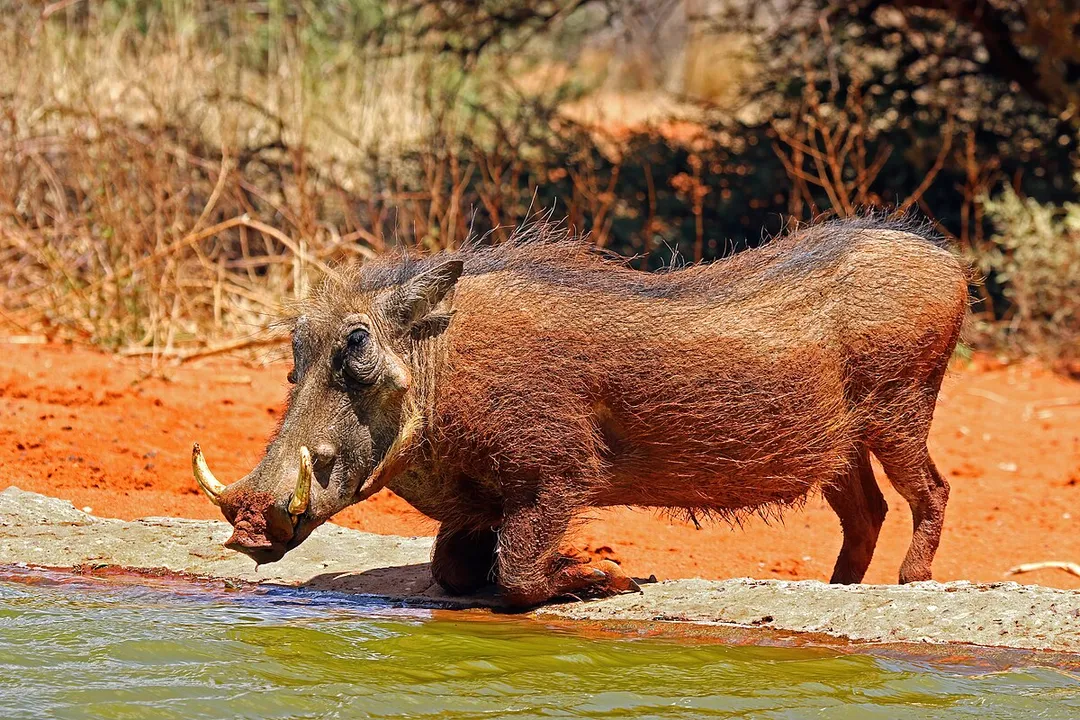
The behavior of entering a burrow backwards is a crucial defensive adaptation. Warthogs utilize abandoned tunnels, often those dug by aardvarks, for shelter from heat or predators. By retreating in reverse, the animal strategically places its most heavily armored and potentially dangerous features—the tough facial warts and the sharp tusks—at the opening. This physical barrier makes it significantly more difficult for a predator attempting to force its way inside the confined space to gain purchase or inflict serious injury on the warthog's vulnerable rear end or body.
#Videos
Warthog Facts: WHY the WARTS? Animal Fact Files - YouTube
Related Questions
Why do common warthogs enter existing burrows backwards when retreating for shelter?What is the primary function attributed to the shorter, sharper lower pair of warthog tusks?What is the specific term for the small family units typically composed of a sow and her offspring?What structures, which give the warthog its name, are thick pads of skin and fatty tissue?What term describes the warthog's primary daily activity pattern, meaning they are most active during the day?To which specific geographical area are common warthogs native, avoiding denser forested regions?When a warthog bolts away from danger, what distinctive posture is assumed by its short, tufted tail?The grazing diet of the warthog causes it to compete directly with which other large African herbivores?Warthogs famously modify and use existing tunnel systems, most commonly those originally excavated by which animal?What approximate maximum length can the significantly longer upper tusks of mature warthog males attain?What is the conservation status designation currently applied to the common warthog by conservation bodies?