Warthog Facts
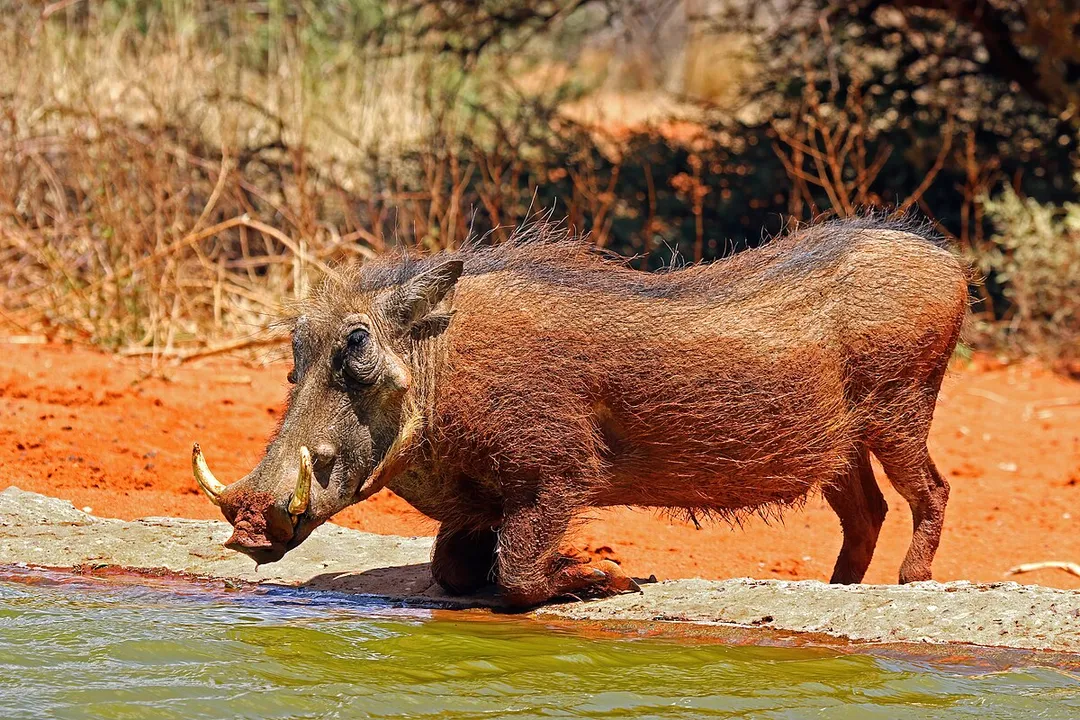
The common warthog, Phacochoerus africanus, is one of the most recognizable residents of the African savanna, often striking observers as comically tough yet surprisingly delicate in its habits. These members of the pig family, or suids, are fascinating subjects whose daily existence revolves around short grasses, defensive posture, and shallow retreats. [3][5][10]
# African Home
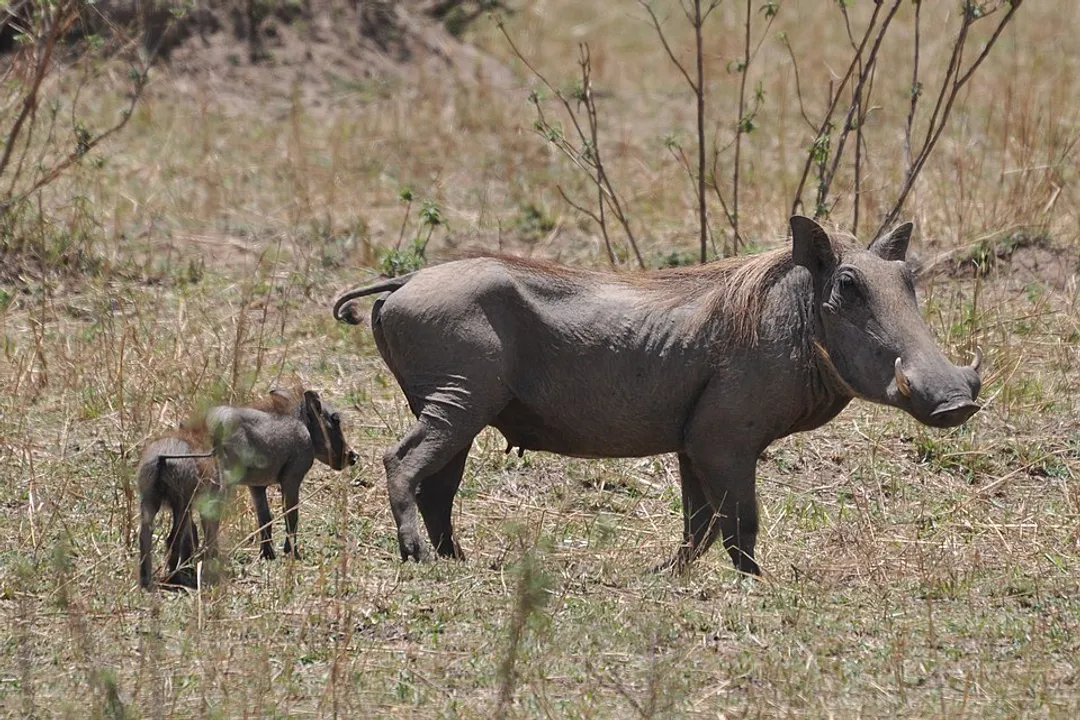
Warthogs are native only to sub-Saharan Africa. [1][4] They inhabit a wide variety of open and semi-open environments, including grasslands, savannas, and woodlands, generally avoiding dense forests and true deserts. [6][4] This adaptability has allowed them to maintain relatively stable populations across much of their historical range, though localized pressure from human expansion remains a concern. [4] They are generally found in areas where water is accessible, as they have a need to drink regularly, although they can supplement their water intake by digging up moisture-rich roots and tubers during dry spells. [1][5]
# Tusk Details
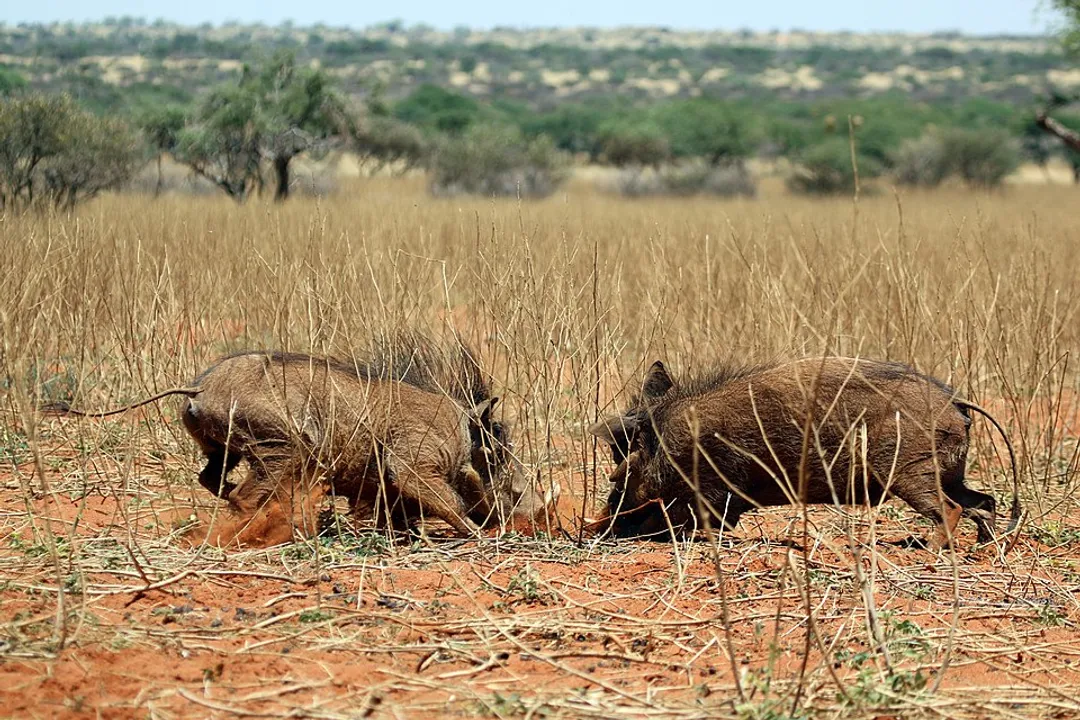
Perhaps the most striking physical features of the warthog are its tusks, which are actually elongated canine teeth that grow throughout the animal’s life. [1][3] A warthog possesses two pairs of these tusks. The upper pair is significantly longer, curving outward and upward, and can reach lengths approaching 60 centimeters (about 2 feet) in mature males. [1][3] The lower pair is shorter but much sharper, as these are the primary tools used during fierce territorial and mating disputes. [1][3] If you observe the two sets, it becomes clear that while the upper tusks provide bulk and a formidable display, the shorter, razor-edged lower set is the real business end of the confrontation. [1][3]
In addition to the tusks, the facial structure is defined by the "warts" that give the animal its name. These are not true warts but rather thick pads of skin and fatty tissue that grow more prominently in males, sometimes numbering up to three pairs. [1][3][6] These structures serve as protection, likely absorbing blows during fights where the males lock heads or use their lower tusks against each other. [3][6] Males, or boars, are distinctly larger and heavier than the females, known as sows. [5] Their skin is typically greyish-brown and sparse with bristly hair, helping them blend into the dry grasses of their habitat. [1][6]
# Daily Routine
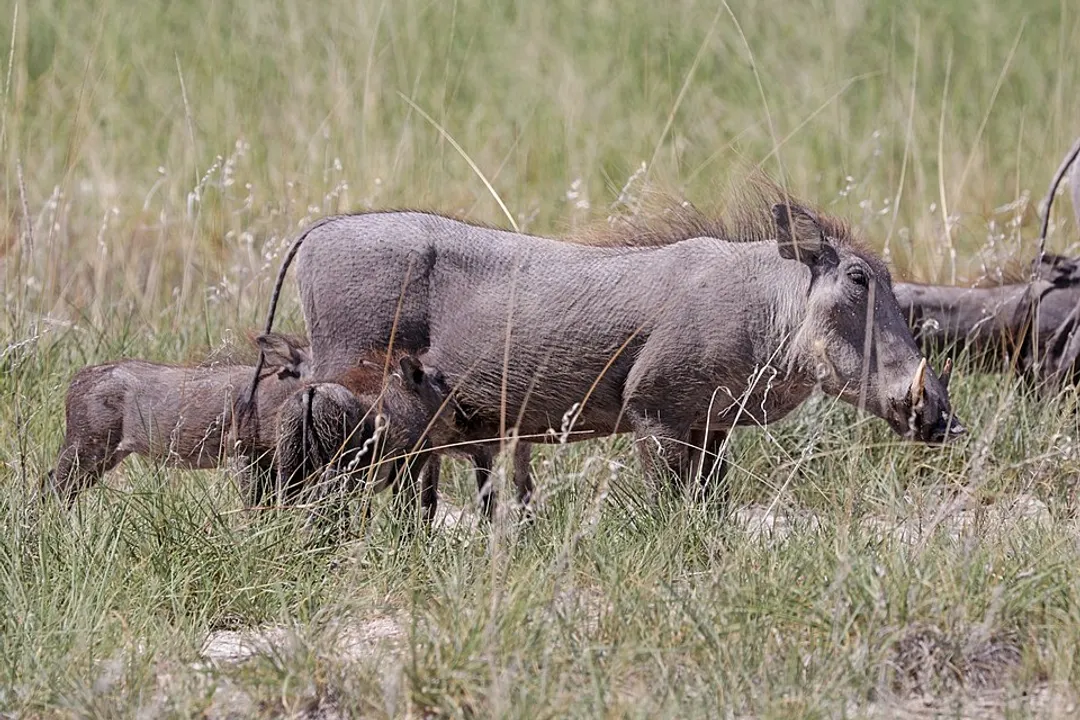
Warthogs are primarily diurnal, meaning they are most active during the day, spending their time grazing and foraging. [1] Despite their somewhat ungainly appearance, they are capable runners when startled, often seen bolting away from danger with their short, tufted tails held straight up like an antenna—a clear visual signal to others in the sounder. [1][10]
One of the most characteristic behaviors involves their sleeping arrangements. Warthogs do not dig their own extensive burrows; instead, they take over and modify existing tunnel systems, most famously those excavated by aardvarks. [2][5][6] When retreating for the night, or seeking shelter from intense heat or predators, they display a curious habit: they enter the burrow backwards. [1][2][5] This behavior positions their tough, heavily tusked face and protective warts toward the entrance, making it extremely difficult for a predator to force its way in after them. [1][10]
# Foraging Style
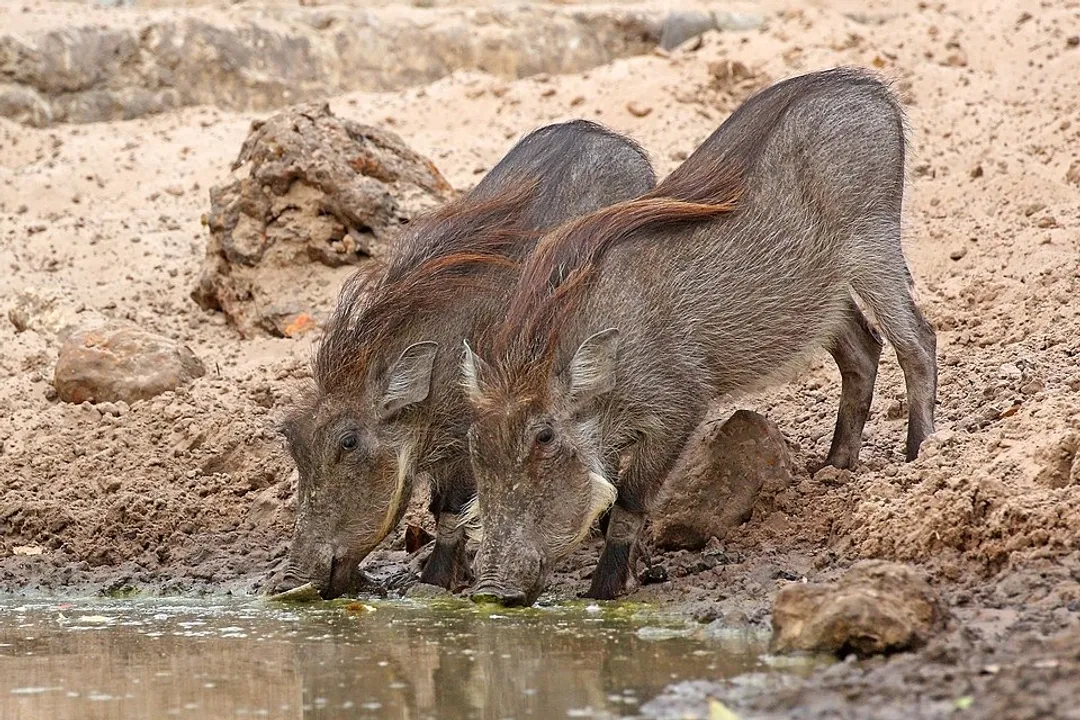
The warthog’s diet places it firmly in the omnivore category, though it leans heavily toward herbivory. [1][3][5] Their main sustenance comes from grazing on short grasses. [1][5] To access deeper nutrients, they frequently get down on their knees, using their hardened upper tusks or the tough front part of their muzzle as a plow to dig up roots and bulbs. [3][5] This rooting behavior is quite common across the suid family, yet the warthog's reliance on grazing puts it in direct competition with zebras and wildebeest in many ecosystems. [1] While grasses form the bulk of their intake, they will supplement this with berries, bark, fungi, and occasionally scavenged meat or small vertebrates if the opportunity arises. [1][3][5]
# Group Dynamics
Social structure dictates much of a warthog’s life. Females live in small family units called sounders, which typically consist of a sow and her offspring. [1][5] Adult males, however, are generally solitary, only associating with the sounders briefly for mating purposes. [1][5]
Reproduction involves a gestation period lasting about 175 days, after which the sow will usually give birth to a litter averaging two to four piglets. [5] The young are born relatively helpless, possessing thinner coats than the adults and requiring protection while they grow their defenses. [5] Piglets are dependent on their mother's milk for about six months. [5] The sounder structure is vital for the survival of the young, as the collective vigilance offers better protection against predators like leopards and hyenas. [1]
# Survival Status
The common warthog is currently classified by conservation bodies as a species of Least Concern. [4] This designation reflects its broad distribution across Africa and its high reproductive rate, which allows populations to bounce back relatively quickly under favorable conditions. [4] However, this status should not imply immunity from threats. Habitat loss due to agricultural expansion and localized threats from poaching or disease outbreaks can certainly cause significant dips in regional numbers. [4] Their reliance on open habitats means that rapid changes in land use pose a continuous challenge to their long-term security in fragmented landscapes. [4]
If you are tracking wildlife in the field, recognizing the specific sounder structure versus the solitary boar can often give you clues about the time of year—mating season sees the lone males moving more actively to find sows and their young. [1][5] Also, while their primary defense is flight or the burrow retreat, always give a warthog, particularly a mother with piglets, a wide berth; those lower tusks are formidable weapons used efficiently when cornered. [3] They are truly survivors, making the most of the African plains with a unique combination of specialized anatomy and behavioral quirks.
#Videos
Warthog Facts: WHY the WARTS? Animal Fact Files - YouTube
Related Questions
#Citations
Warthog Facts and Information | United Parks & Resorts
Warthogs: Facts, Diet, Habitat, Threats, & Conservation | IFAW
Warthog | National Geographic Kids
Common warthog - Wikipedia
10 Fun Facts About Warthogs | Ultimate Kilimanjaro
10 Interesting Facts About Warthogs - Shamwari Game Reserve
Common Warthog - Zoo Atlanta
Warthog - African Wildlife Foundation
warthog - Kids | Britannica Kids | Homework Help
Warthog Facts: WHY the WARTS? Animal Fact Files - YouTube