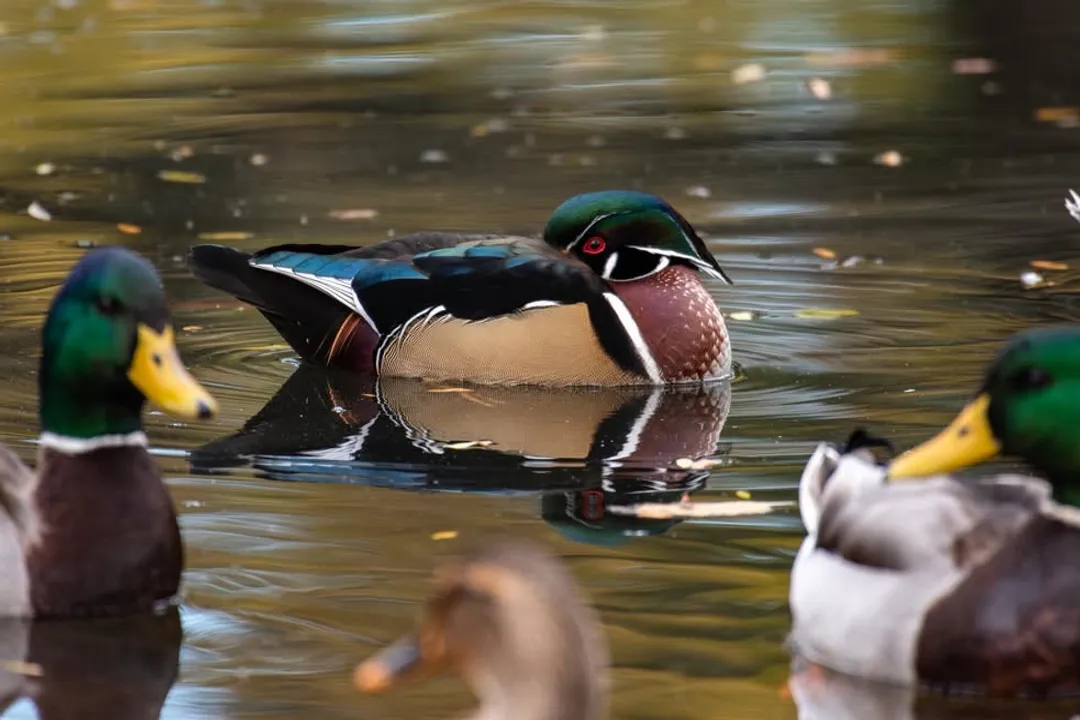
Why are the Wood Duck's feet structurally adapted differently from many strictly aquatic dabbling ducks?
Their feet are well-equipped for perching on branches near the water because they are cavity nesters frequenting wooded areas
The Wood Duck's feet possess adaptations directly related to its unique habitat and nesting behavior, setting it apart from many exclusively aquatic waterfowl. Because the Wood Duck utilizes tree cavities for nesting, often situated high above the water or on branches near the water's edge, their feet are structured to handle terrestrial movement and perching. The feet are generally colored yellowish to orange and are well-equipped for grasping branches, allowing them to move securely in the wooded environments they frequent. This perching capability contrasts with the feet of many other duck species whose structures are optimized primarily for propulsion on open water surfaces.