How is the transition area between the male Wood Duck's chest and flanks described?
Answer
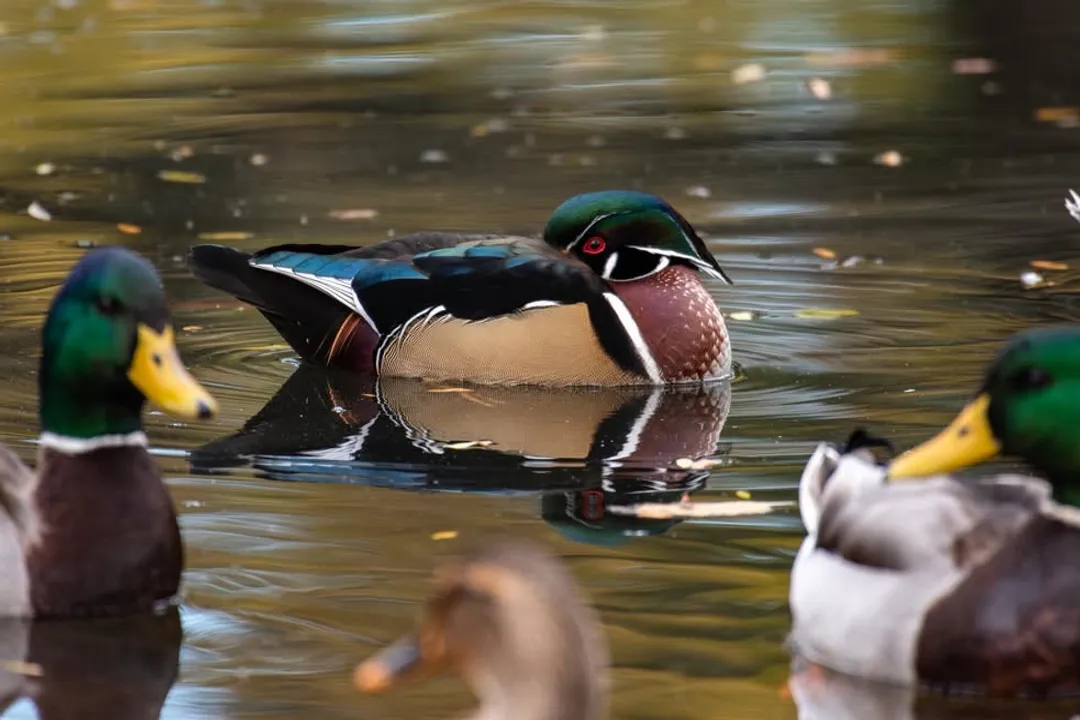
The deep, purplish-chestnut chest meets buffy-yellow or tan flanks, separated by a noticeable black band
The chest plumage of the male Wood Duck is characterized by a deep, rich purplish-chestnut color generously dotted with small white spots. This intense coloration does not simply transition into the lower body plumage but is distinctly demarcated. Moving outward toward the sides, the plumage shifts to buffy-yellow or tan hues, defining the flanks. The crucial visual element separating these two areas is a noticeable black band running across the bird, providing a sharp line of contrast between the upper chest coloration and the flank coloration.
Related Questions
What specific colors define the drake Wood Duck's bill, moving from base to tip?What distinctive white markings reliably identify a female Wood Duck's head pattern?What meaning is associated with the Wood Duck's scientific name, *sponsa*?How is the transition area between the male Wood Duck's chest and flanks described?What occurs to the adult male Wood Duck plumage following the summer breeding season?What functional difference exists between the male's arresting crest and the female's reduced crest shape?What is the typical weight range reported for mature male and female Wood Ducks?Why are the Wood Duck's feet structurally adapted differently from many strictly aquatic dabbling ducks?What reliable physical characteristics aid in identifying a distant Wood Duck in poor light conditions?Which plumage condition do young Wood Ducks, both male and female, generally exhibit?What is the general color of the female Wood Duck's plumage in contrast to the male's vibrancy?