Which specific adaptation helps define the New World monkey classification regarding their nasal structure?
Answer
Their nostrils are spaced widely apart and point sideways
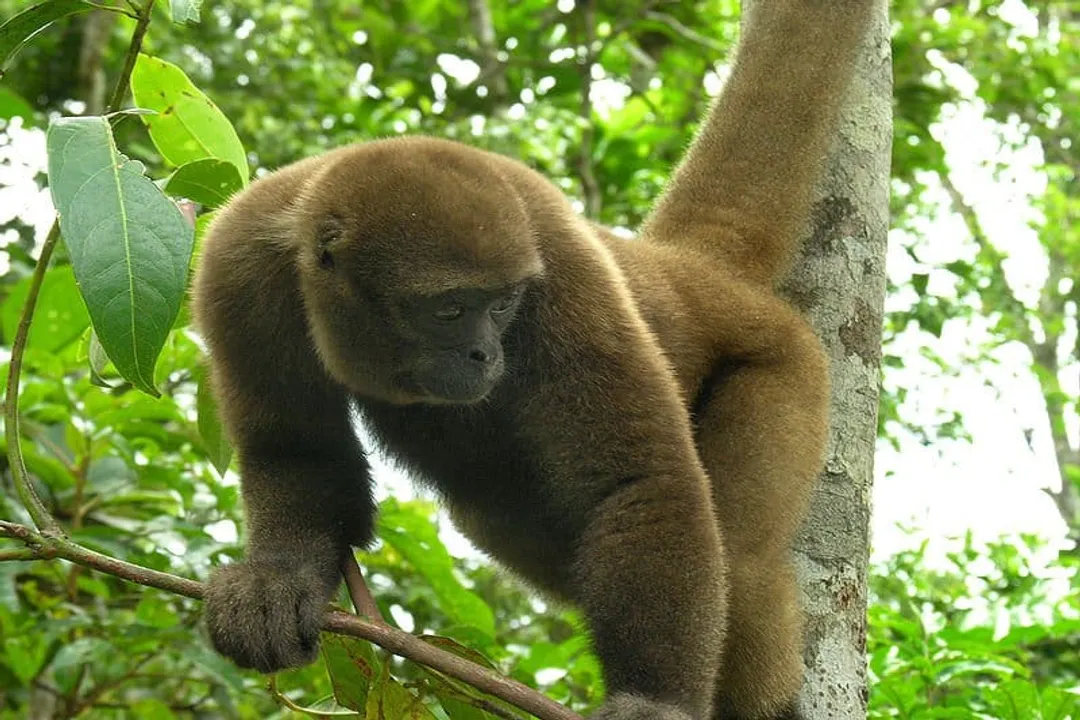
The woolly monkeys are identified as New World monkeys, a geographical distinction further refined within the Primate order based on morphology, particularly the structure of the nose. A key distinguishing feature that separates New World monkeys from their Old World counterparts is the orientation and spacing of their nostrils. For New World primates, this typically means that the openings are separated by a significant distance, causing them to face outwardly or sideways. This anatomical difference is one of the primary structural cues used in classification to immediately place these American primates apart from those originating in Africa or Asia.
Related Questions
What key physical feature is shared by all members of Family Atelidae, including woolly monkeys, spider monkeys, and howler monkeys?What is the derivation of the genus name Lagothrix, which encompasses the woolly monkeys?What specific type of placenta do woolly monkeys possess, which supports traits common to higher primates?What is the current conservation status assigned to the Common Woolly Monkey, scientifically named Lagothrix lagotricha?Which other primates are closely grouped with the woolly monkeys within the Family Atelidae?What dietary classification defines the primary feeding habit of the Lagothrix genus monkeys?Which specific adaptation helps define the New World monkey classification regarding their nasal structure?What is the key physical characteristic that distinguishes the Yellow-tailed Woolly Monkey from Lagothrix lagotricha?What adaptation linked to arboreal existence is shared by members of the Order Primates, including woolly monkeys?If the Yellow-tailed Woolly Monkey is classified under the genus Oreonax rather than Lagothrix, what does this taxonomic shift suggest about its evolutionary relationship?