Which physical characteristic assists the Chinese water deer in persisting within human-altered landscapes of Northern Europe?
Answer
Reliance on camouflage and stillness rather than speed or group defense
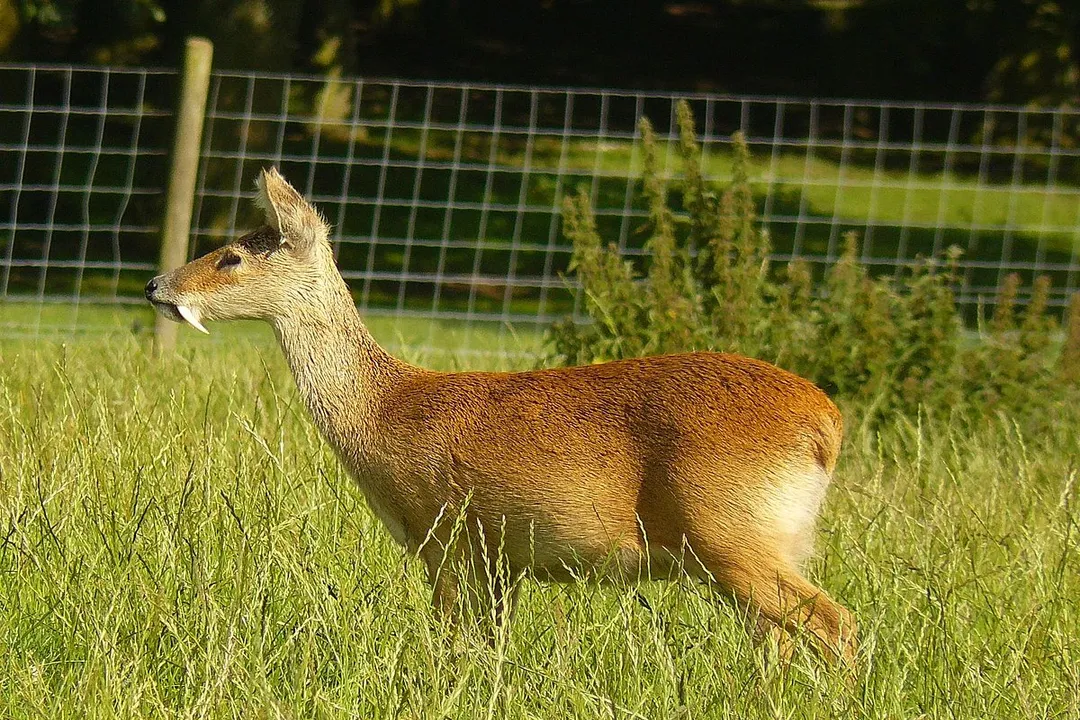
The Chinese water deer possesses certain physical and behavioral traits that contribute to its survival success in altered landscapes outside Asia. Specifically, its relatively small size, its tendency towards solitary behavior, and its strategy of relying heavily on camouflage and remaining still when threatened, rather than escaping quickly through speed or relying on group defense mechanisms, allows it to persist effectively in environments shaped by human activity, provided adequate ground cover remains available.
Related Questions
What are the ancestral homelands of the Chinese water deer (Hydropotes inermis)?What specific human activity causes population threats in the native Asian habitat?Approximately when did the first Chinese water deer releases occur in East Anglia, UK?Which organization tracks the annual harvest data, known as the National Gamebag Census, for Chinese water deer in the UK?What does the harvest data provided by the National Gamebag Census primarily function as in managed UK areas?What is the primary focus of management in the successful introduced range, like the UK, compared to the native range?Which physical characteristic assists the Chinese water deer in persisting within human-altered landscapes of Northern Europe?Regarding population status, how does the trend in the native Asian habitat contrast with the established UK population?Why is the global count of Chinese water deer figures likely inaccurate when aggregated?What type of environment do Chinese water deer favor in areas where they have successfully colonized?