How many grey seals are left?
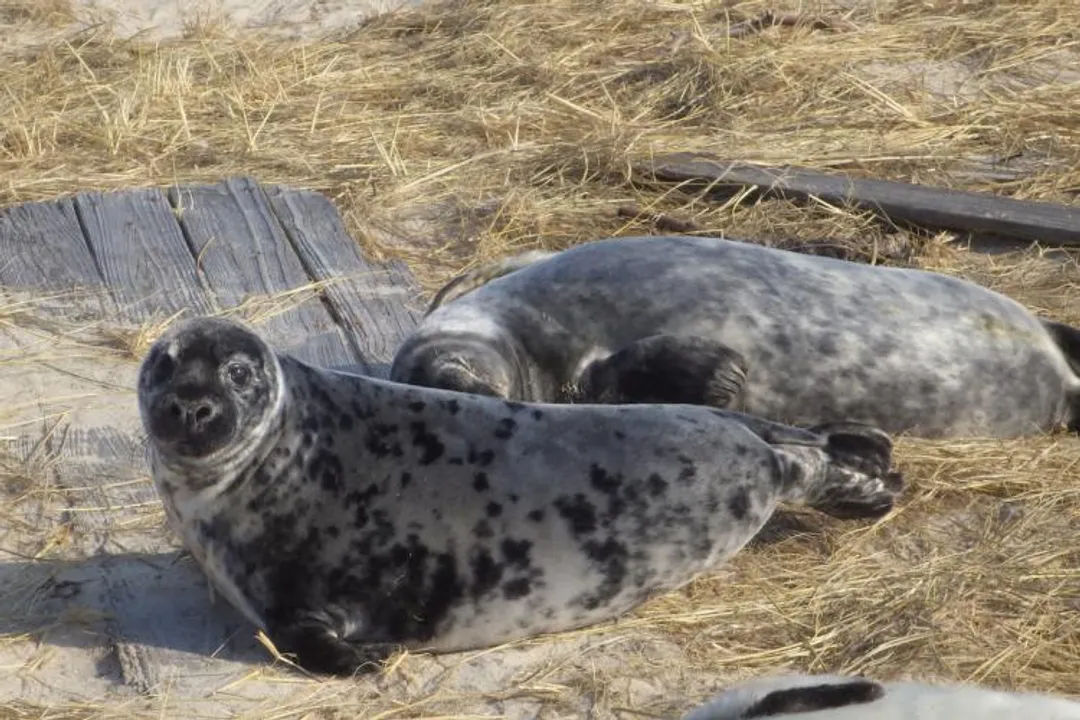
The status of the grey seal (Halichoerus grypus) population is best understood not as a single, unified number, but as an assessment of several distinct groups scattered across the North Atlantic and the Baltic Sea. While the species is generally listed as Least Concern globally by the IUCN, achieving this status is a testament to remarkable recoveries from historical lows in certain regions, contrasting sharply with areas where populations are still recovering or facing specific regional pressures.
# Abundance Estimates
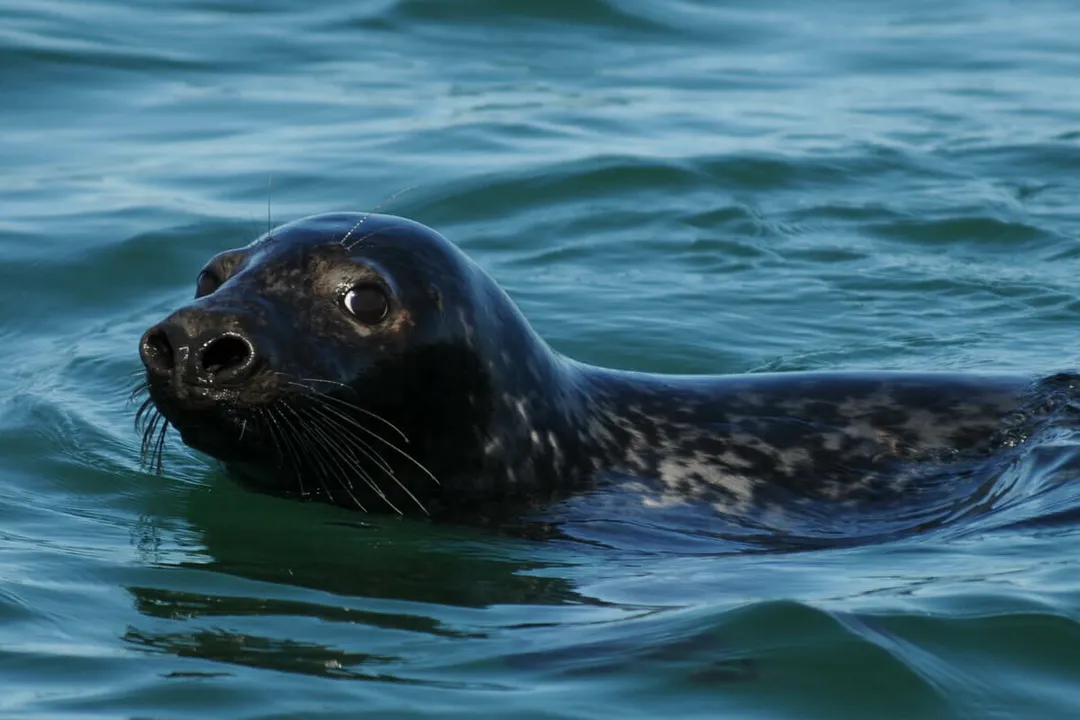
Pinpointing an exact current worldwide total is complicated by differing methodologies and reporting years across international bodies. One recent estimate for the combined North Atlantic and Baltic populations suggested approximately 650,000 grey seals globally as of July 2023. However, other reports aggregate the data differently, suggesting a worldwide total closer to 632,000 based on a 2016 IUCN assessment, or even a more conservative 290,000-300,000 when summing the three main population estimates available in one 2000s-era assessment. This variation underscores the difficulty in counting a mobile marine mammal spread over vast coastlines.
The grey seal exists across three main, genetically distinct populations: the Northwest Atlantic, the Northeast Atlantic, and the Baltic Sea. The key to understanding the species' current numbers lies in breaking down these regional figures.
# Northwest Atlantic
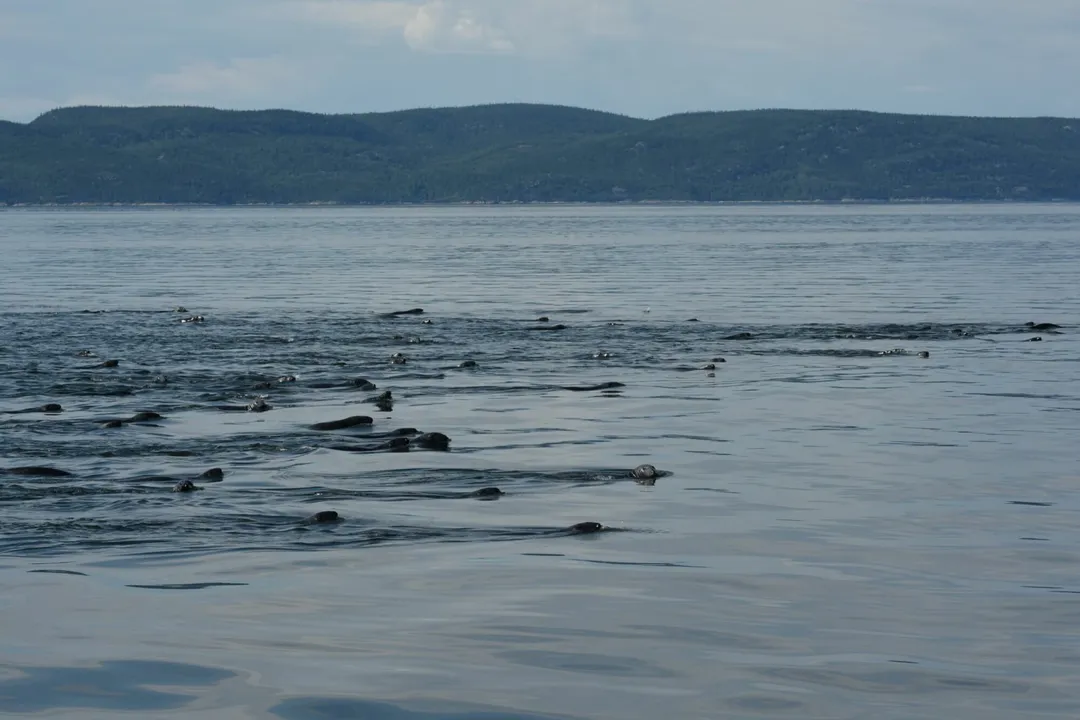
The Northwest Atlantic stock, encompassing Canada and the northeastern United States, holds a very substantial portion of the global count. The most recent Canadian assessment from 2021 estimated the total abundance for grey seals in Atlantic Canada to be 366,400 animals, showing a growth rate that had recently slowed to 1.5% per year between 2016 and 2021. This Canadian population is managed across different breeding groups, with the vast majority associated with Sable Island, Nova Scotia, which hosts the world's largest colony.
In the United States, the recovery story is one of near-total loss followed by successful recolonization. Following protection under the Marine Mammal Protection Act, a survey in Maine in 1973 found only 30 seals. By the 2021 pupping season, the US population, estimated by applying Canadian ratios to US pup counts, reached approximately 27,911 individuals. The overall number in US and Canadian waters combined has been recently suggested to be around 450,000.

# Northeast Atlantic
The Northeast Atlantic population centers around the British Isles, Iceland, Norway, and extends to Russia. This area is a crucial stronghold for the species. For British grey seals, the estimated adult population size in 2020 was calculated to be around 157,300. This massive concentration means that the UK population alone represents about 40% of the world's grey seals and an incredible 95% of the entire European population.
Further north and east, other distinct groups exist:
- Iceland: A 2017 census estimated the population at 6,269 individuals. Interestingly, this figure was reported to be about 32% smaller than the 1982 census number, although the population had surpassed the government's management objective of 4,100 animals by that time.
- Wadden Sea: The combined German, Danish, and Dutch coasts saw growth, with 9,000 seals counted in 2021, up from only about 1,500 in 1992 in the Dutch region alone.
- Faroe Islands: Counts between 2018 and 2021 suggested a minimum of 661 animals.
- Norway: The population estimate showed a decrease, dropping from about 8,740 in 2011 to an estimated 3,850 in 2018, possibly due to high by-catch rates in local fisheries.
# Baltic Recovery
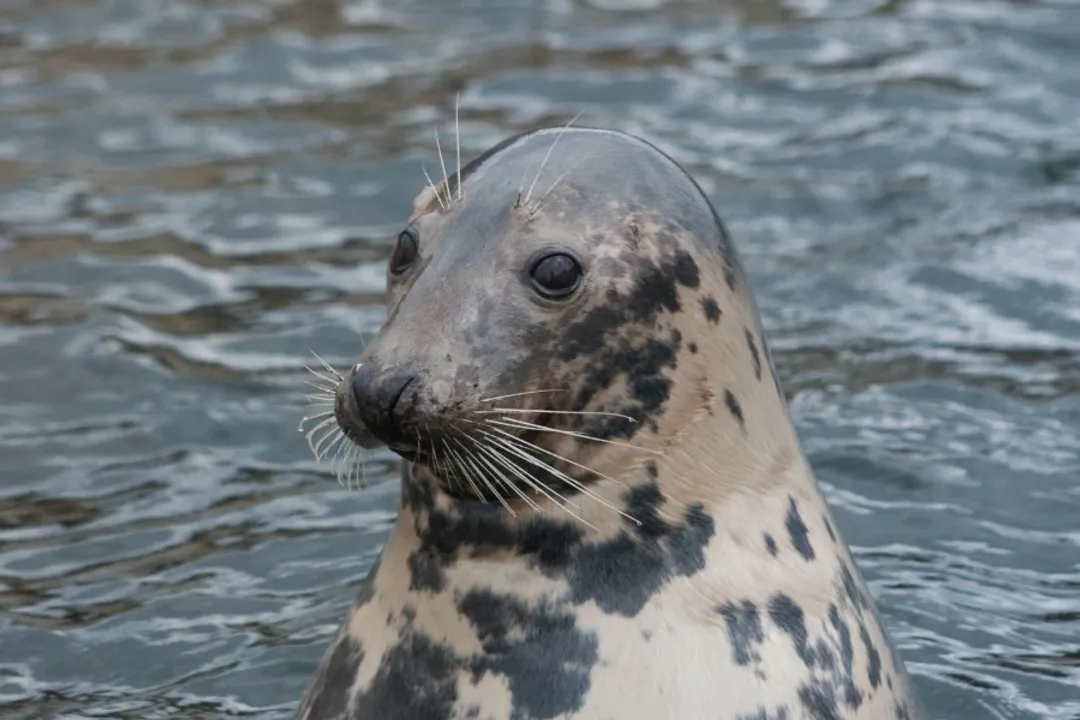
The Baltic Sea grey seal population represents a genetically isolated subspecies facing unique environmental challenges, including high levels of pollution. This group experienced the most drastic historical decline, plummeting from an initial population of over 90,000 at the start of the 20th century down to a mere 5,000 in the 1970s due to intense hunting and contamination.
Today, the story is largely one of recovery. A 2021 survey indicated 42,000 seals, while a more recent analysis (March 2024) noted the population stood at around 55,000 animals. The recovery took three generations, but researchers warn that increased licensed hunting quotas could reverse this progress.
# Recovery Scale
When comparing the regional histories, the scale of the successful conservation efforts is clearer. The UK population's rebound from a low of 500 seals in the early 20th century to nearly 160,000 adults today highlights a massive success story of protection that began relatively earlier than in other regions. In contrast, the Baltic seals began from a much deeper hole—from 100,000 down to 5,000—meaning their recovery to 55,000, while significant, still leaves them potentially more vulnerable to external pressures like climate change or high hunting removals compared to their Atlantic cousins.
# Monitoring Science
Understanding these shifting numbers relies heavily on scientific monitoring, often utilizing methods that capture only part of the picture at a given time. For instance, NOAA Fisheries in the US estimates its total population size by counting pups at US breeding colonies and then applying the known total-to-pup ratio observed in the Canadian population. This reliance on regional demographic assumptions is a pragmatic necessity for transboundary species but also introduces the potential for variation between cited figures.
This continuous need for accurate counts is why responsible human behavior is important. While grey seals are curious, they are predators and can be dangerous if approached or fed. A tip for anyone observing these animals, particularly on crowded beaches where pups are born and moult, is to strictly adhere to viewing guidelines, such as staying at least 50 yards away and limiting observation time to 30 minutes or less, as harassment is illegal and can disrupt critical behaviors. Furthermore, reporting any sick, injured, or entangled animals to the proper authorities, rather than attempting to intervene, provides vital data for ongoing population health assessments.
In essence, the number of grey seals left today is decidedly not a number, but a status report across three continents—a tale dominated by large, growing populations in the Atlantic, and a precarious, hard-won recovery in the enclosed Baltic environment.
# Life History Notes
Grey seals are large, with males significantly bigger than females, sometimes reaching up to 2.6 meters in length and 300 kg. They are distinguished by their long, sloping "Roman nose" profile. Pups are born with a distinctive creamy-white, woolly coat, known as lanugo, which they shed after about three weeks when they develop their waterproof adult fur. Females fast while nursing, producing milk that can be up to 60% fat, allowing the pups to gain 1.2-2 kg per day.
# Enduring Threats
Even with booming numbers in some areas, threats persist across the species' range. Entanglement in fishing gear, including gillnets and trawls, is a constant source of mortality, sometimes reported as being higher than the annual birth rate in small, localized areas like Cornwall, England. Additionally, pollution, especially in the Baltic Sea, leads to high concentrations of contaminants like PCBs in their blubber, which can affect their immune and reproductive systems. Vessel strikes and illegal harassment also contribute to losses, particularly where seals are abundant close to human activity. The picture is one of a species that has largely won the battle against extinction, but one that now faces the persistent, smaller-scale challenges of coexisting with human industry and activity.
Related Questions
#Citations
Gray Seal | NOAA Fisheries
Grey seal - NAMMCO - North Atlantic Marine Mammal Commission
Grey seal - Wikipedia
Grey Seal (Halichoerus grypus) - Seal Conservation Society
Facts and details about grey seals | Ecomare Texel
Facts, pictures & more about Grey Seal - Oceanwide Expeditions
Scientists warn: The grey seal hunt is too large - EurekAlert!
Grey seal | Manx Wildlife Trust
Grey Seal - Baleines en direct