How many onagers are left in the world?
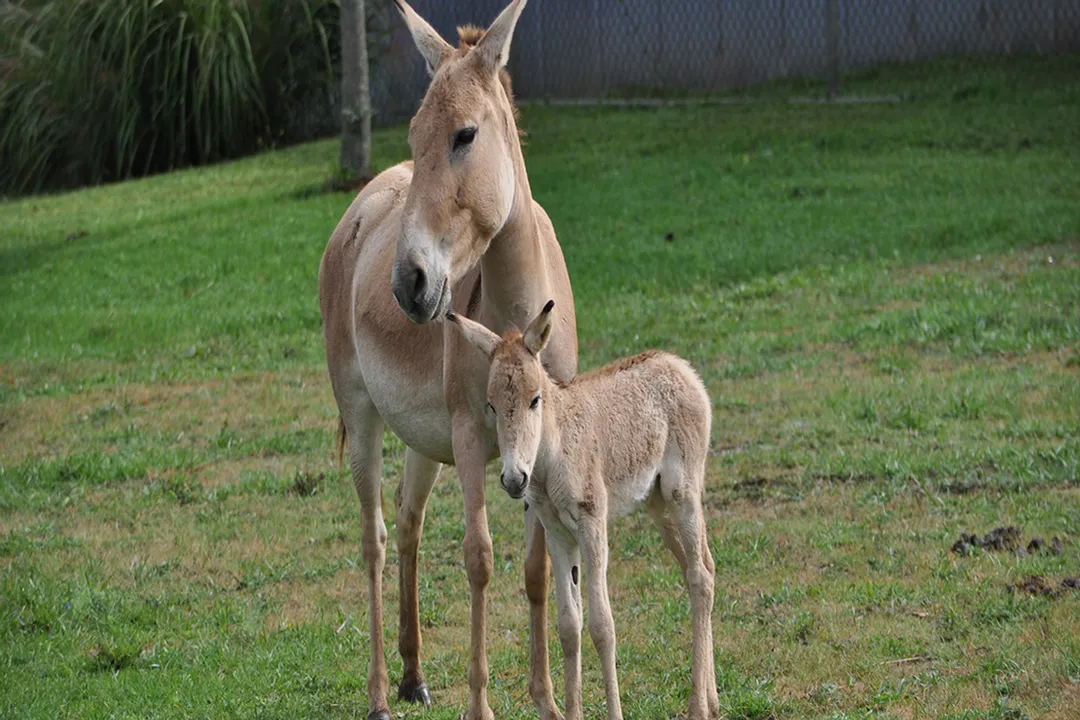
The question of how many onagers survive across the globe leads to a surprisingly complex answer, one tied not to a single number, but to the distinct fates of the different subspecies that make up the Equus hemionus species, commonly known as the Asiatic wild ass. When looking at the entire group, one figure often cited is around 55,000 individuals remaining worldwide, leading to an overall classification of Near Threatened (NT) on the IUCN Red List. However, this overarching number masks severe regional crises, particularly concerning the most endangered subspecies, the Persian onager.
# Subspecies Breakdown

The onager is not a monolithic population; it comprises several distinct subspecies, two of which—the Syrian wild ass (E. h. hemippus) and the European wild ass (E. h. hydruntinus)—are now sadly extinct. The survival of the species today rests on the remaining four or five living populations, each with its own geographic range and population health.
The most numerous and widespread is the Mongolian wild ass (E. h. hemionus), which claims nearly half of the entire global population. This subspecies, along with those in adjacent China, accounts for a substantial majority of the living onagers, with around 40,000 in Mongolia alone and about 5,000 more in China’s Xinjiang province. The sheer volume of Mongolian onagers acts as a buffer, pulling the entire species status up to Near Threatened.
In contrast, the fate of other groups is far more precarious:
- Indian Wild Ass (E. h. khur): Approximately 4,000 individuals are found within wildlife sanctuaries in Gujarat, India.
- Turkmenian Kulan (E. h. kulan): Around 920 animals are found in Turkmenistan and Uzbekistan, with reintroduction efforts underway in Kazakhstan.
- Kazakhstan: About 3,100 individuals are reported in this range.
- Israel: A small population of about 250 exists in the Negev region.
When you sum these figures, you arrive near the 55,000 estimate, yet this total is heavily skewed by the stability of the Mongolian population. For instance, the A-Z Animals source suggested a much lower figure of 28,000 total onagers worldwide, which highlights how swiftly these population estimates can change or how different surveys might categorize adjacent populations differently.
# Persian Crisis

The plight of the Persian onager (Equus hemionus onager) represents the starkest conservation challenge within the species complex. This subspecies is classified as Endangered. While the overall species might be Near Threatened, the Persian onager is teetering on the edge, with its population estimated between 600 and 700 individuals existing only in two protected habitats in Iran, such as Turan National Park.
The total global tally for the Persian onager, including those in managed care, is cited as roughly 790 individuals by the IUCN. Looking specifically at captive populations, the number is extremely low—fewer than 1,000 globally, with only a small fraction, fewer than 30, residing in North American zoos. This disparity between the "Near Threatened" global status and the "Endangered" status of this key subspecies illustrates a common pitfall in wildlife monitoring: an aggregate number can hide localized extinctions or severe declines that require immediate, targeted intervention.
# Range and Habitat
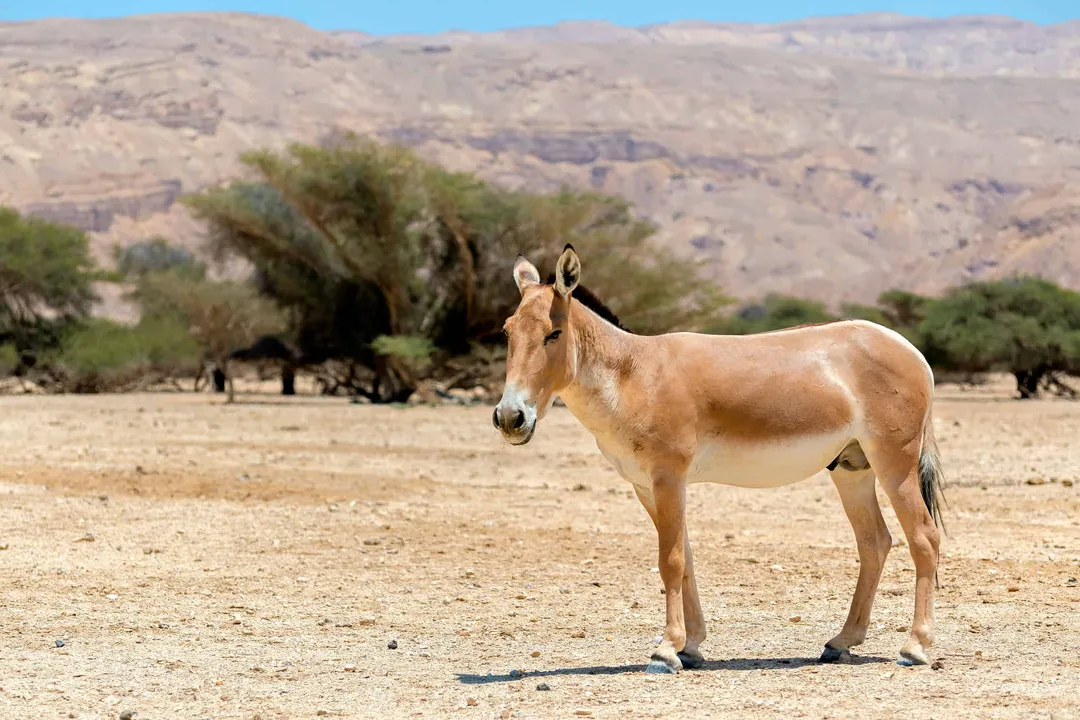
Onagers are creatures of arid extremes, inhabiting environments that range from desert plains and steppes to mountain steppes and semi-deserts across Asia. They are remarkably hardy, known to endure temperatures that can climb to 120 degrees Fahrenheit in the summer, adapting to the cold by growing a dense, curly winter coat.
Their need for water is a defining feature of their ecology. While they can derive necessary moisture from the sparse plant life they consume, which includes perennial grasses, herbs, and foliage, they must remain within a relatively short distance of open water—about 12 to 20 kilometers. When surface water is scarce, they exhibit an intelligent, problem-solving behavior: digging holes in dry riverbeds to access subsurface water. This created water source benefits more than just the onager; it becomes a gathering point for livestock and other wildlife.
# Social Dynamics and Speed
These equids are decidedly social, typically living in groups that include a dominant male (jack), females (jennets), and their young, often numbering 10 to 12 members. During periods of resource abundance, such as fall and winter, these smaller groups can congregate into massive herds that swell to hundreds or even over a thousand individuals, though these large associations are temporary. Older males often become solitary as they age.
Social structure revolves around dominance and resources. Males fight for mating rights, often by defending prime territories rich in food and water, forcing females to migrate between these guarded zones to breed. Their temperament has historically made them difficult to tame; though ancient Romans may have used them for war machines, humans ultimately abandoned attempts to domesticate them in favor of horses and donkeys due to their unruly nature.
Physically, they are the most horse-like of the wild asses. They possess a distinctive feature, especially among the Persian subspecies, which is a prominent black stripe running down the back, bordered by white strips that blend into pale hindquarters. They are also incredibly fast, capable of reaching top speeds of 70 km/h (or about 43 mph), a necessity for escaping predators like gray wolves, Persian leopards, and striped hyenas.
# Understanding the Conservation Gap
The existence of a 55,000-strong population does not equate to safety for the species as a whole. The high concentration of individuals in Mongolia means that any major ecological shift, disease outbreak, or severe climatic event in that region could drastically reduce the global count overnight. This dependency on one major region for the species' continued survival is an underlying vulnerability that requires attention from a landscape-scale perspective, not just reserve-level management.
Conservation efforts must therefore focus on securing corridors between these isolated populations. Since the greatest threat often involves habitat fragmentation from human encroachment, roads, and competition with livestock for water, ensuring the onagers can maintain their large migratory routes is essential. While protected areas offer vital refuge, the very nature of the onager—a nomadic animal requiring vast tracts of land to track scarce resources—demands a conservation planning tool that accounts for movement across human-altered landscapes, essentially planning for a "moving target". Success in captive breeding, such as the first-ever artificial insemination of stored sperm with this species resulting in foals, confirms that human intervention can create life, but it cannot replace the need for secure, large, and connected wild habitats.
Ultimately, the number of onagers left is a story of extremes: one subspecies thrives under protection, while another is critically close to vanishing entirely, reminding us that conservation success requires knowing not just the total count, but the count within every isolated pocket of existence.
Related Questions
#Citations
Onager - Equus hemionus - A-Z Animals
Equus hemionus onager - Animal Diversity Web
Onager | Mammals Wiki | Fandom
Onager - Facts, Diet, Habitat & Pictures on Animalia.bio
Persian onager | Smithsonian's National Zoo and Conservation ...